Contents
Get a Personalized Demo
See how Torq harnesses AI in your SOC to detect, prioritize, and respond to threats faster.
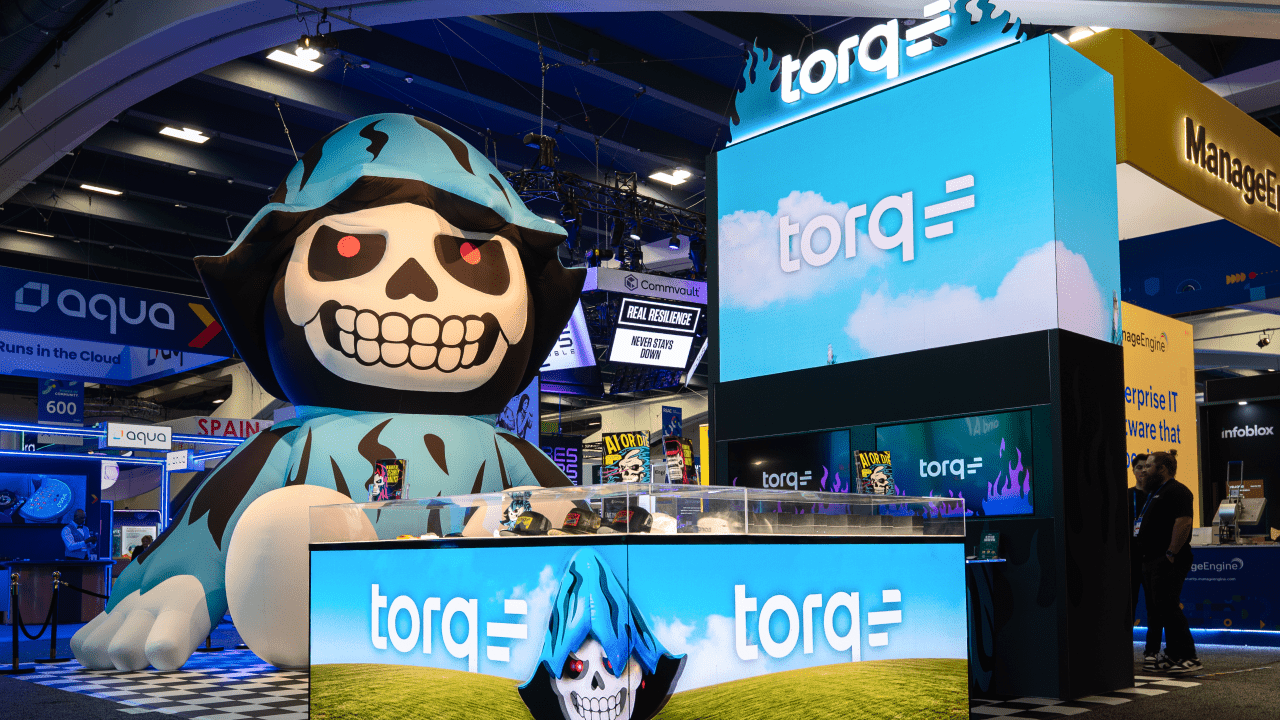
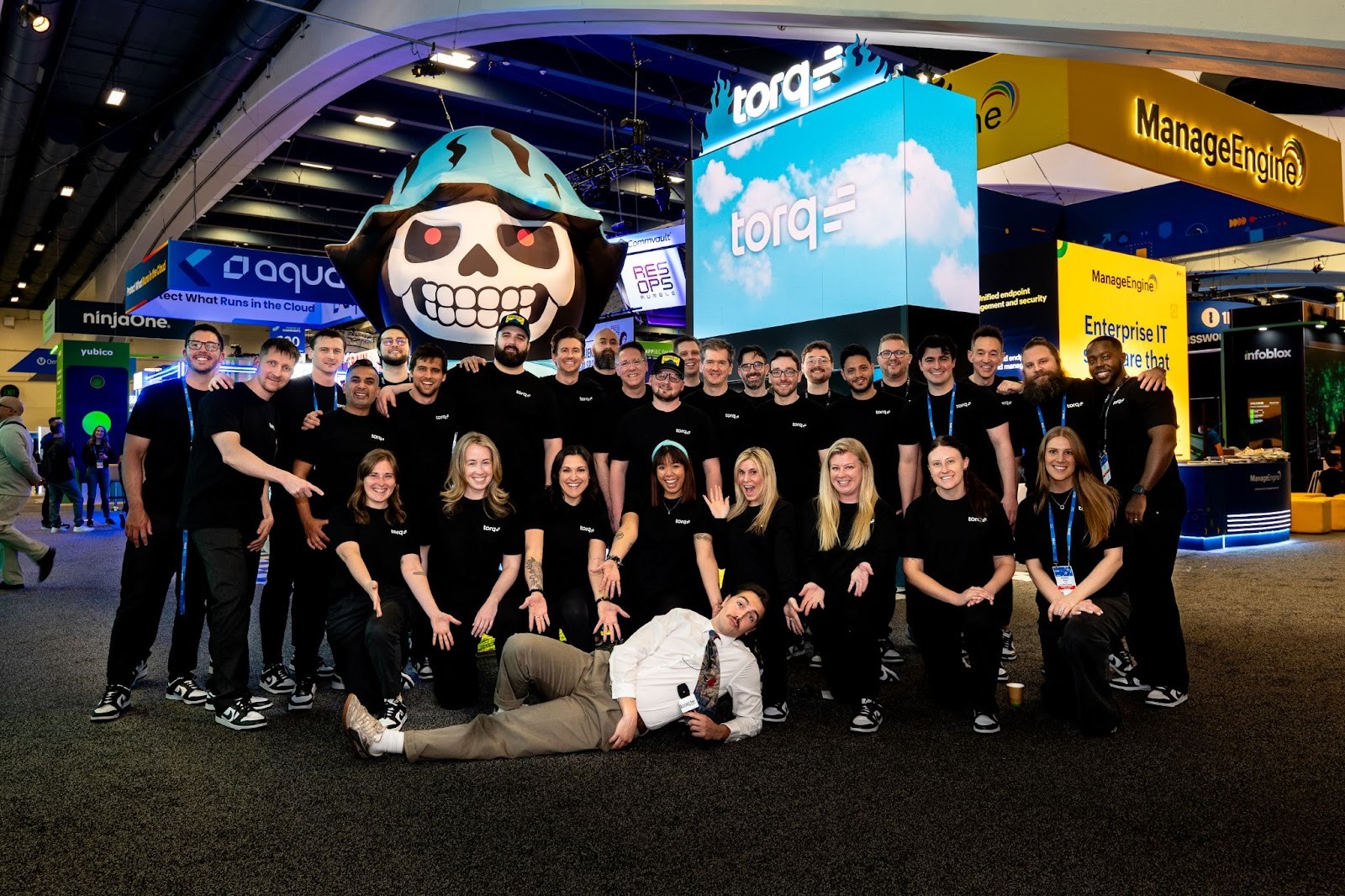
Torq rolled into RSAC 2026 at Booth #527 with the same energy that made us the talk of the show last year — except this time, everybody was just waiting to see how we could top a monster truck.
So, we brought a 20-foot inflatable skeleton that towered over the Moscone floor. A fully operational tattoo bus giving out permanent ink. A product announcement that turned heads across the industry. And the 2026 AI SOC Leadership Report — new research from 450 CISOs and security leaders on what AI is actually doing inside the SOC (and where it’s falling short).
Here’s everything that happened.
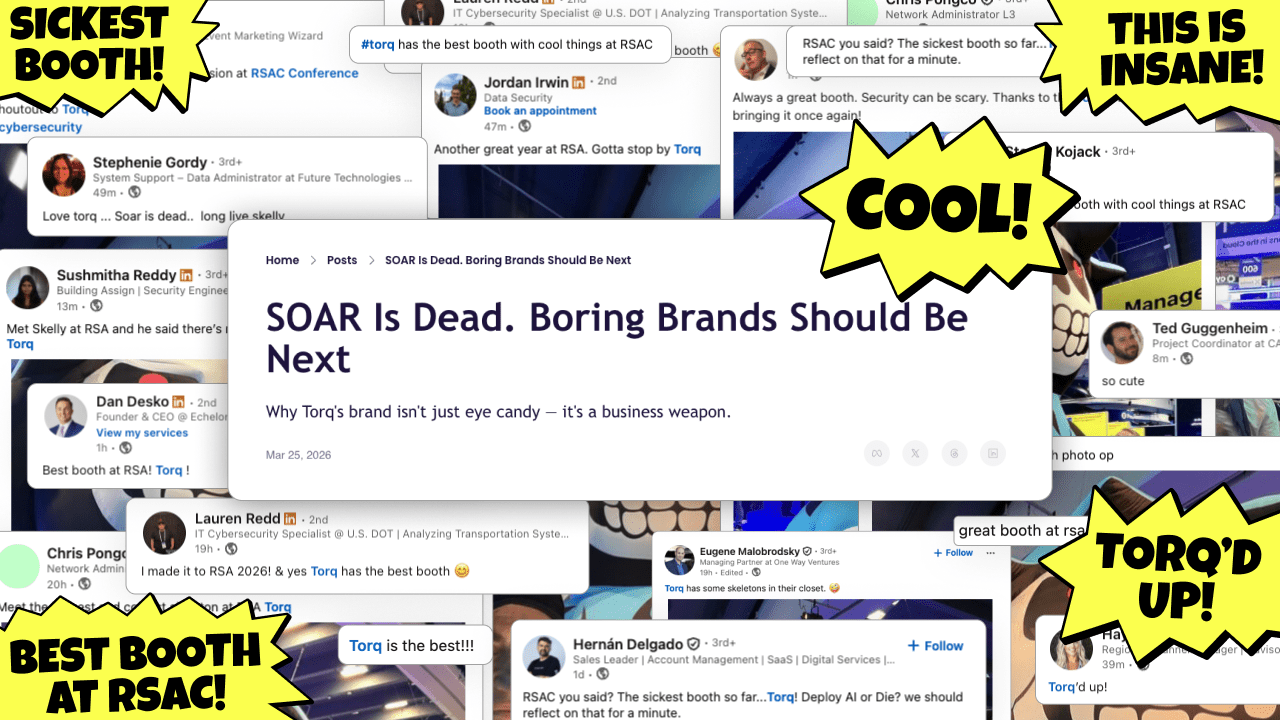
The Booth That Broke RSAC (Again)
Last year, it was 12,000 pounds of Grave Digger. This year, it was the world’s largest inflatable skeleton — and somehow, it still wasn’t the most memorable thing we did. The skeleton got them to stop. The tattoo bus got them talking. But the Torq AI SOC Platform is what had security professionals coming back for demo after demo.
In a sea of AI-powered sameness, Torq’s demo stood out as the only AI SOC that covers the entire threat management lifecycle. AI Agents that actually take action, saving analyst hours at every stage of SecOps and closing the loop on threats — autonomously.
The demo highlighted Torq ingesting and normalizing security events from many of the other big-name vendors on the show floor — CrowdStrike, Wiz, Okta, etc. — correlating and prioritizing alerts to reduce the noise. But the demo didn’t stop at analysis. Torq HyperAgents™ dug deep, investigating cases by querying data lakes and cross-referencing third-party threat intelligence, before Socrates’ agentic response actions contained threats and remediated the root cause.
The benefits clicked immediately for booth visitors, who were already thinking ahead to what they could accomplish with the time savings Torq would provide. What about agentic vulnerability management? How can HyperAgents expedite threat hunting? With the Torq AI SOC Platform removing mundane, repetitive work that bogged down security analysts, the conversation quickly shifted to the world of possibility.
One attendee said, “I can see how this platform could really help us scale my MSSP.“
The wow factor came from the agentic transparency. No black box decision making; clean, detailed, and transparent reasoning logs documented in real time as Torq AI Agents triaged, investigated, and responded. This was a breaking point that led a majority of demo viewers to schedule follow-up time for the rest of their team to see the hype.
Part of that hype? A week before RSAC, Torq announced Agentic Builder, which led CRN to name us one of the “20 Coolest AI and Security Products at RSAC 2026.” Think Cursor, but for the SOC. A security engineer describes what they need in plain language — “correlate EDR alerts with suspicious logins and known malicious IPs, map to MITRE ATT&CK, escalate by severity” — and Agentic Builder does the rest.
The announcement was covered by SecurityWeek, SiliconANGLE, and Channel Insider, but Valvoline CISO Corey Kaemming, who previewed Agentic Builder before the show, said it best: “It feels less like configuring an application and more like collaborating with a counterpart that understands your SecOps objectives and delivers a ready-to-run agent without the rework.”
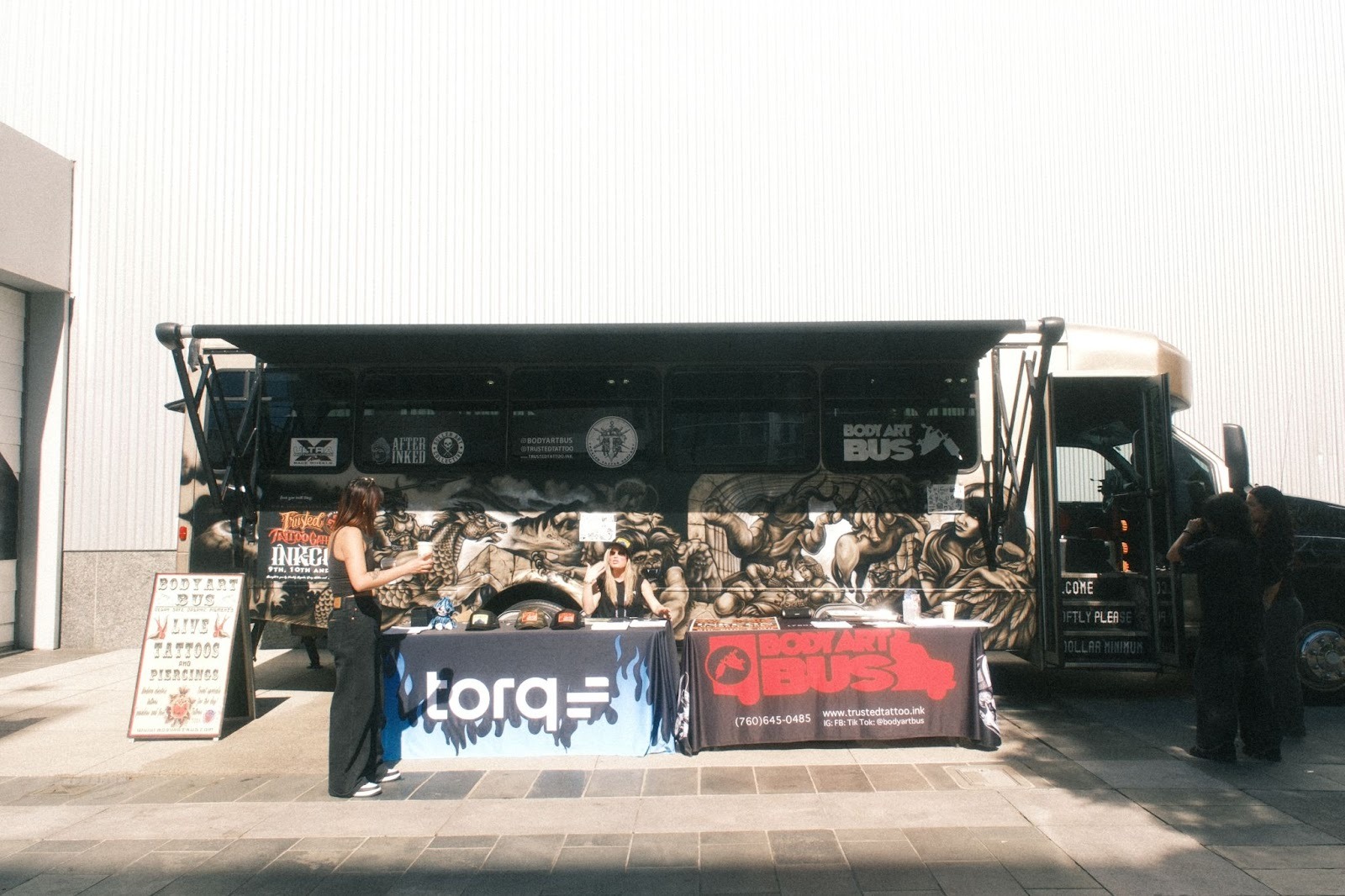
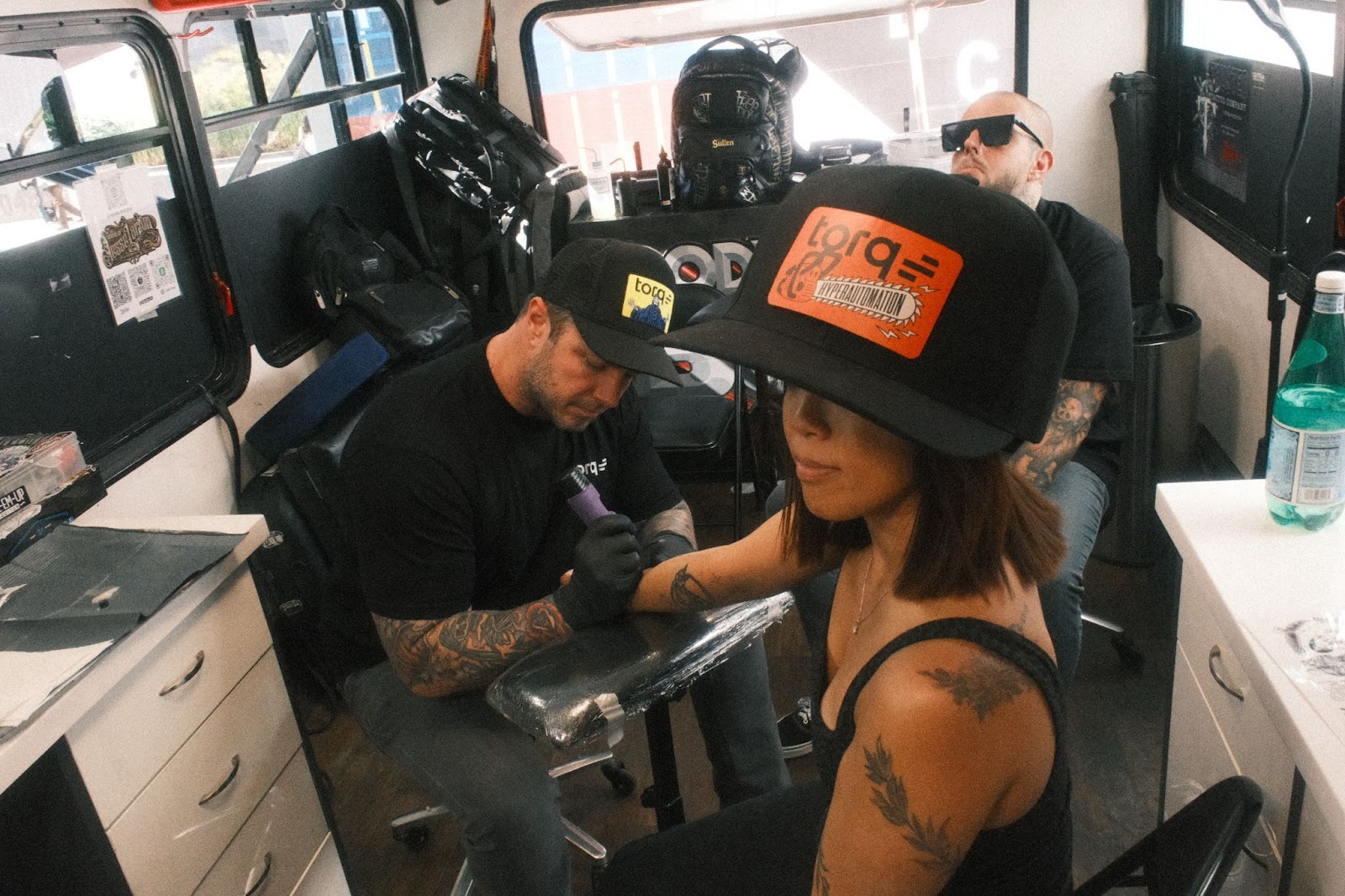
Tatted with Torq
Forget tote bags. At RSAC 2026, people walked away with permanent ink.
The Torq Tattoo Bus ran walk-in sessions for RSAC attendees on Tuesday and Wednesday. Real tattoo artists. Actual permanent tattoos. Pre-set flash designs, including Trevor and the Torq skeleton.
The line wrapped around the bus both days. By Tuesday afternoon, we had security professionals rolling up their sleeves who told us they’d specifically planned their RSAC schedule around getting in the chair. The final count: we gave out 155 real (and a few temporary) tattoos during RSAC. Ragrets? None.“This is the highlight of the conference for me,” was just one of the comments we picked up at the bus.
We also heard: “Hey, you’re the urinal cake guys from last year!” Not the legacy we planned — but we’ll own it.
And Then There Was… AI 4 Pets
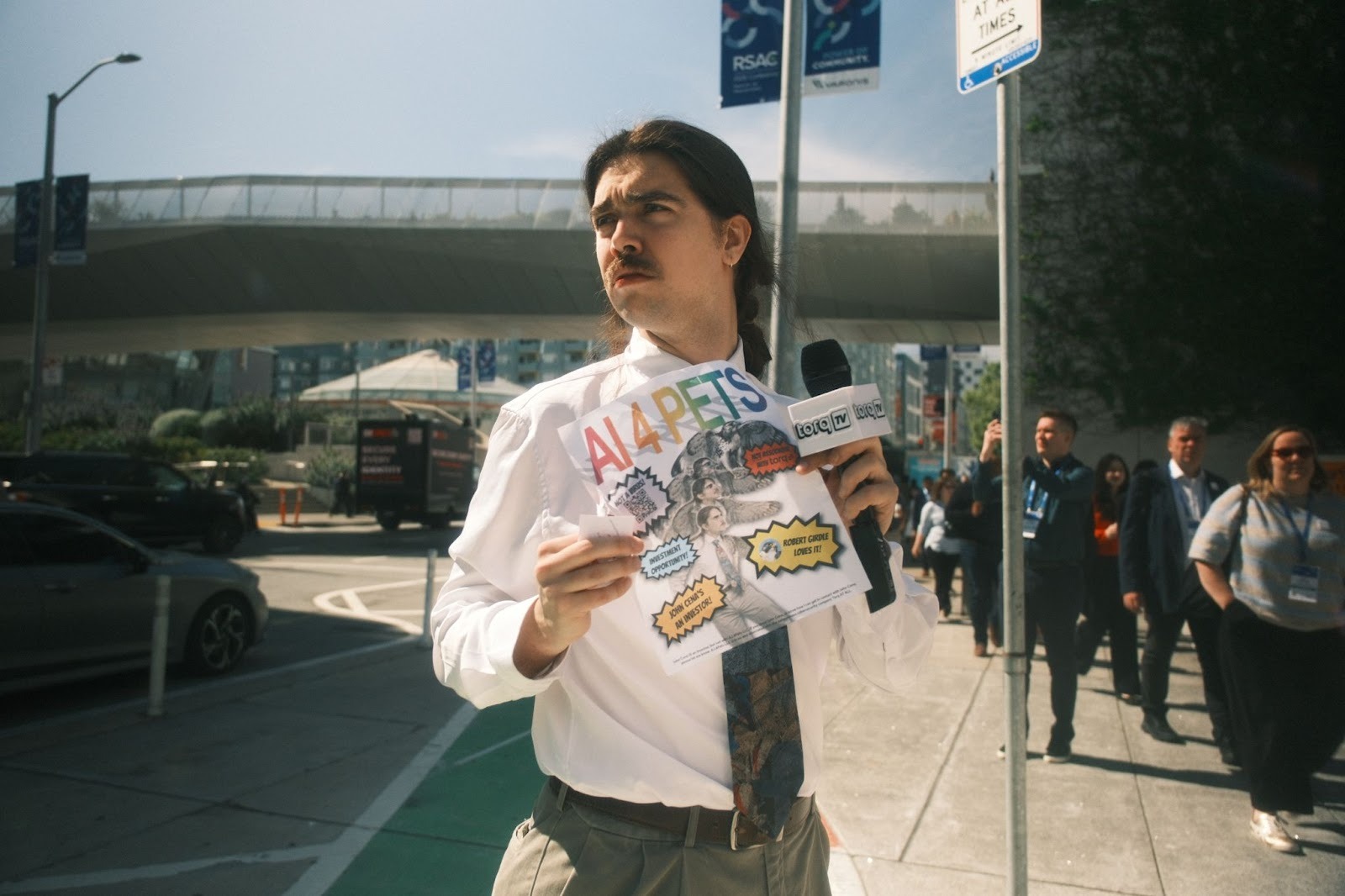
Trevor came to RSAC with a plan. Not Torq’s plan. His plan.
While the rest of the team was running demos and giving out tattoos, Torq’s Junior Media Intern had been quietly working on something of his own: AI 4 Pets — a “bajillion dollar idea” to bring agentic autonomy to pets. He made a website. He filmed a pitch video. He took it to the streets to ask people to invest.
Nobody invested.
New Research, Hot Off the Press
The 2026 AI SOC Leadership Report dropped during the show — 450 CISOs and security leaders across four countries on what AI is actually doing inside the SOC. The findings landed hard because they matched what we were hearing at the booth all week:
- AI is everywhere, but it’s fragmented.
- 94% of teams use it. 80% say it’s adding complexity, not reducing it.
- And 97% trust AI to handle triage — but only 35% actually let it.
Beyond the Booth
Presidents Forum
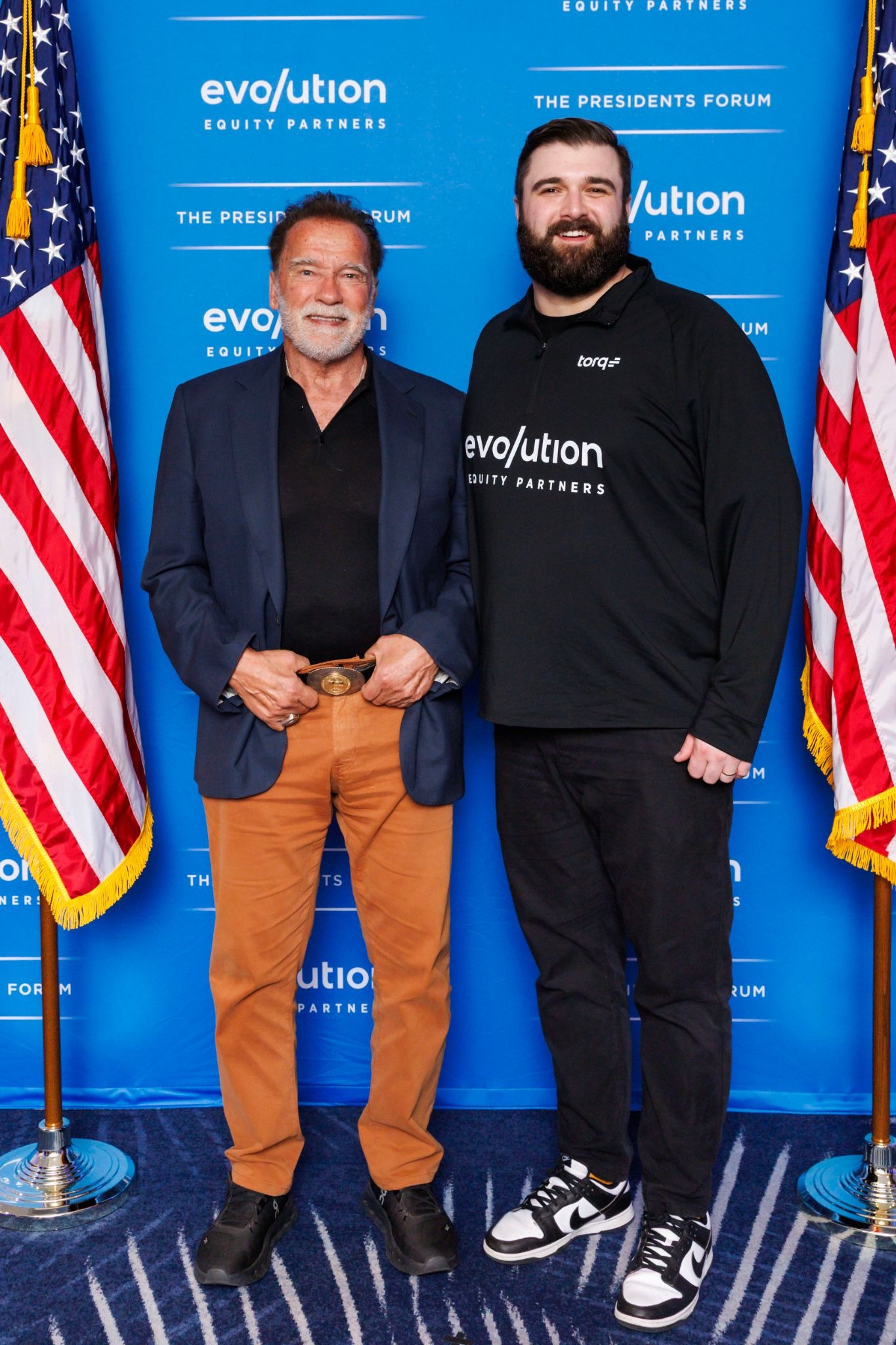
Torq’s Bob Boyle kicked off the Presidents Forum, an invitation-only event hosted by Evolution Equity Partners during RSAC week. The headliner: Arnold Schwarzenegger, moderated by SINET Chairman Robert Rodriguez. The conversation centered on leadership under pressure — building teams, making calls with imperfect information, and communicating through crisis.
Tell NY Marketing Happy Hour
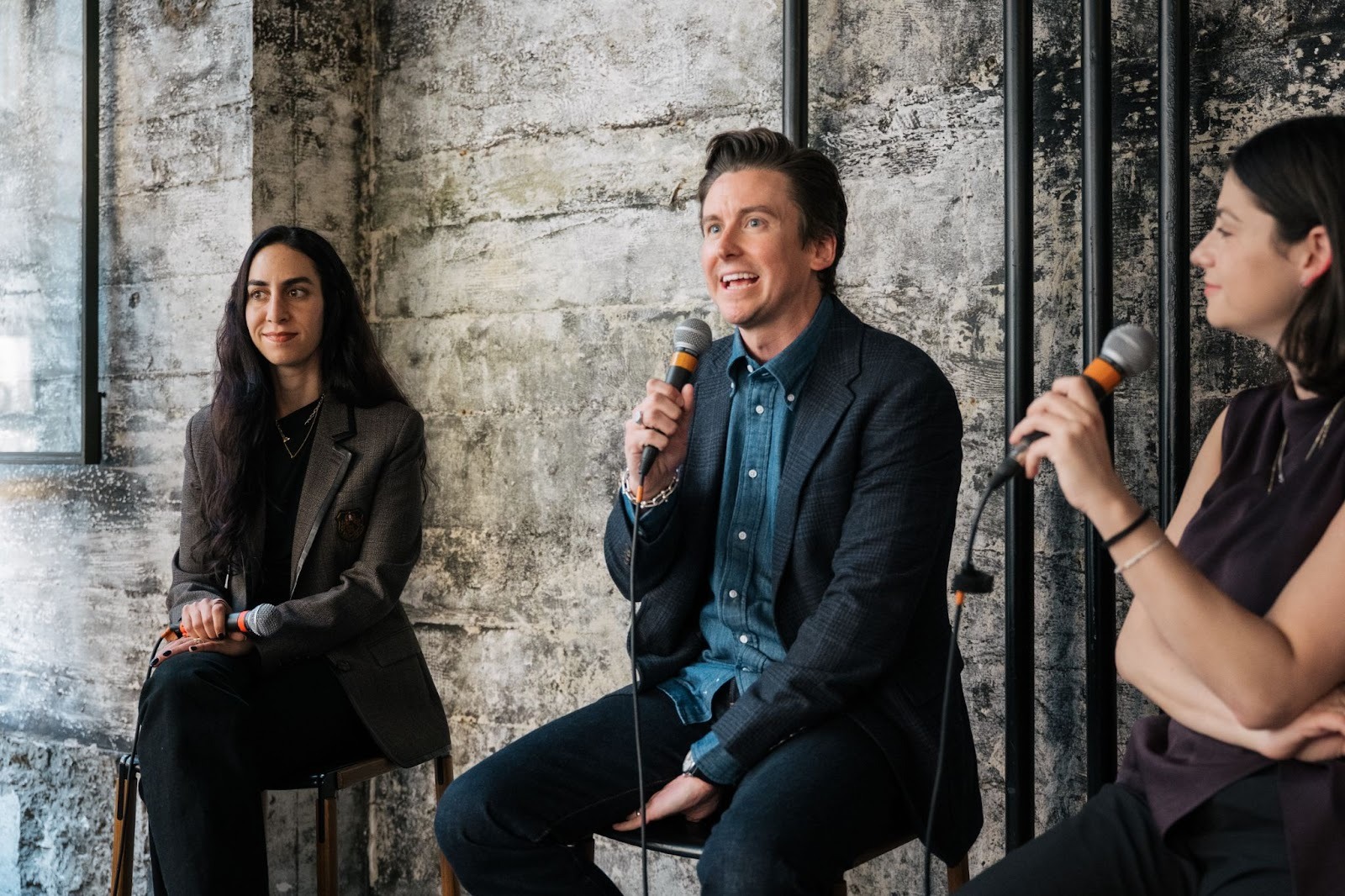
Don Jeter joined Wiz CMO Raaz Herzberg at Tell NY’s marketing mixer — unconventional brand moves, the evolving role of PR, and how to stand out in a space that doesn’t always reward creativity.
See You Next Year
RSAC 2026 is in the books. Skelly has been deflated. The tattoo bus has left San Francisco. AI 4 Pets remains unfunded.
But Torq? That’s forever.
How do we go EVEN BIGGER next year? You’ll have to wait until RSAC 2027 to find out.
The conversations at Booth #527 all pointed to the same thing: AI adoption isn’t the problem — unification is. We put the data behind it. 450 security leaders. Five findings. One report.