Hyper-AUTO-Mation: Why Carvana’s CISO Bet on Agentic AI for 5x SOC Efficiency

Contents

Get a Personalized Demo

See how Torq harnesses AI in your SOC to detect, prioritize, and respond to threats faster.

Request a Demo

CISOs everywhere are feeling the AI fatigue. Every vendor at Black Hat 2025 was hyping ‘AI agents for SecOps,’ so there’s rightfully a lot of skepticism about deploying AI in production, especially in enterprise environments.

But the old way of running a SOC just isn’t working anymore. After all the time and money spent on traditional playbooks, we’re still wrestling with the same challenges: alert fatigue, burnout, tool sprawl, and inability to scale. It’s time for a new approach — but what does that actually look like in the very real, often messy world of the SOC?

Dina Mathers, CISO of Carvana, is a leader who’s fearlessly challenging the status quo with an AI-first SecOps strategy in a Fortune 500 environment. I recently moderated a Black Hat 2025 session with her, where she shared her insights from the front lines of Carvana’s modern, AI-powered SOC

Below are her key takeaways for any security leader considering (or concerned about) adopting AI.

The Business Case for AI in SecOps

Staffing a full 24×7 security operations center is expensive and doesn’t scale well. And, as Dina noted, “the SOC grind is real… and it’s tough.” In a traditional SOC, analysts are constantly triaging and responding to alerts from disparate security tools — and a lot of events are just noise. Analysts have to hop between multiple screens and dashboards to figure out what’s real and what’s impactful.

“Who wants to spend their time doing that?” Dina asked the audience. She also pointed out how inefficient it is to have human analysts spending their time on mundane, repeatable tasks that can be automated, such as responding to phishing emails or documenting cases. The leaner the team, the more these inefficiencies hurt, slowing down response and increasing risk exposure.

That’s why Dina says that, from her perspective, it’s a “no-brainer” to leverage AI to offload the Tier-1 and Tier-2 alert triage, so her team can focus on more critical and strategic work.

Leveraging AI [in the SOC] seemed to me like a no-brainer. There’s a very strong use case to use AI for your traditional security operations to start. Then, you can grow from there.”

– Dina Mathers, Carvana CISO

The Carvana AI Adoption Playbook

For Carvana, AI isn’t just a buzzword — it’s core to their business and security strategy. While Carvana is a Fortune 500 company, it operates with a startup mindset, which means they move fast and are willing to adopt AI rapidly. But Carvana also underpins their AI-first strategy with a methodical and governance-focused approach designed to ensure security and alignment with business goals, including: 

  • Establishing a cross-functional task force: Carvana has an AI task force with stakeholders from legal, information security, data governance, and engineering. This group meets bi-weekly to review new use cases and ensure a unified approach.
  • Starting with a clear business case: The first step when evaluating a proposed AI solution is to ask, “What is your actual use case?” This prevents teams from buying new AI tools just for the sake of shiny new toys to experiment with. The process also includes checking if an existing, sanctioned tool can fulfill the need to avoid “shadow AI” or redundant technologies.
  • Engaging legal and security early: When a business case is confirmed, Carvana spins up a POC and works with the legal team to ensure proper contractual documentation, such as a data protection agreement or information security amendment. A security review of the third-party vendor is also conducted in parallel to ensure the tool meets their standards.
  • Adopting a ‘crawl-walk-run’ approach: When deploying Torq’s AI SOC Analyst, Carvana started with a human-in-the-loop model, allowing the AI to triage lower-risk cases by following a defined runbook, then having a human analyst review the AI’s conclusions before a remediation or closure action was taken. Taking baby steps initially allowed Carvana to build trust and comfort in the AI’s ability to perform consistently over time as they slowly expanded the scope of tasks they assigned to the AI, such as having the AI ask end users questions over Slack in order to close out a case.

“Within one month of deploying HyperSOC, we had 41 of our runbooks created and we started assigning cases to Socrates, the AI SOC Analyst. But we used a ‘crawl-walk-run’ approach so we could say, ‘We’re comfortable with the AI Analyst triaging, but not with it remediating or closing out an incident yet.’ So we had a human in the loop from the beginning.”

– Dina Mathers, Carvana CISO

The Real-World Impact of Torq’s Agentic AI

Carvana’s Torq HyperSOC implementation delivered tangible results beyond simple automation.

100% Tier-1 and Tier-2 Triage Automation

Torq’s AI SOC Analyst now triages 100% of Carvana’s Tier-1 and Tier-2 security events, acting as an extension of their lean team. This has transformed the day-to-day work for their security team, which can now focus on higher-value work and operate at the effectiveness of a team five times larger.

Improved Team Morale and More Strategic Focus

Automating repetitive tasks has led to a happier, more engaged security team. Team members can focus on strategic projects like deploying new technologies and improving the overall security posture, instead of just monotonous triage.

Expanded Use Cases Beyond the SOC

There are also many use cases beyond the SOC that agentic AI can help with, such as automating onboarding and offboarding workflows and reducing tech debt by automatically disabling inactive service accounts. Carvana uses Torq to identify lost or stolen endpoints to ensure that the assets are properly updated in their configuration management database (CMDB) and that the assets are removed from disparate endpoint tools.

Dina shared, “Although we made the decision to invest in the AI SOC Analyst initially just to triage the security events, what we’re finding is there are so many more use cases beyond the traditional security operations center. I would implore you to check out Torq, honestly. There are so many use cases, so you don’t have to go get another agentic AI for some other purpose-built solution — you could standardize all of your automation using Torq’s agentic AI.”

“[With Torq], we have materially improved our operations. We’ve dramatically reduced the cost of operating a security operations center to the point where we can reallocate those funds to different technologies that we need.”

– Dina Mathers, Carvana CISO

Watch Now: Dina Shares More Insights

The Torq team had the chance to catch up with Dina ahead of her Black Hat 2025 session. Watch the interview now!

The Final Takeaway: Don’t Be the Department of ‘No’

Dina closed her on-stage session by challenging security leaders to embrace AI rather than be skeptical: “Don’t be the Department of ‘No’. Lean into AI. Try it out.” Just as Carvana disrupted car sales by automating the misery out of buying a car, their embrace of agentic AI in the SOC is automating the misery out of life in the SOC.

Dina also shared that she finds the limitless horizons of AI exciting. “What’s crazy about AI adoption is that your imagination is what’s limiting it. The tool can do anything you tell it to do.”

Want to see how Torq HyperSOC can transform your SecOps?

SEE TORQ IN ACTION

Ready to automate everything?

“Torq takes the vision that’s in your head and actually puts it on paper and into practice.”

Corey Kaemming, Senior Director of InfoSec

“Torq HyperSOC offers unprecedented protection and drives extraordinary efficiency for RSM and our customers.”

Todd Willoughby, Director

Compuquip logo in white

“Torq saves hundreds of hours a month on analysis. Alert fatigue is a thing of the past.”

Phillip Tarrant, SOC Technical Manager

Fiverr logo in black

“The only limit Torq has is people’s imaginations.”

Gai Hanochi, VP Business Technologies

Carvana logo in black

“Torq Agentic AI now handles 100% of Carvana’s Tier-1 security alerts.”

Dina Mathers, CISO

Riskified logo in white

“Torq has transformed efficiency for all five of my security teams and enabled them to focus on much more high-value strategic work.”

Yossi Yeshua, CISO

Black Hat 2025: Grave Digger, Agentic AI, and… SOC Goblins?

Contents

Get a Personalized Demo

See how Torq harnesses AI in your SOC to detect, prioritize, and respond to threats faster.

Request a Demo

Torq’s mission at Black Hat 2025 was simple: go big or go EVEN BIGGER. 

Yes, Grave Digger was in the booth again — but the real show-stopper that kept attendees around was our agentic AI-driven Torq HyperSOC™ demo. Oh yeah, and our Junior Media Intern Trevor was seen wandering around Las Vegas with a new furry, yellow frenemy…. more on that later.

Here are all the Black Hat highlights. 

The Pre-Show Buzz: AMP, AI Internships & Fortune Top 50

Torq kicked off the week before Black Hat with a big reveal: a new Alliance & Momentum Partner (AMP) Program, with launch partners including Google Cloud Platform, Wiz, NVIDIA, Zscaler, Astrix, Intezer, Panther, Sweet Security, and more. Forget pay-to-play tiers and red tape. The Torq AMP program provides the go-to-market muscle, marketing firepower, and joint solution innovation to move beyond basic integrations and create the world’s leading ecosystem of agentic AI cybersecurity expertise.

“For years, integrations were treated as check-the-box activities, such as basic API connectors or one-way data flows. But security teams don’t need more connectors. They need outcomes. That’s where Torq AMP comes in. It gives partners a direct path to operationalizing agentic AI through real-world solutions, not just theoretical ideas.”

Eldad Livni, Torq Co-Founder and CIO, in Channel Futures

Torq also announced a new nationwide AI internship program in partnership with AI4ALL. The program pairs underrepresented college students with hands-on experience in real-world cybersecurity and AI projects at Torq. Forbes described how “it goes beyond just job shadowing or résumé building. Interns will be mentored by Torq’s R&D and AI leadership teams while contributing directly to product innovation.”

To top off the pre-show spotlight, Torq was named one of Fortune’s Top 50 Cybersecurity Companies of 2025.  

LinkedIn Votes: Best Booth at Black Hat 2025

What does a monster truck have to do with security operations? NOTHING AT ALL, BUT WHO CARES? IT’S FREAKIN’ GRAVE DIGGER! Oh, and also because Torq is on tour nationwide with Monster Jam® — RSVP for your city here!

The LinkedIn-osphere lit up with post after post after post calling Torq “the best booth at Black Hat”. (And “wicked”, “coolest”, “my first stop”, “killer”, “awesome”, and “the bomb”… We could keep going but we’re already blushing.) 

The Hottest Demo in Cybersecurity

Grave Digger may have turned heads, but it was our demo that kept security pros hanging around Torq’s booth.

Torq HyperSOC™ is the AI-native autonomous SOC purpose-built to crush the SOC’s biggest challenges and pain points. HyperSOC integrates with your full security stack to automate, manage, and monitor critical SOC responses at machine speed to clear out Tier-1 grunt work and free your team to focus on critical threats. 

The Torq platform was recognized as one of the “most feature-rich platforms” in Software Analyst Cyber Research’s comprehensive new 2025 AI SOC Industry Report from Francis Odum and Rafal Kitab. Torq stood head and shoulders above for delivering “notable improvements in detection and response” with an “extensive feature set” that goes beyond traditional SOC scope. (Francis loved our Black Hat booth ❤️, BTW.)

Want to see Torq HyperSOC in action and ask all your questions? Attend our half-hour live virtual demo. Save your spot. 

Hyper-AUTO-Mation: Why Carvana’s CISO Bet on Agentic AI for 5X SOC Efficiency

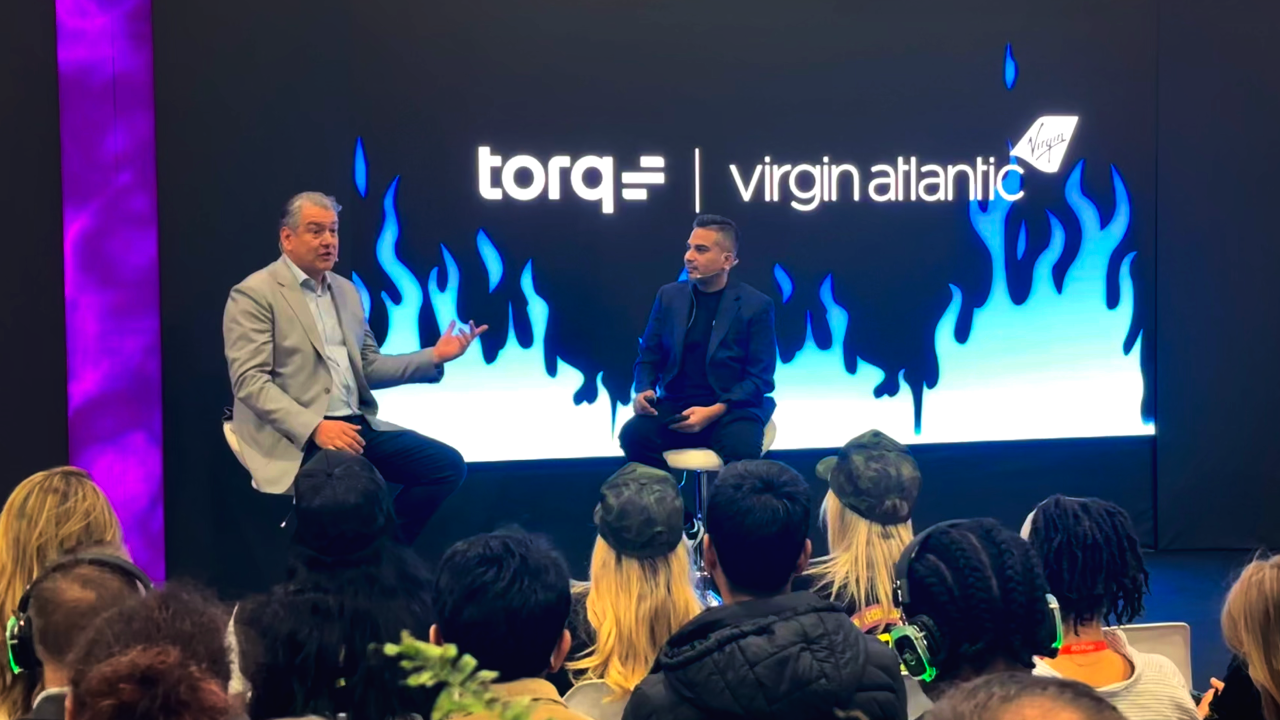
Dina Mathers, CISO at Carvana, joined Torq’s Field CISO Patrick “PO” Orzechowski on stage to discuss her experience in applying Carvana’s AI-first mindset to the SOC “not just in talk but in actual execution” by becoming an early adopter of Torq HyperSOC.

Carvana CISO Dina Mathers and Torq Field CISO Patrick Orzechowski speaking at Black Hat 2025

With a lean team, Dina knew her SOC couldn’t afford the analyst burnout that comes with the mundane, repetitive low-level work of triaging alerts and hopping across screens to respond. “Who wants to spend their time doing that?” she asked the audience.

Dina explained how the Fortune 500 company “now legitimately has 100% of our Tier-1 and Tier-2 security events triaged by our [Torq] AI SOC Analyst that’s basically an extension of our team” — dramatically reducing costs and boosting team morale by allowing them to focus on strategic work. Ultimately, Dina’s message to other CISOs was simple: “Let’s not be the Department of ‘No’. Lean into AI. Try it out.”

“Leveraging AI seemed to me like a no-brainer…. We have materially improved our operations. We’ve dramatically reduced the cost of operating a security operations center to the point where we can reallocate those funds to different technologies that we need.”

– Dina Mathers, Carvana CISO

WTF Was That Furry, Yellow Thing?

Meet the SOC Goblin of Black Hat 2025

Did you see the SOC Goblin at Black Hat and wonder “what the heck is that?” Turns out, 96% of security operation centers have a SOC Goblin lurking in the corner slowing down MTTR and burning out analysts — and they don’t even know it. Luckily, Torq can make SOC Goblins ✨disappear✨. Learn how

This particular SOC Goblin was kickin’ it at Black Hat 2025 with our Junior Media Intern Trevor as he tried to get a SOC du Soleil show off the ground. (Don’t ask). Check out their misadventures from traveling across the country in a van to arriving in Vegas to causing a scene

Agentic AI in the SOC That’s Real

Agentic AI was THE buzzword of Black Hat 2025 and it seems like every vendor has their own AI Agent for SecOps. But there’s a big difference between marketing hype and actual AI in production handling real-world use cases in Fortune 500 environments. Torq Co-Founder and CEO Ofer Smadari recently sat down for a video interview with BankInfoSecurity to share how Torq’s autonomous AI agents accurately resolve threats at scale.

Want to see Torq’s agentic AI in action? Request a demo. And learn more about how Torq HyperSOC saves your SOC with our new manifesto.

SEE TORQ IN ACTION

Ready to automate everything?

“Torq takes the vision that’s in your head and actually puts it on paper and into practice.”

Corey Kaemming, Senior Director of InfoSec

“Torq HyperSOC offers unprecedented protection and drives extraordinary efficiency for RSM and our customers.”

Todd Willoughby, Director

Compuquip logo in white

“Torq saves hundreds of hours a month on analysis. Alert fatigue is a thing of the past.”

Phillip Tarrant, SOC Technical Manager

Fiverr logo in black

“The only limit Torq has is people’s imaginations.”

Gai Hanochi, VP Business Technologies

Carvana logo in black

“Torq Agentic AI now handles 100% of Carvana’s Tier-1 security alerts.”

Dina Mathers, CISO

Riskified logo in white

“Torq has transformed efficiency for all five of my security teams and enabled them to focus on much more high-value strategic work.”

Yossi Yeshua, CISO

What is a Whaling Phishing Attack? How to Prevent One with Automation

Contents

Get a Personalized Demo

See how Torq harnesses AI in your SOC to detect, prioritize, and respond to threats faster.

Request a Demo

The biggest cybersecurity threats often arrive quietly, disguised as something users trust — and they go straight for the top. Whaling phishing attacks are precision strikes crafted to target senior executives, exploiting their authority to steal money or critical data. 

Below, we share strategies to recognize and prevent whaling phishing attacks before they reach your leadership team.

Whaling Phishing Attacks Explained

What makes whaling unique is the level of detail and personalization used to deceive recipients. Attackers research company structure, executive behavior, and industry-specific language to make their fraudulent messages convincing. Their goal is to request sensitive data transfers or financial transactions, or steal confidential information — all under the authority of the executive they’re impersonating.

The impact of a single successful whaling attack can be catastrophic. The FBI’s Internet Crime Complaint Center (IC3) reported that business email compromise (BEC) and email account compromise (EAC) scams, which include whaling, resulted in over $2.7 billion in losses in 2022 alone. In one infamous case, a company lost over $46 million to a whaling scam over a period of several years. This isn’t a small-time email scam — it’s a high-stakes, high-reward scheme that can sink a company.

How to Identify Whaling Phishing Attacks: 4 Warning Signs

Whaling emails are often subtle, but there are clear red flags that security teams and employees can watch for. Recognizing these warning signs is the first step in neutralizing an attack before it succeeds.

Social Engineering

Attackers carefully research the organization’s hierarchy, ongoing projects, and executive routines to craft messages that feel authentic. These emails may reference real initiatives, use company jargon, or mimic internal communication styles to build trust and lower suspicion.

Impersonating Company Executives

Attackers pose as senior leaders like CEOs, CFOs, or board members. By spoofing or using lookalike email addresses, attackers exploit authority and urgency, making employees more likely to comply without question.

Fake “Urgent” Messages from Fake Email Addresses

Many whaling attempts use urgency to pressure quick decisions. Subject lines such as “Immediate Action Required” or “Confidential Transaction Approval Needed” create stress and encourage recipients to move quickly without verifying the request, increasing the chance of a costly mistake.

Sending Strange or Unidentified URLs

Links included in these emails may look legitimate at first glance, but redirect to malicious sites or credential-harvesting pages. Subtle misspellings in domain names (e.g., micros0ft.com instead of microsoft.com) and unfamiliar file attachments are clear indicators of a potential attack.

6 Ways to Prevent Whaling Phishing Attacks

1. Employee Training and Awareness

Executives and their support staff must undergo specialized phishing awareness training, including signs of whaling phishing attacks. Teach them to spot common tactics, validate requests, and report suspicious activity.

2. Multi-Factor Authentication (MFA)

Enforce MFA across all accounts, particularly executive-level accounts. Even if credentials are stolen, MFA makes it much harder for attackers to gain access.

3. Advanced Email Filtering

Use email security tools that scan for domain spoofing, suspicious metadata, and malicious attachments before they reach inboxes.

4. Anti-Phishing Software

Deploy software that uses behavioral analytics to detect anomalies in communication patterns — especially important for high-risk roles like finance and legal.

5. Real-Time Threat Intelligence

Staying ahead of attackers requires live intelligence. By integrating global threat feeds, organizations can block known malicious domains and adapt to emerging attack patterns instantly.

6. Security Automation

Manual detection and response are too slow for modern whaling threats. Security automation ensures that suspicious emails are quarantined, alerts are prioritized, and responses are orchestrated without human delay.

Why Threat Intelligence and Automation Are Critical

Manual phishing response is a losing battle. Analysts burn hours pivoting between tools, validating IOCs, and remediating inboxes — time attackers exploit. Torq Hyperautomation eliminates that grind by automatically enriching alerts with threat intelligence integrations such as VirtusTotal to determine if URLs, attachments, and other indicators are malicious. This provides the context for faster, more informed decisions and helps quickly weed out false positives before a security case is even created.

With prebuilt workflows, phishing alerts can be automatically triaged, validated, and remediated in minutes instead of hours, slashing noise and reducing human error.

At Lennar, one of the largest U.S. homebuilders, Torq cut phishing resolution time from hours to minutes by automating investigation and remediation, freeing analysts to focus on more complex investigations.

How Hyperautomation Powers Your Defense and “Squishes” Phishers

Torq’s Hyperautomation platform empowers security teams to build end-to-end phishing defenses without adding complexity. It integrates across your entire security stack — email gateways, identity platforms, EDRs, SIEMs, and more — to detect, investigate, and neutralize phishing attempts at machine speed.

When a phishing alert is triggered — say, from Microsoft 365 — Torq instantly takes over the triage process. It automatically extracts URLs, attachments, and headers in parallel, then validates them against multiple threat intelligence feeds like VirusTotal. This weeds out false positives and confirms true threats within seconds. All artifacts are consolidated into a structured dataset, which Torq uses to automatically create or escalate a case. From there, auto-remediation workflows — such as blocking senders, quarantining endpoints, or resetting credentials — can be launched without analyst intervention.

Torq Hyperautomation™ changes the game by:

  • Automating phishing and whaling triage. Torq instantly extracts IOCs (URLs, hashes, headers), checks them against threat intel, and validates alerts without analyst intervention.
  • Orchestrating remediation. Auto-remediation workflows block senders, reset credentials, quarantine endpoints, and remove malicious emails from inboxes automatically.
  • Empowering end users. Chatbot integrations in Slack, Teams, and email give employees a one-click way to self-report phishing, while automation handles the rest.

By automating repetitive workflows and augmenting analysts with agentic AI, Torq helps organizations detect, prioritize, and respond to phishing scams and whaling attacks faster than attackers can act. The result: reduced human error, stronger executive protection, and maximized SOC efficiency.

Winning the Phishing War

Generative AI has made phishing faster, cheaper, and harder to detect — meaning that phishing and whaling attacks will only grow more sophisticated, more frequent, and more damaging. Relying on human vigilance and manual triage won’t be enough.

The only sustainable path forward is automation: uniting threat intelligence, AI-driven detection, and orchestrated response into one seamless defense layer. By eliminating manual bottlenecks and supercharging SOC efficiency, Torq ensures that phishing — even whaling-level attacks — never has the chance to sink your business.

Learn the keys to building a more efficient SOC, straight from Torq’s Field CISO.

FAQs

What is an example of whaling?

A classic example of whaling is when an attacker impersonates a CEO or CFO to trick an employee into authorizing a wire transfer. In one real-world case, attackers posed as executives and convinced employees to transfer $46.7 million to fraudulent overseas accounts. This shows how whaling phishing attacks exploit executive authority to carry out high-value fraud.

What are the three types of phishing attacks?

The three most common types of phishing attacks are:

  1. Standard Phishing Attacks – Bulk, generic emails sent to many users in hopes of tricking someone into clicking a malicious link or opening an infected file.
  2. Spear Phishing Attacks – Highly targeted phishing attacks that use personal or organizational details to tailor the message to a specific individual or small group.
  3. Whaling Phishing Attacks – A specialized form of spear phishing aimed at high-profile executives, such as CEOs or CFOs, often involving financial fraud or sensitive data theft.
What does it mean if someone is whaling?

In cybersecurity, “whaling” refers to attackers targeting “the big fish” — senior leaders or executives within an organization. The goal is to exploit their authority and access to approve high-value financial transactions or disclose sensitive company information.

What is the difference between impersonation and whaling?

Impersonation is a tactic: attackers pretend to be someone trusted (e.g., a colleague, vendor, or executive) to trick the victim. It can be used in many types of phishing.

Whaling is a strategy: it specifically targets senior executives. Whaling almost always involves impersonation, but with a narrower and higher-value focus than general phishing.

SEE TORQ IN ACTION

Ready to automate everything?

“Torq takes the vision that’s in your head and actually puts it on paper and into practice.”

Corey Kaemming, Senior Director of InfoSec

“Torq HyperSOC offers unprecedented protection and drives extraordinary efficiency for RSM and our customers.”

Todd Willoughby, Director

Compuquip logo in white

“Torq saves hundreds of hours a month on analysis. Alert fatigue is a thing of the past.”

Phillip Tarrant, SOC Technical Manager

Fiverr logo in black

“The only limit Torq has is people’s imaginations.”

Gai Hanochi, VP Business Technologies

Carvana logo in black

“Torq Agentic AI now handles 100% of Carvana’s Tier-1 security alerts.”

Dina Mathers, CISO

Riskified logo in white

“Torq has transformed efficiency for all five of my security teams and enabled them to focus on much more high-value strategic work.”

Yossi Yeshua, CISO

Why MSSPs are Ditching Legacy SOAR for Hyperautomation

Contents

Get a Personalized Demo

See how Torq harnesses AI in your SOC to detect, prioritize, and respond to threats faster.

Request a Demo

Managed security service providers (MSSPs), desperate to automate repetitive tasks, initially turned to SOAR to reduce their workload and improve threat response times. 

But legacy SOAR still stalls at scale, struggles with multitenancy, and breaks on fast-moving APIs — so teams end up babysitting playbooks instead of stopping threats. That’s why leading MSSPs are switching to Torq Hyperautomation: event-driven and massively scalable, with agentless integrations,and no/low-code and AI-generated workflows that turn Tier-1 tasks into hands-off outcomes.

Where Legacy SOAR Breaks for MSSPs

Scalability issues: Legacy SOAR platforms don’t handle alert spikes well. When volumes surge, their schedulers queue work serially, pipelines back up, and response times slip. The result is delayed containment, missed SLAs, and a SOC that’s waiting on tooling instead of stopping threats.

Lack of true multitenancy: Most SOAR tools weren’t built to isolate tenants. A burst of noisy events for one customer can starve resources and slow playbooks for everyone else. For MSSPs running dozens of environments, that bleed-through turns one client incident into a cross-tenant performance hit.

Integration complexity: Connecting customer tools should be routine, but with legacy SOAR, it’s a big project. Custom connectors take weeks to build, break when APIs change, and demand ongoing care and feeding. Teams end up maintaining glue code or paying for professional services, burning time and margin that should go to defending customers.

High maintenance costs: Legacy SOAR products often come with high maintenance costs in terms of time and resources. An organization might use around 25 different playbooks for different services and integrations, each requiring regular updates and optimization. Before long you’re maintaining dozens of near-duplicates, versioning them, testing them, and fixing scripts after every platform update. The operational overhead snowballs and erodes profitability.

Limited customization and flexibility: SOAR stacks lock down scripting and libraries, which cap what you can actually build. If you can’t use common SDKs or craft custom logic, you’re stuck with canned steps that don’t match real-world workflows. Analysts spend more time working around the platform than improving outcomes.

Hyperautomation: Built for MSSP Scale

Legacy SOAR tools weren’t designed for the scale, complexity, and economics that MSSPs face today. They’re monolithic, brittle, and reliant on endless scripting to keep up with changing APIs and customer environments. As MSSPs grow, those limitations compound — onboarding slows down, SLA penalties mount, and gross margins erode. At Torq, we deemed SOAR dead, and industry analysts followed suit.

Security Hyperautomation is different. It’s event-driven, horizontally scalable, and built for multi-tenant operations from the ground up. Torq enables MSSPs to orchestrate real-time alerts and responses across dozens or hundreds of unique customer stacks.

Key advantages of Torq for MSSPs include:

  • Parallel execution: Torq runs thousands of workflows simultaneously, ensuring tenants never compete for capacity.
  • No-code/low-code and AI-built automation: Analysts can build, customize, and deploy workflows in hours — accelerating onboarding and reducing the need for engineering resources.
  • Limitless integrations: With 300+ native connectors and containerized options, Torq adapts to any toolset, no matter how fragmented or fast-changing.
  • AI-assisted efficiency: Torq’s AI SOC Analyst, Socrates, enriches, correlates, and classifies cases automatically, while analysts approve high-risk actions through Slack, Teams, or ITSM.

For MSSPs, this means Tier-1 cases can be fully automated, Tier-2 streamlined with supervised approvals, and Tier-3 supported with rich AI-driven context. The result: reduced MTTR, happier customers, and healthier margins — even as alert volumes and customer counts grow.

How MSSPs Use Torq Hyperautomation

Accelerating onboarding: Every new customer brings a unique stack of firewalls, EDRs, SaaS apps, and cloud platforms. Instead of writing one-off automation scripts, MSSPs use Torq’s template-first playbooks with tenant-specific variables and policy toggles. This lets them onboard new clients in hours or days — not weeks — while maintaining consistency across tenants.

Meeting SLAs: SLA exposure through missed MTTA or MTTR is a top MSSP pain point. With Torq, Tier-1 alerts are fully automated — phishing, commodity malware, suspicious logins, impossible travel — and higher-risk actions are gated for analyst approval in Slack or Teams. Every case is logged with timestamps and actions, making SLA reporting defensible and reducing penalties.

Handling integration complexity: Customers bring dozens of different tools, many with fast-changing APIs. Torq’s 300+ native integrations, containerized connectors, and no-code customization allow MSSPs to connect “anything to anything” without custom code. This flexibility reduces the integration maintenance tax that eats into MSSP margins.

Reducing analyst burnout: MSSPs often deal with massive alert queues across tenants. Torq automates over 90% of Tier-1 triage and enrichment, suppresses false positives, and prioritizes high-risk cases. Analysts spend less time on swivel-chair tasks and more on threat hunting and customer strategy.

Delivering continuous optimization: Clients expect not just coverage but ongoing improvement. Torq enables MSSPs to measure MTTR, suppression rate, and analyst touches per case across all tenants. Workflows can be tuned continuously, and reports are compliance-ready for SOC 2, NIST, HIPAA, or industry-specific audits.

The business impact for MSSPs: Faster onboarding (up to 18×), faster workflow creation (10×), automated handling of up to 95% of Tier-1 alerts, and more substantial gross margins per customer.

The MSSP Hyperautomation Playbook: How HWG Sababa Doubled SOC Output

A few years ago, Italy-based MSSP HWG Sababa faced a tipping point in its growth. Instead of trying to squeeze more efficiency out of scripts and manual processes, it rebuilt its SOC around Torq Hyperautomation™. The result was a complete step-change in scale and efficiency.

Within weeks of adopting Torq, HWG Sababa:

  • Automated 55% of monthly alerts by targeting repetitive Tier-1 cases first
  • Cut MTTI and MTTR by up to 95% for routine alerts and 85% for high-priority threats
  • Nearly doubled SOC productivity and capacity without adding headcount
  • Boosted analyst morale and retention by eliminating repetitive, burnout-inducing tasks
  • Reduced customer-side effort by automating remediation actions directly in client environments

Marco Fattorelli, Head of Innovation at HWG Sababa, said Torq enabled them to deliver automated threat detection, containment, and remediation inside customer environments, saving clients hours of manual effort while strengthening trust and satisfaction.

The takeaway is this: Hyperautomation isn’t just a technical upgrade for MSSPs — it’s a competitive differentiator. By combining no-code workflows, vendor-agnostic integrations, and AI-driven case management, MSSPs like HWG Sababa prove ROI instantly while building more scalable and sustainable SOCs.

“Based on customer feedback when we showcase our services, Torq is the ideal solution for adding value to our managed SOC, particularly with its seamless integrations. By accelerating our automations and responses, Torq Hyperautomation helps us stay ahead of the curve and the competition.”

– Marco Fattorelli, Head of Innovation, HWG Sababa

Join the World’s Top MSSPs in Ditching Legacy SOAR

Legacy SOAR can’t keep pace with the multi-tenant scale, SLA pressure, and tooling diversity MSSPs face every day. Hyperautomation fixes the foundation: elastic execution that never stalls during spikes, true tenant isolation, plug-anything integrations, and AI-assisted workflows that turn the Tier-1 grind into hands-off outcomes. That’s how managed security service providers protect margins while delivering faster MTTR, stronger SLAs, and happier analysts.

MSSPs worldwide use Torq Hyperautomation to stamp reusable playbooks across tenants, orchestrate any stack, capture audit-ready evidence by default, and gate high-risk actions through Slack/Teams.

Ready to trade scripting and an endless backlog for scalable, multi-tenant automation? Get the Managed Services Manifesto.

SEE TORQ IN ACTION

Ready to automate everything?

“Torq takes the vision that’s in your head and actually puts it on paper and into practice.”

Corey Kaemming, Senior Director of InfoSec

“Torq HyperSOC offers unprecedented protection and drives extraordinary efficiency for RSM and our customers.”

Todd Willoughby, Director

Compuquip logo in white

“Torq saves hundreds of hours a month on analysis. Alert fatigue is a thing of the past.”

Phillip Tarrant, SOC Technical Manager

Fiverr logo in black

“The only limit Torq has is people’s imaginations.”

Gai Hanochi, VP Business Technologies

Carvana logo in black

“Torq Agentic AI now handles 100% of Carvana’s Tier-1 security alerts.”

Dina Mathers, CISO

Riskified logo in white

“Torq has transformed efficiency for all five of my security teams and enabled them to focus on much more high-value strategic work.”

Yossi Yeshua, CISO

The MSSP Hyperautomation Playbook: How HWG Sababa Doubled SOC Output

Contents

Get a Personalized Demo

See how Torq harnesses AI in your SOC to detect, prioritize, and respond to threats faster.

Request a Demo

Most MSSPs know the drill: more clients, more tools, more alerts — and somehow, fewer people. The traditional playbook of hiring your way out or custom-scripting every integration just doesn’t work anymore. It’s slow and impossible to maintain across dozens of environments. 

HWG Sababa — an Italy-based MSSP — realized this early. Rather than patching the same old processes, they tore up the traditional playbook and rebuilt their MSSP SOC with Hyperautomation as the foundation.

The Top 4 MSSP SOCs Challenges 

  1. Scaling security without scaling headcount: Manual processes and custom scripting don’t scale. MSSPs need fast, flexible, and repeatable security automation without needing to code every use case from scratch.
  2. Supporting disjointed customer environments: Each customer brings their own security stack. Integrating dozens of SIEMs, EDRs, and threat intel tools quickly (and securely) is critical to onboarding and retention.
  3. Keeping analysts productive and engaged: Burnout is real. If your SOC analysts are stuck in Tier-1 alert queues all day, you’ll lose them fast — and with them, your operational effectiveness.
  4. Delivering and proving ROI: MSSPs must justify their value with quantifiable outcomes. Response speed, automation rates, and time savings matter just as much as detection quality.

Hyperautomation: The Solution to MSSP SOC Challenges

HWG Sababa, a leading Italian MSSP serving customers across Europe, the Middle East, and Central Asia, found themselves at a crossroads. Their custom-coded automation system had become a bottleneck — too slow and too dependent on developer resources.

To scale their SOC, they needed a new solution that was:

  • Easy for analysts to use; no specialized coding skills required
  • Fast to implement and scale across environments
  • Seamless to integrate with each customer’s existing security stack
  • Designed to eliminate repetitive manual tasks at every stage

They chose Torq Hyperautomation™. And the impact was immediate.

HWG Sababa: SOC Automation Results in Just Weeks

Automating 55% of Monthly Alerts

By focusing first on automating the repetitive, manual Tier-1 tasks that consumed analyst time, HWG Sababa rapidly automated over half (55%) of their total monthly alert volume. 

Torq’s AI-driven enrichment and automated remediation reduced Mean Time to Investigate (MTTI) and Mean Time to Respond (MTTR) by 95% for low-to-medium-priority cases and by 85% for high-priority threats, enabling analysts to handle incidents in minutes rather than hours.

Productivity and Operational Capacity Nearly Doubled

Automating the heavy-lift processes immediately boosted MSSP SOC productivity and efficiency, effectively doubling the team’s operational capacity. SOC analysts moved away from repetitive tasks, shifting focus to complex and strategic cybersecurity analysis.

Enhanced Analyst Morale and Retention

Reducing repetitive workload drastically improved analyst engagement. Automating tasks with Torq freed their SOC analysts to focus on deeper, more strategic cybersecurity work, improving job satisfaction significantly.

Reduced Customer-Side Effort

HWG Sababa also used Torq to automate customer-side actions that previously required manual effort, dramatically reducing their clients’ workloads. 

Marco Fattorelli, Head of Innovation, highlighted that Torq allowed HWG Sababa to deliver automated threat detection, containment, and remediation directly within their customers’ environments. This capability eliminated hours of manual effort for clients and significantly improved overall customer satisfaction.

Strategic Adoption Across the Organization

Torq quickly became a critical strategic tool for MSSP SOC operations and other departments. Teams across the organization began adopting Hyperautomation for their own workflows, leading to widespread efficiency gains. This cross-functional adoption underscores Torq’s usability and immediate, tangible benefits.

Hyperautomation: A Clear MSSP SOC Differentiator

Torq Hyperautomation has become a competitive differentiator for MSSPs across the world. Prospective customers immediately recognize the value of significantly reduced response times, precise alert handling, and quantifiable operational efficiency.

  • No-code/low-code workflows: Analysts — not just engineers — can own and evolve automations.
  • Vendor-agnostic integrations: Connect instantly with customer tech stacks, avoiding lock-in and delays.
  • AI-powered case management: Handle repetitive alerts automatically, while enriching and escalating what matters.
  • Quantifiable ROI: Track every automated action and turn it into clear business value, both for your SOC and your customers.

Looking Forward: A Hyperautomation-First Mindset

With Torq fully embedded into their operational DNA, MSSPs like HWG Sababa are able to evaluate every new tool, technology, or process first through the lens of automation. Hyperautomation isn’t just a technology choice — it’s central to a long-term operational strategy.

By moving away from manual scripting and legacy automation, MSSPs can dramatically increase their operational scale and responsiveness. Torq Hyperautomation transforms managed SOCs, doubles productivity, cuts response times to mere minutes, and delivers measurable value to MSSP customers.

The results for HWG Sababa speak for themselves: a stronger security posture, empowered analysts, happier customers, and a decisive competitive edge.

Ready to Scale Your MSSP SOC?

Torq helps MSSPs differentiate, accelerate, and deliver with unmatched speed and efficiency.

Want to see exactly how HWG Sababa scaled their MSSP SOC, doubled analyst productivity, and delivered measurable ROI with Torq?

SEE TORQ IN ACTION

Ready to automate everything?

“Torq takes the vision that’s in your head and actually puts it on paper and into practice.”

Corey Kaemming, Senior Director of InfoSec

“Torq HyperSOC offers unprecedented protection and drives extraordinary efficiency for RSM and our customers.”

Todd Willoughby, Director

Compuquip logo in white

“Torq saves hundreds of hours a month on analysis. Alert fatigue is a thing of the past.”

Phillip Tarrant, SOC Technical Manager

Fiverr logo in black

“The only limit Torq has is people’s imaginations.”

Gai Hanochi, VP Business Technologies

Carvana logo in black

“Torq Agentic AI now handles 100% of Carvana’s Tier-1 security alerts.”

Dina Mathers, CISO

Riskified logo in white

“Torq has transformed efficiency for all five of my security teams and enabled them to focus on much more high-value strategic work.”

Yossi Yeshua, CISO

Get AMP’d: Introducing the Torq Alliance & Momentum Partner Program

Contents

Get a Personalized Demo

See how Torq harnesses AI in your SOC to detect, prioritize, and respond to threats faster.

Request a Demo

Chris Coburn is the Senior Director of Technology Alliances at Torq

Chris Coburn is the Senior Director of Technology Alliances at Torq, where he leads strategic partnerships that fuel innovation and growth. With experience scaling alliance programs at cybersecurity leaders like Recorded Future, he brings an execution-first mindset to ecosystem development. He’s the architect of Torq’s AMP program, redefining how partners integrate, collaborate, and win together.

At Torq, we don’t believe in playing by the old rules. That’s why we’ve launched the Torq Alliance and Momentum Partners (AMP) program. It’s a bold new take on what a cybersecurity partnership can and should be. AMP is designed to accelerate SecOps innovation, eliminate red tape, and empower partners of all sizes to build, integrate, and grow.

We’re thrilled to welcome launch partners like Google Cloud Platform, Wiz, NVIDIA, Zscaler, Astrix, Intezer, Panther, Sweet Security, and more to the AMP ecosystem. Together, we’re building an alliance program that puts ideas, effort, and impact above everything else.

What Makes Torq AMP Different

Let’s be honest: most partner programs feel like gated clubs. Rigid tiers, “pay-to-play” models, and success metrics built for giants, not innovators. 

With Torq AMP, there’s no tiering. No mandatory customer thresholds. No barriers to entry. What you build and how much effort you put into it matters. Whether you’re a two-person startup with a cool idea or an established leader reshaping a category, AMP gives you the tools and exposure to make it matter.

We’re looking for partners building the coolest, most impactful solutions and putting in the work to bring them to life.

Why Join AMP?

AMP is an ecosystem where innovation meets action. We’ve created a program that aligns technical creativity with meaningful business momentum, including:

  • Fast-track integration: You get your own Torq instance, hands-on support, and a clear path to go from concept to integration without unnecessary overhead.
  • Go-to-market that actually goes somewhere: From joint demos and field events to aligned sales plays and enablement, we work side-by-side to drive real pipeline.
  • Marketing with muscle: AMP partners tap into the full reach of the Torq brand, from strategic social promotion to presence in campaigns, solution briefs, the Torq platform, and yes, even custom swag.

And the best part? AMP is a living program. We don’t stop at launch. We keep building together — more use cases, content, and mutual value. The more you invest, the more you get back.

AMP in Action

Google Cloud + Torq: Powering Cloud-Scale Hyperautomation

Torq’s integration with AMP Partner Google Cloud Platform (GCP) empowers customers to build workflows across Gmail, Drive, Workspace, and more. Google Cloud and Torq accelerate processes with seamless orchestration, rapid threat detection, and automated remediation at scale, making it easier than ever for SecOps teams to protect their cloud environments.


Wiz + Torq: Accelerating Cloud Risk Response

Torq’s integration with Wiz enables cloud-native security teams to automate proactive risk management with ease. Through Torq AMP, joint customers can trigger workflows directly from Wiz alerts and use no-code automation to remediate vulnerabilities, update issue statuses, and correlate cloud risk data with broader security operations. Together, Torq and Wiz accelerate threat detection and response across complex multi-cloud environments.

Get AMP’d

Cybersecurity innovation doesn’t need more red tape; it needs more momentum. That’s exactly what Torq AMP delivers.

If you’re building technology that could transform how SOC teams work, we want to hear from you. Let’s build it, ship it, and wow our mutual customers — together.

Explore the Torq AMP program and get ready to integrate with the most-talked-about company in cybersecurity. 

SEE TORQ IN ACTION

Ready to automate everything?

“Torq takes the vision that’s in your head and actually puts it on paper and into practice.”

Corey Kaemming, Senior Director of InfoSec

“Torq HyperSOC offers unprecedented protection and drives extraordinary efficiency for RSM and our customers.”

Todd Willoughby, Director

Compuquip logo in white

“Torq saves hundreds of hours a month on analysis. Alert fatigue is a thing of the past.”

Phillip Tarrant, SOC Technical Manager

Fiverr logo in black

“The only limit Torq has is people’s imaginations.”

Gai Hanochi, VP Business Technologies

Carvana logo in black

“Torq Agentic AI now handles 100% of Carvana’s Tier-1 security alerts.”

Dina Mathers, CISO

Riskified logo in white

“Torq has transformed efficiency for all five of my security teams and enabled them to focus on much more high-value strategic work.”

Yossi Yeshua, CISO

Torq + SSDLC: Where Secure Automation Begins

Contents

Get a Personalized Demo

See how Torq harnesses AI in your SOC to detect, prioritize, and respond to threats faster.

Request a Demo

Legacy SOAR solutions emerged in an era of traditional, static on-premises networks with fewer sophisticated threats. But today’s cybersecurity landscape is dramatically different — attack surfaces rapidly evolve, threats are multifaceted, and cybersecurity talent is increasingly scarce. 

As organizations struggle with sprawling security stacks and burned-out SOC teams, legacy SOAR solutions reveal their significant limitations. One of the most critical weaknesses is their lack of support for the Secure Software Development Lifecycle (SSDLC).

The Evolution from SDLC to SSDLC

Every software application, from mobile apps to intricate enterprise solutions, follows a structured development process called the Software Development Lifecycle (SDLC). SDLC provides a systematic approach, covering requirement analysis, design, coding, testing, deployment, and maintenance. While it allows for systematic steps to ensure software quality and reliability, traditional SDLC often sidelines security until late stages in the software development process.

The growth of sophisticated cyber threats underscores the limitations of traditional SDLC. To address these gaps, the Secure Software Development Lifecycle emerged, embedding security practices at every stage of the development lifecycle. Unlike traditional SDLC, which prioritizes functionality and performance, SSDLC proactively addresses vulnerabilities and significantly reduces risk.

The Importance of Integrating SSDLC into Modern Development

Integrating SSDLC is essential for any organization serious about maintaining digital trust. Cyber threats continue to rise in complexity and frequency, making a security-first approach non-negotiable. The proactive, integrated model of SSDLC dramatically reduces vulnerability risks compared to traditional SDLC methods, which often rely on reactive, late-stage patching and inefficient security tests.

Transitioning to SSDLC signifies more than just a technical shift; it represents an organizational commitment to embedding security deeply into the culture and software development lifecycle, driving resilience, compliance, and long-term trust.

Where Legacy SOAR Fails: Lack of SSDLC Integration

SSDLC ensures that security considerations are seamlessly integrated throughout the entire software development lifecycle and automation workflows, reducing vulnerabilities before they become expensive, high-risk issues in production. However, legacy SOAR solutions typically:

  • Lack integrated tools and features specifically designed for SSDLC
  • Require substantial manual effort to verify that workflows meet security and compliance standards
  • Leave workflows vulnerable to potential security threats due to inadequate built-in security testing and checks

These gaps force organizations to invest considerable resources — both human and financial — to ensure automation workflows remain secure and compliant, resulting in higher operational costs and increased exposure to data breaches.

How Torq Hyperautomation Integrates SSDLC by Design

Unlike traditional SOAR solutions, Torq Hyperautomation™ inherently integrates SSDLC principles throughout its platform, ensuring security is embedded into every aspect of workflow development.

Built-in SSDLC Framework

Torq’s Hyperautomation platform offers a comprehensive framework that covers planning, software development, testing, deployment, and maintenance phases. Embedding secure software development into every step of automation ensures robust, compliant workflows.

Automated Testing and Continuous Validation

With Torq, rigorous automated testing is built into the workflow development process. These comprehensive tests check for:

  • Vulnerabilities: Continuous scanning and mitigation of security flaws.
  • Performance assessments: Ensuring security measures don’t degrade functionality.
  • Compliance adherence: Automatic checks aligned with industry standards and regulations.

Unlike legacy solutions, Torq’s automated tests are ongoing, not isolated to specific phases. This continuous validation ensures all workflow changes and updates remain secure and adhere strictly to best practices. Torq also integrates seamlessly with existing development tools, creating a unified and efficient workflow environment.

Environment Segmentation: Development, Staging, and Production

Torq allows security teams to separate workflow development into clearly defined staging and production environments. This enables controlled testing and refinement before workflows ever touch a live environment. By isolating workflows this way, Torq dramatically reduces the risk of security incidents and ensures smooth deployments.

Torq Hyperautomation also implements robust role-based access control (RBAC) by default. These stringent access controls ensure only authorized personnel can interact with specific functions, preserving workflow integrity and security.

Agile Workflow Development with Enhanced Security

Torq doesn’t just secure your automation workflows — it accelerates their development. Its intuitive, user-friendly interface empowers users of all technical skill levels to prototype, test, and refine workflows rapidly.

Torq’s iterative, agile-driven development process incorporates continuous feedback, ensuring automations remain effective and adaptive to evolving security requirements. This agile process far surpasses the capabilities of legacy SOAR platforms, enabling your organization to respond swiftly and confidently to new threats.

Hyperautomation is Essential for SSDLC

The future of software security demands an integrated, continuous SSDLC approach that seamlessly fits into an organization’s overall development strategy. Traditional SDLC approaches that defer security considerations are no longer viable in today’s rapidly evolving threat landscape.

Organizations adopting Torq’s Hyperautomation platform can confidently build security into the core of their development processes, ensuring their automation workflows remain robust and resilient against evolving threats. This continuous, integrated security approach positions organizations to maintain compliance, build digital trust, and sustainably mitigate risks.

Legacy SOAR solutions simply can’t keep up with modern cybersecurity demands. Their lack of built-in SSDLC support leaves critical gaps, resulting in higher costs, increased risks, and significant manual overhead. In contrast, Torq’s Hyperautomation platform is built from the ground up with security-first principles.

With automated SSDLC support, rigorous security checks, robust environment segmentation, and agile workflow development, Torq ensures automations are secure, compliant, and ready to handle today’s dynamic threat landscape.

Secure your organization’s future with Torq’s integrated SSDLC and Hyperautomation capabilities.

SEE TORQ IN ACTION

Ready to automate everything?

“Torq takes the vision that’s in your head and actually puts it on paper and into practice.”

Corey Kaemming, Senior Director of InfoSec

“Torq HyperSOC offers unprecedented protection and drives extraordinary efficiency for RSM and our customers.”

Todd Willoughby, Director

Compuquip logo in white

“Torq saves hundreds of hours a month on analysis. Alert fatigue is a thing of the past.”

Phillip Tarrant, SOC Technical Manager

Fiverr logo in black

“The only limit Torq has is people’s imaginations.”

Gai Hanochi, VP Business Technologies

Carvana logo in black

“Torq Agentic AI now handles 100% of Carvana’s Tier-1 security alerts.”

Dina Mathers, CISO

Riskified logo in white

“Torq has transformed efficiency for all five of my security teams and enabled them to focus on much more high-value strategic work.”

Yossi Yeshua, CISO

The 5 Hidden Costs of SOAR for MSSPs — And What to Do Instead

SEE TORQ IN ACTION

Ready to automate everything?

“Torq takes the vision that’s in your head and actually puts it on paper and into practice.”

Corey Kaemming, Senior Director of InfoSec

“Torq HyperSOC offers unprecedented protection and drives extraordinary efficiency for RSM and our customers.”

Todd Willoughby, Director

Compuquip logo in white

“Torq saves hundreds of hours a month on analysis. Alert fatigue is a thing of the past.”

Phillip Tarrant, SOC Technical Manager

Fiverr logo in black

“The only limit Torq has is people’s imaginations.”

Gai Hanochi, VP Business Technologies

Carvana logo in black

“Torq Agentic AI now handles 100% of Carvana’s Tier-1 security alerts.”

Dina Mathers, CISO

Riskified logo in white

“Torq has transformed efficiency for all five of my security teams and enabled them to focus on much more high-value strategic work.”

Yossi Yeshua, CISO

How Valvoline Hyperautomated Their SOC in Just One Week

Contents

Get a Personalized Demo

See how Torq harnesses AI in your SOC to detect, prioritize, and respond to threats faster.

Request a Demo

Retail cybersecurity teams face a perfect storm: high-volume, low-signal alerts, a massive surface area across stores, POS systems, cloud apps, and third-party vendors, and an environment where any delay in response can lead to reputational and revenue damage.

Yet most retail SOCs are held back by aging infrastructure and brittle tools. Alert fatigue, false positives, and manual workflows turn shifts into chaos. Legacy SOARs aren’t helping; they’re often the problem.

To survive and scale, retail SOCs need automation that’s fast to deploy, easy to use, and flexible enough to handle diverse systems and real-world incident volume. That’s Torq Hyperautomation™. Valvoline faced these exact challenges — and overcame them — by replacing their brittle legacy SOAR with Torq, transforming their SOC in just one week.

Retail SOC Cybersecurity Challenges

Retailers handle massive volumes of customer data, making them prime targets for cybercriminals. At the same time, they face growing IT complexity across stores, e-commerce platforms, and third-party vendors. Legacy systems, minimal in-house resources, and constant alert fatigue make defending against modern threats increasingly difficult.

Top retail threats include:

  • Phishing and social engineering: Used to steal customer credentials or launch broader attacks.
  • Ransomware: Often triggered by phishing, disrupting business operations and demanding costly ransoms.
  • Third-party & IoT risks: Unsecured vendors and smart devices expand the attack surface dramatically.
  • Credential attacks: From fake accounts to credential stuffing, bots wreak havoc on authentication systems.
  • DDoS and web exploits: Automated attacks can bring down retail systems and erode customer trust.

To stay resilient, modern retail SOCs need security automation that neutralizes threats faster than attackers can exploit them, without increasing analyst burden.

Hyperautomation: A Better Way to Automate the Retail Industry

When Corey Kaemming became Senior Director of InfoSec at Valvoline, he inherited a challenge familiar to many security leaders: Legacy SOAR that broke more than it built. His SOC had been cut in half during a major divestiture, and their deeply customized, brittle SOAR couldn’t keep up. Only a few SMEs could operate it, and everyone else was blocked.

“We needed a platform that didn’t require hard-to-find coding skills. Our SOAR was slowing us down, not scaling us up,” Corey shared. What followed was a full transformation of Valvoline’s security operations — one powered by Torq Hyperautomation™ for automation in retail.

How Valvoline Hyperautomated Their SOC

Valvoline put Torq to the test in a head-to-head proof of value. Within 48 hours, they were live. Within a week, they were running real automation in production.

  • Their Rapid7 integration, which had stalled for hundreds of hours in their SOAR, was live in less than a week in Torq.
  • Phishing triage, once eating up to 12 hours per day, became a fully automated workflow, slashing workload by 6–7 analyst hours daily.
  • Containment actions — password resets, session terminations, and more — became automatic, logged, and auditable via Torq’s built-in case management.
  • Non-developers could use no-code/low-code drag-and-drop workflows, which made it easy for anyone on the team to contribute.

“Torq takes the vision that’s in your head and actually puts it on paper and into practice.”

Corey Kaemming, Senior Director of InfoSec at Valvoline

From Reactive to Proactive: The SOC of the Future

With Torq, retail companies like Valvoline can move from reactive response to a strategic focus.

  • Anyone can build: Drag-and-drop workflows let even non-developers create automation.
  • Analysts reclaim their time: Repetitive Tier-1 tasks became automated, eliminating alert fatigue.
  • Response becomes instant: Clicking a malicious link now triggers a fully automated incident response workflow — no manual intervention required.
  • Case management got smarter: Built-in automation tracks every action and provides rich incident metrics.

Why Retail SOCs Are Turning to Hyperautomation

Torq isn’t just a better product — it’s a better partner.

From onboarding to enablement, SOC teams are supported by a dedicated Customer Success Manager, Solutions Architect, and content resources at every step. And because Torq is built for scale, Valvoline is now expanding automation to adjacent teams like identity and fraud.

What once took weeks or months now takes days. The Valvoline team is delivering more value with fewer resources — and doing it without waiting on developers or vendors.

Torq Hyperautomation gave Valvoline the speed, flexibility, and confidence they needed to scale security without scaling burnout. Within 48 hours, they were live. Within a week, they were automated. And, they’re just getting started with all that they can do with Torq.

See how Valvoline replaced legacy SOAR, automated phishing triage, and transformed their retail SOC in just one week with Torq Hyperautomation.

SEE TORQ IN ACTION

Ready to automate everything?

“Torq takes the vision that’s in your head and actually puts it on paper and into practice.”

Corey Kaemming, Senior Director of InfoSec

“Torq HyperSOC offers unprecedented protection and drives extraordinary efficiency for RSM and our customers.”

Todd Willoughby, Director

Compuquip logo in white

“Torq saves hundreds of hours a month on analysis. Alert fatigue is a thing of the past.”

Phillip Tarrant, SOC Technical Manager

Fiverr logo in black

“The only limit Torq has is people’s imaginations.”

Gai Hanochi, VP Business Technologies

Carvana logo in black

“Torq Agentic AI now handles 100% of Carvana’s Tier-1 security alerts.”

Dina Mathers, CISO

Riskified logo in white

“Torq has transformed efficiency for all five of my security teams and enabled them to focus on much more high-value strategic work.”

Yossi Yeshua, CISO

Security Operations Center Best Practices to Boost Security & Automate Smarter

Contents

Get a Personalized Demo

See how Torq harnesses AI in your SOC to detect, prioritize, and respond to threats faster.

Request a Demo

Torq Field CISO Patrick "PO" Orzechowski, SOC leader and expert

Patrick Orzechowski (also known as “PO”) is Torq’s former Field CISO, bringing his years of experience and expertise as a SOC leader to our customers. PO is a seasoned security veteran with a deep understanding of the modern security landscape. You can find him talking to SOC leaders and CISOs from major brands at cybersecurity events around the world.

Running a SOC isn’t for the faint of heart. I should know. Late nights, understaffed teams, endless alerts, and jumping from tool to tool — all fueled by a probably unhealthy amount of energy drinks? Yeah, I’ve been right there in the trenches. And let’s face it: the old SecOps playbooks can’t scale in the face of modern SOC challenges.

The SOC best practices below are the hard-won lessons that separate the security operations centers that struggle to keep up from the ones that position themselves as strategic value centers.

Level Up Your SOC: Best Practices to Stay Sharp and Secure

A Security Operations Center (SOC) brings together people, processes, and technology to manage and improve an organization’s security posture. Put simply, it’s the command center for protecting a business from cyber risk and threats.

In a world where a single data breach can cost millions, an efficient SOC isn’t a luxury — it’s a core business function. An effective security operations center can significantly reduce an organization’s risk by identifying, analyzing, and responding to cybersecurity incidents in near real-time, or better yet, finding and mitigating vulnerabilities before they ever become an incident.

When I ask security operations center leaders the “why” behind the way they built their SOC, most mention that it’s to:

  • Proactively prevent cybersecurity incidents by detecting and fixing vulnerabilities, security monitoring, and gathering threat intelligence on known threats.
  • Minimize the impact of data breaches by rapidly containing incidents and minimizing their impact on the organization.
  • Ensure business continuity by protecting critical assets and data so business operations can continue without interruption.

At the end of the day, all of these drive up to the ultimate goal of a SOC: reducing risk to the business. 

5 Most Common SOC Challenges

If you run an SOC, these challenges probably keep you up at night. They’re not just headaches — they’re fundamental risks to your security posture.

1. Alert Fatigue

Alert fatigue is more than just “too many alerts” — it’s a soul-crushing onslaught of low-fidelity noise and false positives that buries the critical alerts that matter. While the cybersecurity industry is a bit of a broken record around alert fatigue, it doesn’t change the fact that most teams are still struggling with it — more than half of security teams say false positives are a huge problem, and nearly two-thirds are overwhelmed by sheer data volume. Alert fatigue burns out already stretched-thin SOC teams, delays threat detection and incident response, and increases the risk of missed threats.

2. Tool Overload

Too many security operation centers I see have sprawling security stacks of disconnected tools that don’t play nice. Security analysts waste precious time swiveling between different UIs and even writing clunky PowerShell or Python scripts to gather information, trying to solve a puzzle with pieces from different boxes. 

3. Manual Processes

In 2025, there’s simply no need for human SOC analysts to be manually copy-pasting information from one tool to another to build a case. These repetitive, mind-numbing tasks are slow, prone to human error, and a complete waste of your team’s valuable expertise.

4. Talent Shortage

Finding and retaining top-tier security talent is brutally competitive. The shortage is real, and it means you can’t just throw more people at the problem (especially when budgets are lean). You have to make the team you have exponentially more effective.  A crucial part of that is keeping your SOC analysts engaged — automating mundane tasks takes tedious work off their plates, which directly increases morale, boosts productivity, and gives your best talent a reason to stay.

5. Scalability Issues

The volume of data from cloud environments, SaaS applications, and distributed endpoints is exploding, and the security perimeter is larger than ever. A SOC built on manual processes and disjointed tools simply cannot scale to meet this demand. As your business operations — and your attack surface — grows, your security coverage will fall further and further behind unless you start automating.

6. The Ransomware Time-Bomb

Today, every organization of any size is a target for ransomware, and ransomware operators are moving at unprecedented speed, with a median time from initial breach to business-ending payload of less than 24 hours. This breakneck pace demands an immediate and flawless response that is nearly impossible to deliver with manual processes.

7 Security Operation Center Best Practices

Since I started at Torq, I’ve heard the same story from CISOs over and over — they’ve finally reached a tipping point with tech sprawl. They’re looking at unwieldy, expensive security stacks and asking the hard questions: Are these dozens of tools actually making us more secure, or are they just burning out our security analysts and our budget?

This is leading to a massive push for real SOC transformation. The smartest leaders I talk to are no longer content with running a reactive cost center that just cleans up messes. They’re determined to build a proactive, data-driven value center that anticipates cyber threats and demonstrates clear ROI, often by replacing ten disjointed tools with three or four that work together. But getting there requires a fundamental shift in strategy.

The following security operations center best practices are the playbook for that transformation.

1. Build a Strong Foundation with the Right People and Processes

Stop hiring bodies and start building a team. Move from generalized security playbooks to methodical runbooks that combine your security analysts’ expertise with strategic automation and AI augmentation. 

2. Prioritize Threat Detection and Response to Your Business Needs

It’s key to shift your team’s focus from managing alerts to actively hunting cyber threats. But with the sheer volume of today’s alerts pinging from sprawling stacks and an explosion of endpoints, the only way to free them up is by leveraging automation and AI to handle the majority of your Tier-1 alerts. 

3. Automate the Mundane, Focus on the Critical

Automating repetitive and time-consuming tasks allows your limited resource of human expertise to be focused on more strategic activities, such as threat hunting and investigating complex and critical cases.

4. Embrace Continuous Improvement

The most overused wording in cybersecurity think pieces is probably “the constantly evolving threat landscape,” but the truth still stands. To keep up, SOCs must continuously improve their processes and technologies, which means regularly reviewing and updating security policies, tools, processes, and procedures, tracking and reporting KPIs, and being able to slice and dice case data to pinpoint problem areas.

5. Measure Everything

If you can’t measure it, you can’t fix it. Mean time to investigate, respond, and remediate aren’t vanity metrics — they are the vital signs of a SOC. When you can show your CISO that Hyperautomation slashed MTTI from hours to minutes (like this top 30 U.S. bank did), you’re no longer talking about a cost center; you’re talking about tangible, provable ROI.

6. Be Strategic About AI

AI is the biggest buzzword in security right now, with every vendor promising it can solve all of your problems. But it’s not a magic wand — and there’s a whole lot of AI-washed marketing out there right now. The real power of AI in the SOC is leveraging it to automate away the noise and grunt work and accelerate incident response, so your human SOC analysts can hunt cyber threats and handle complex incidents. And if an AI solution can’t prove its logic with evidence, it’s a black box that will kill trust and has no place in your SOC. See how to deploy AI in the SOC the right way.

7. Consolidate and Optimize 

True optimization isn’t a “lift and shift” of your old, inefficient workflows to a new platform — it’s about fundamentally transforming your processes. Torq helps customers escape the tech debt of legacy SOAR by replacing dozens of brittle, code-heavy workflows with a handful of powerful and efficient automations built easily in Torq.

When migrating off a SOAR, Torq customers consistently consolidate their processes, achieving the same outcomes with significantly fewer and more efficient automations, often slashing their workflow count by 30% or more. Get the SOAR migration guide.

The Best SOC Tools

You can’t win today’s fight with yesterday’s technology. What’s the core solution you need to build a modern, autonomous SOC

Torq HyperSOC

HyperSOC™ is the AI-driven platform I wish I had years ago. Designed specifically to crush the biggest challenges SOCs face, HyperSOC uses powerful, no-code automation to become the connective tissue for your entire security stack, so your cases are managed out of a single interface, and agentic AI autonomously handles 90% of Tier-1 case work.

Here’s how HyperSOC incorporates critical SOC best practices, built in:

  • Automates alert triage: HyperSOC ingests the flood of alerts across your stack, using automation and AI to add context, dismiss false positives, and group related alerts into a single, actionable case. It cuts through the noise so your team only sees what truly matters.
  • Connects your security tools: Torq has hundreds of pre-built integrations to instantly connect your SIEM, endpoint detection and response (EDR), threat intelligence, ticketing, and communication platforms into seamless, automated workflows.
  • Uses no-code, low-code, and AI-generated workflows: With Torq, you don’t need a team of developers to build complex automations. Torq’s drag-and-drop and AI-generated workflow-building capabilities mean anyone can create automations to handle everything from phishing investigation to endpoint containment.
  • Supports human-in-the-loop actions: Any AI deployed in the SOC needs to be transparent to be trustworthy. Torq makes it easy to inject human decision points into any AI workflow. Torq’s AI SOC Analyst Socrates can automatically investigate and enrich a case, then present it to a security analyst in Slack or Teams for a final decision on a critical action.

The Foundation for Transformation: Why SOC Best Practices Matter

The days of running a SOC on manual processes and sheer willpower are over. The only way to win against fast, AI-powered adversaries is to fight back with smarter, faster automation. By following security operations center best practices like prioritizing automation, empowering your team with the right tools, and quantifying outcomes through metrics, you can transform your SOC into a strategic value center.

Torq HyperSOC was designed specifically to automate and orchestrate modern SOC operations at scale. Want to learn more about how HyperSOC can help your security operations center get a whole lot more done, a whole lot faster? 

Get the SOC Efficiency Guide packed with insights from my years in the trenches as a SOC leader.

FAQs

What are the main challenges faced by a SOC?

The big ones haven’t changed much, but they’ve gotten worse: alert fatigue from overwhelming volumes of low-fidelity alerts, tool sprawl creating “swivel chair syndrome” where analysts waste time jumping between disconnected UIs, talent shortages making it impossible to hire your way out of the problem, and scalability issues as cloud adoption explodes the attack surface faster than teams can keep up. Add ransomware operators moving at unprecedented speed, and you’ve got a recipe for burnout and missed threats.

How does automation benefit SOC operations?

Automation isn’t about replacing analysts — it’s about stopping the waste of human expertise on tasks machines can do faster and more consistently. The real benefits: dramatically faster response times (seconds vs. hours), elimination of human error in repetitive tasks, consistent execution of runbooks regardless of who’s on shift, and freed-up analyst capacity for threat hunting and complex investigations. The SOCs we see thriving are the ones where automation handles 90% of Tier-1 work so humans can focus on the 10% that actually requires judgment.

What tools are essential for SOC efficiency?

At minimum: a SIEM for log aggregation and correlation, EDR for endpoint visibility and response, threat intelligence for context, and a case management/ticketing system for tracking investigations. But here’s the thing — having the tools isn’t enough. The magic happens when they’re connected. That’s where a Hyperautomation platform like Torq comes in: it becomes the connective tissue that lets your SIEM, EDR, IAM, threat intel, and ticketing systems actually work together without analysts manually bridging the gaps.

How does Torq integrate into a SOC?

Torq sits at the center of your security stack, connecting to your existing tools via hundreds of pre-built integrations — SIEM, EDR, IAM, email security, cloud platforms, ticketing, collaboration tools, and more. It doesn’t replace your tools; it makes them work together. Alerts flow in from any source, get enriched automatically, and either get handled autonomously by AI or get routed to analysts with full context already attached. The implementation is fast (days to weeks, not months) because Torq’s no-code and AI-generated workflows don’t require a dev team to build and maintain.

How do I measure SOC performance?

The metrics that matter: Mean Time to Detect (MTTD), Mean Time to Investigate (MTTI), Mean Time to Respond (MTTR), and Mean Time to Remediate. Track alert volume vs. cases created (your noise-to-signal ratio), false positive rates by source, cases handled per analyst, and SLA compliance. But don’t just measure — act on it. If a particular alert source generates 90% false positives, fix the detection logic or auto-dismiss it. If MTTR is climbing, figure out where the bottleneck is. Metrics should drive continuous improvement, not just populate dashboards.

SEE TORQ IN ACTION

Ready to automate everything?

“Torq takes the vision that’s in your head and actually puts it on paper and into practice.”

Corey Kaemming, Senior Director of InfoSec

“Torq HyperSOC offers unprecedented protection and drives extraordinary efficiency for RSM and our customers.”

Todd Willoughby, Director

Compuquip logo in white

“Torq saves hundreds of hours a month on analysis. Alert fatigue is a thing of the past.”

Phillip Tarrant, SOC Technical Manager

Fiverr logo in black

“The only limit Torq has is people’s imaginations.”

Gai Hanochi, VP Business Technologies

Carvana logo in black

“Torq Agentic AI now handles 100% of Carvana’s Tier-1 security alerts.”

Dina Mathers, CISO

Riskified logo in white

“Torq has transformed efficiency for all five of my security teams and enabled them to focus on much more high-value strategic work.”

Yossi Yeshua, CISO