How Security Orchestration Strengthens Ransomware Protection

Contents

Get a Personalized Demo

See how Torq harnesses AI in your SOC to detect, prioritize, and respond to threats faster.

Request a Demo

TL;DR

  • Ransomware encrypts in minutes, not hours. The median encryption time is 42 minutes; the fastest strains finish in under 4 minutes.
  • Manual response can’t keep pace. 30% of alerts are never addressed, and 83% of SOC analysts struggle with alert volume (IDC).
  • Orchestration closes the gap. Automated workflows can isolate endpoints, disable accounts, and segment networks in seconds, not hours.
  • Speed is the new metric. Mean Time to Contain (MTTC) matters more than detection scores alone.
  • Real results: Torq customers achieve up to 95% auto-remediation of Tier-1 cases and cut analyst workload by 7+ hours per day.

Ransomware doesn’t wait for your SOC to finish its morning coffee.

The moment an attacker gains access, the clock starts ticking. Research found that the entire attack chain, from initial access to encryption, now completes in under 30 minutes. Modern ransomware can encrypt nearly 100,000 files before most SOC teams even finish triaging the initial alert.

This timing gap is exactly what attackers exploit. And is exactly why the traditional approach to ransomware protection (prevention checklists, siloed tools, and manual investigation) fails when it matters most.

The enterprises winning the ransomware battle aren’t investing in better detection. They’re rethinking their entire response model through automated security orchestration — replacing reactive scrambling and swivel chairing with autonomous workflows that detect, contain, and remediate threats at machine speed. 

Hope isn’t a security strategy. Automation is.

What Is Ransomware Protection and Why Does Manual Response Fall Short?

Ransomware protection is a multilayered security discipline designed to prevent, detect, and respond to ransomware attacks before they encrypt critical data or disrupt operations. 

Effective protection spans: 

  • Email security
  • Endpoint detection
  • Network monitoring
  • Identity management
  • Backup verification
  • Incident response.

The issue? Most organizations treat these layers as separate silos. Your email security flags a suspicious attachment. Your EDR detects unusual file activity. Your SIEM correlates both events. 

But connecting those dots still requires a human analyst to investigate, pivot between tools, and manually execute containment steps. Meanwhile, the ransomware is spreading like wildfire.

Here’s the math that every SOC Director should be aware of: IDC previously reported that 30% of security alerts are never even addressed, while 83% of SOC analysts struggle with alert volume. Add a global cybersecurity workforce gap of 4.8 million professionals — a shortage that grew by 19% in just one year — and you have a perfect storm. Too many alerts, too few analysts, and attackers who move faster than manual processes can keep up.

The window between initial access and encryption is where ransomware attacks succeed or fail. Analysts context-switch between 20+ security tools, manually correlate data, decide on containment actions, and execute them one by one across multiple consoles.

Every minute of delay is a minute ransomware uses to spread laterally, escalate privileges, and encrypt more systems.

However, automation addresses this challenge by collapsing response time from hours to seconds. Automation platforms like Torq Hyperautomation™ connect your entire security stack — EDR, SIEM, identity, network, and backup tools — into unified workflows that execute containment actions the moment indicators are confirmed. 

No waiting. No ticket queues. No more “fingers crossed” that an analyst is available.

Preventing Ransomware Attacks With Automated Threat Detection

Prevention still matters. The best ransomware response is the one that never has to execute because the attack was stopped at the door. 

Effective ransomware prevention combines three core strategies:

  1. Automated email security, because phishing remains the primary delivery mechanism. Squish the phish.
  2. Behavioral analysis to catch threats that evade signature-based detection.
  3. Continuous vulnerability management to close the gaps that attackers exploit.

The keyword is automated. Prevention at enterprise scale requires continuous monitoring with real-time threat intelligence enrichment across your entire security stack, not periodic scans and manual reviews.

Torq Hyperautomation enables this by connecting prevention tools into workflows that share context automatically. When your email security solution detects a suspicious attachment, Torq Hyperautomation can instantly enrich that indicator with threat intelligence from tools like VirusTotal, Recorded Future, or GreyNoise — then correlate it with signals from your EDR and SIEM to determine if it’s part of a broader attack pattern. 

All before a human reviews the alert.

Email Phishing Defense and Behavioral Anomaly Detection

Phishing remains ransomware’s favorite front door. A malicious attachment slips past your email gateway. An employee clicks. And the race against encryption begins.

Automated workflows transform this scenario. Instead of relying on analysts to manually triage suspicious emails, Hyperautomation platforms analyze messages in seconds: extracting IOCs from attachments, detonating files in sandboxes, checking sender reputation, and comparing URLs against known malicious domains.

When indicators confirm a threat, automated containment triggers immediately — quarantining the email, removing it from other inboxes where it may have landed, and alerting the security team. The entire process completes before the employee finishes reading the first paragraph.

Torq Hyperautomation integrates with email security solutions like Abnormal Security and Proofpoint to build these workflows. Lennar, the national homebuilder, reduced phishing remediation from hours to minutes using Torq Hyperautomation for phishing response — freeing analysts to focus on threats that actually require human judgment. Behavioral anomaly detection adds another layer. 

Ransomware exhibits predictable patterns: 

  1. Rapid file enumeration
  2. Mass file modifications
  3. Shadow copy deletion
  4. Unusual encryption activity

EDR tools like CrowdStrike and Microsoft Defender detect these behaviors — but detection alone isn’t enough.

Torq Hyperautomation connects behavioral signals from multiple tools to correlate ransomware patterns across your environment. When your EDR detects suspicious encryption activity on one endpoint while your identity tool logs an unusual privilege escalation from the same user, Torq can automatically connect those dots and trigger containment, without waiting for an analyst to investigate.

Learn more about how Torq automates phishing investigation and response.

Stop Ransomware With Automated Response Workflows

Prevention will never be perfect. The question isn’t whether ransomware will breach your perimeter; it’s how fast you can stop it. 

This is where automated response workflows become the difference between a contained incident and a crisis.

SOC teams using platforms like Torq build automated workflows that execute the moment indicators are confirmed. The workflow looks something like this:

  1. Detection: Your SIEM or EDR identifies ransomware indicators, unusual file encryption, known malicious hashes, or behavioral patterns matching ransomware TTPs.
  2. Enrichment: Torq Hyperautomation automatically enriches the alert with threat intelligence, asset context, and user information. Is this endpoint critical? Is the user a privileged admin? Has this IOC been seen in other ransomware campaigns?
  3. Containment: Based on enrichment results, Torq executes containment actions across your stack — isolating the endpoint via CrowdStrike or Microsoft Defender, disabling the user account via Okta or Microsoft Entra, and triggering network segmentation via Zscaler or Palo Alto.
  4. Verification: Torq checks backup status via integrations with Veeam or other backup solutions, confirming recovery options before the situation escalates.
  5. Notification: Stakeholders receive instant alerts via tools like Slack or Microsoft Teams — complete with AI-generated case summaries that explain what happened and what actions were taken.

This entire sequence executes in seconds. 

Carvana demonstrated what this looks like at scale: Torq’s agentic AI now handles 100% of their Tier-1 security alerts and automated 41 different runbooks within just one month of deployment. A fundamental transformation of how their SOC operations work.

The orchestrated response model also enables continuous improvement. Every automated workflow generates data on response times, containment effectiveness, and false positive rates. 

SOC teams can refine playbooks based on real-world performance, progressively automating more scenarios as confidence grows.

For a deeper look at how automation transforms SOC operations, explore The Multi-Agent System: A New Era for SecOps.

Selecting a Ransomware Solution for Your SOC

Not all Hyperautomation platforms are created equal. When evaluating ransomware protection solutions, SOC Directors should look beyond detection scores and focus on three critical capabilities:

  1. Integration depth: Your ransomware response workflow is only as strong as its weakest integration. Can the platform connect to your EDR, SIEM, identity provider, network tools, and backup solutions? Torq offers 300+ pre-built integrations with 4,000+ pre-built steps — and AI-powered tools to build custom integrations when needed.
  2. Workflow flexibility: Ransomware attacks don’t follow scripts. Your response workflows shouldn’t be limited by rigid, pre-built playbooks. Look for platforms that support no-code, low-code, and full-code workflow building — so your team can start with templates and customize based on your environment.
  3. Autonomous remediation: Detection without response is just expensive alerting. The platform should enable true autonomous remediation — executing containment actions without requiring human approval for well-understood threats. Torq customers like BigID report that “what would normally require 10 security engineers just needs one or two with Torq.”

Key metrics to track:

  • Mean Time to Contain (MTTC): How fast can you isolate a compromised endpoint? Automated workflows should reduce this from hours to seconds.
  • Automation rate: What percentage of Tier-1 alerts are handled without human intervention? Torq customers achieve up to 95% auto-remediation of Tier-1 cases.
  • Analyst time saved: Valvoline cut analyst workload by 7 hours per day after implementing Torq. Time that now goes toward threat hunting and security improvement instead of repetitive triage.

Legacy SOAR platforms promised automation but delivered something completely different. Hyperautomation platforms like Torq represent the next evolution, combining AI-powered workflows, agentic reasoning, and deep integrations to enable truly autonomous SOC operations. It’s important to understand why SOAR is dead and what comes next.

Stop Ransomware Before It Stops You

The enterprises successfully defending against ransomware aren’t relying on prevention checklists and manual runbooks. They’re deploying Hyperautomation that detects threats in real time, enriches alerts with contextual intelligence, and executes containment workflows at machine speed.

Torq Hyperautomation and Torq HyperSOC™ give SOC teams the tools to build an autonomous ransomware response — connecting every security tool into unified workflows that stop attacks before encryption completes.

Ready to transform your ransomware protection from reactive to autonomous?

FAQs

What is ransomware protection?

Ransomware protection is a multilayered security discipline that prevents, detects, and responds to ransomware attacks before they encrypt critical data or disrupt operations. Effective protection spans email security, endpoint detection and response (EDR), identity management, network monitoring, backup verification, and automated incident response workflows.

What is the best protection against ransomware?

The best ransomware protection combines prevention (email security, patching, MFA) with automated response capabilities. Since ransomware can encrypt systems in under 42 minutes, organizations need security automation platforms that can detect, contain, and remediate threats in seconds.

Which tools can be used to detect ransomware?

Ransomware detection typically involves EDR solutions (CrowdStrike, Microsoft Defender, Carbon Black), SIEM platforms (Splunk, Microsoft Sentinel), email security tools (Abnormal Security, Proofpoint, Mimecast), and threat intelligence feeds (VirusTotal, Recorded Future). However, detection alone isn’t enough, security automation platforms like Torq connect these tools into automated workflows that respond to threats at machine speed.

What software can prevent ransomware?

Ransomware prevention software includes email security gateways, endpoint protection platforms, vulnerability management tools, and identity security solutions. However, since no prevention is 100% effective, organizations also need Hyperautomation that can execute rapid containment when ransomware is detected, isolating endpoints, disabling compromised accounts, and segmenting networks within seconds.
SEE TORQ IN ACTION

Ready to automate everything?

“Torq takes the vision that’s in your head and actually puts it on paper and into practice.”

Corey Kaemming, Senior Director of InfoSec

“Torq HyperSOC offers unprecedented protection and drives extraordinary efficiency for RSM and our customers.”

Todd Willoughby, Director

Compuquip logo in white

“Torq saves hundreds of hours a month on analysis. Alert fatigue is a thing of the past.”

Phillip Tarrant, SOC Technical Manager

Fiverr logo in black

“The only limit Torq has is people’s imaginations.”

Gai Hanochi, VP Business Technologies

Carvana logo in black

“Torq Agentic AI now handles 100% of Carvana’s Tier-1 security alerts.”

Dina Mathers, CISO

Riskified logo in white

“Torq has transformed efficiency for all five of my security teams and enabled them to focus on much more high-value strategic work.”

Yossi Yeshua, CISO

Cases Dashboards: Real-Time SOC Visibility in Torq 

Contents

Get a Personalized Demo

See how Torq harnesses AI in your SOC to detect, prioritize, and respond to threats faster.

Request a Demo

Roman Kunicher is a Product Manager at Torq focused on HyperSOC case operations and SOC visibility. With 10+ years in cybersecurity and a hands-on technical background, Roman has spent his career partnering with R&D, Sales, customer teams, and partners to translate real SOC needs into practical outcomes. Before Product, he served as a Security Solution Architect and Product Specialist at Torq, bridging field reality and product execution.

Security teams spend too much time turning case data into decisions that other people can act on.

The data exists, but it’s rarely organized into a continuous, shared view of cross-case operations: one place that surfaces what’s driving pressure (e.g., open case backlog, SLA risk, critical spikes), how performance is trending over time, and where the SOC should focus next, so each role can work from the same up-to-date picture, tailored to what they need.

The Challenge: Staying Aligned as Things Change

The hard part isn’t finding a metric — it’s maintaining shared, situational awareness that stays useful as the SOC changes. Different personas need different answers, and the “right” view shifts daily: a case backlog spike, an SLA risk trend, a new noisy source, or a sudden concentration of critical work. 

When the view isn’t easy to tailor and reuse, teams end up re-answering the same questions with ad-hoc slices of case data. Torq Cases Dashboards are designed to make those answers continuously available instead of not a one-off exercise.

The questions are familiar:

  • What should we focus on right now — and what’s changing?
  • Where are we falling behind (SLA risk, triage bottlenecks, unassigned work)?
  • Are we getting more effective over time (MTTR, MTTA, throughput, SLA trends)?
  • How are AI and automation impacting my cases?
  • Where should we improve next (process, automation, AI)?

What Teams Actually Need

Impaired situational awareness creates a few practical problems:

  • Patterns show up late. Backlogs, SLA risk, duplicate spikes, or noisy detections become visible only after they’re already painful.
  • Operational decisions get harder. Workload balancing, escalation priorities, and coaching become guesswork when the data is fragmented.
  • Sharing insights is slow. The same questions get answered repeatedly for different audiences, and each answer requires another round of manual stitching.

The cost isn’t just time. It’s slower decisions, uneven execution, and fewer cycles spent improving triage, detections, and automation.

SecOps practitioners need a real-time operational dashboard for case data — one that shows trends across cases (and, when relevant, across workspaces), and that lets you transition quickly from “something’s changed,” to “these are exact cases that explain it.”

Meet Torq Cases Dashboards

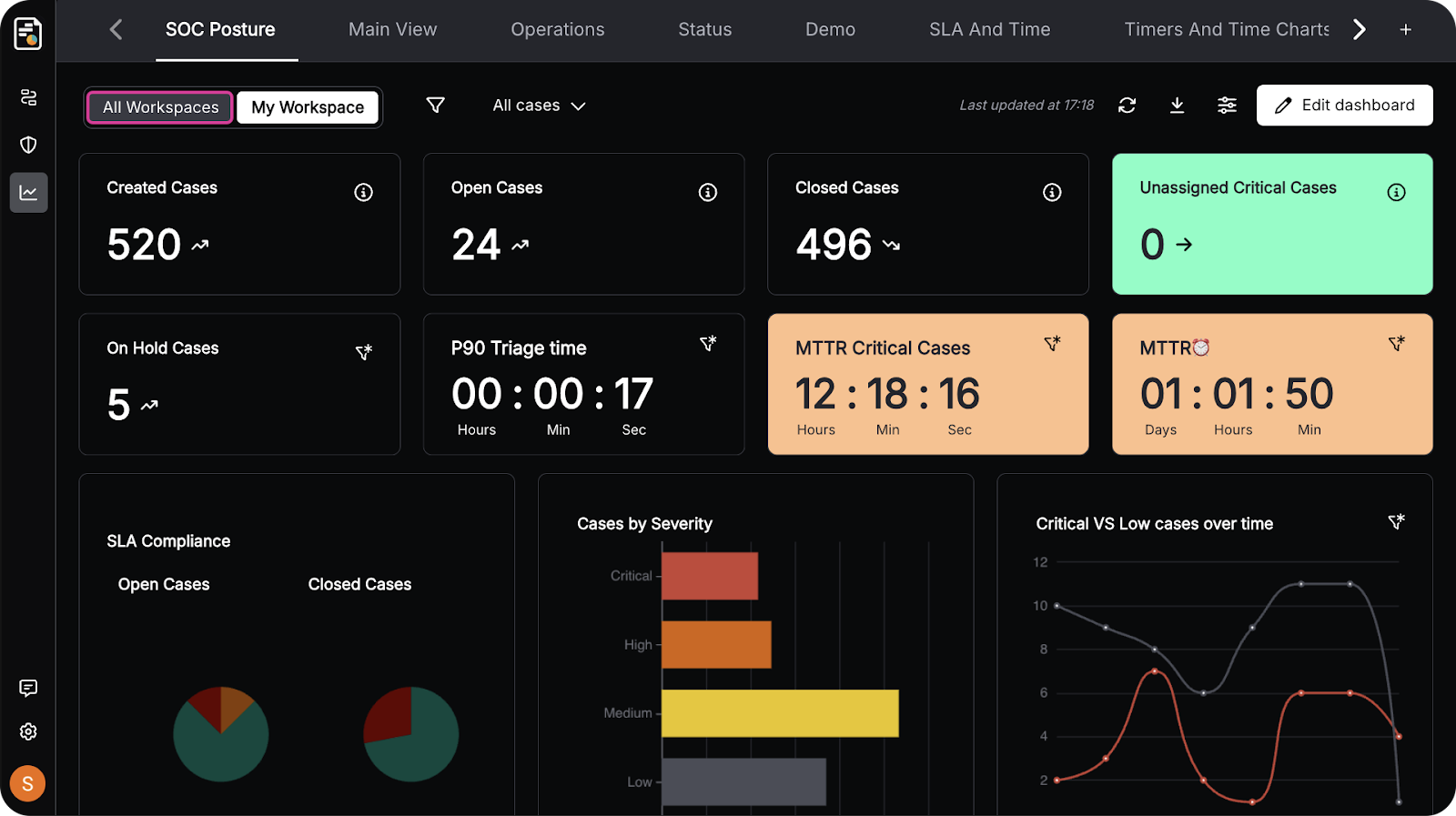
Cases Dashboards make it easy to build and customize real-time views of SOC posture and case operations across workspaces, so teams can track trends, drill into the cases behind every metric, and share insights and outcomes with stakeholders.

Track trends, explore the cases behind every metric, and share outcomes with stakeholders.

They’re built for the way SOCs actually work inside Torq HyperSOCTM: fast pivots, dynamic prioritization, and translating operational data into decisions. All without adding another reporting ritual.

Cases Dashboards are designed to sit at the center of day-to-day SOC operations, addressing the unique needs of different users:

  • Leaders use dashboards to understand posture, performance, and risk exposure at a glance.
  • SOC managers track throughput, workload distribution, and SLA health.
  • Analysts use dashboards as an investigation starting point, moving from patterns to the exact cases driving them.

This is not reporting for reporting’s sake. No one has time for that. Instead, this is up-to-date operational visibility that directly informs action.

Key Capabilities and Benefits of Cases Dashboards

Build Dashboards That Answer Your Questions — Fast

Cases Dashboards are built for customization without ceremony. You can take a question you care about (SLA risk, MTTR/MTTI/MTTT, workload balance, a noisy source, a spike in criticals), turn it into a visual view across cases, and adjust it as the SOC changes. 

Instead of digging through lists, you build a dashboard that makes the signal obvious: what’s trending, what’s stuck, and what needs attention. 

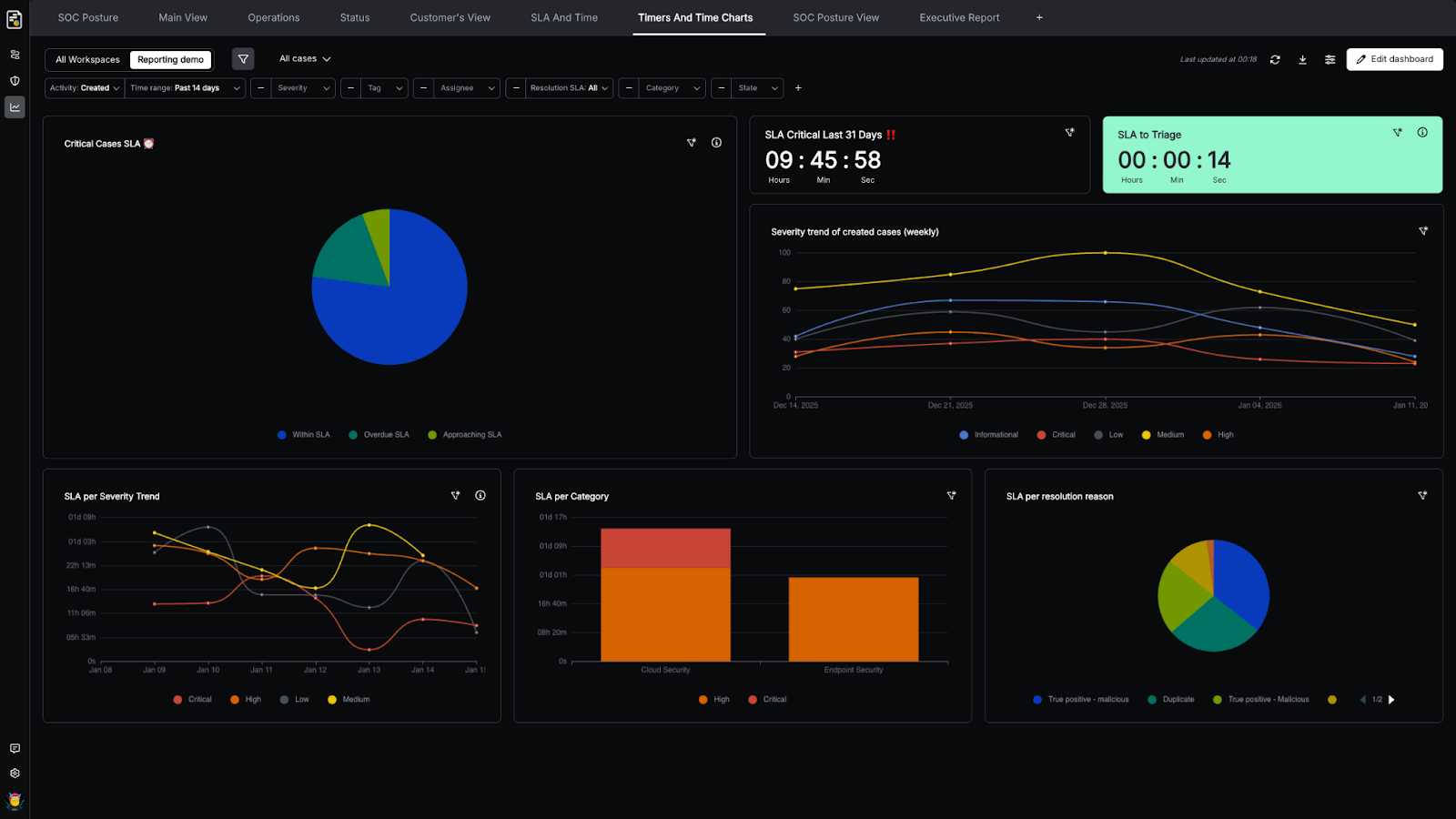
Create a custom dashboard widget that tracks cases exceeding SLA, organized by source

The same dashboard can support “right now” operations and longer-term analysis. Track case volume and severity mix, SLA compliance, throughput, and performance over time — then zoom in when something starts drifting.

This is where dashboards stop being “status” and become operational awareness: you spot the change early, before it becomes a fire drill.

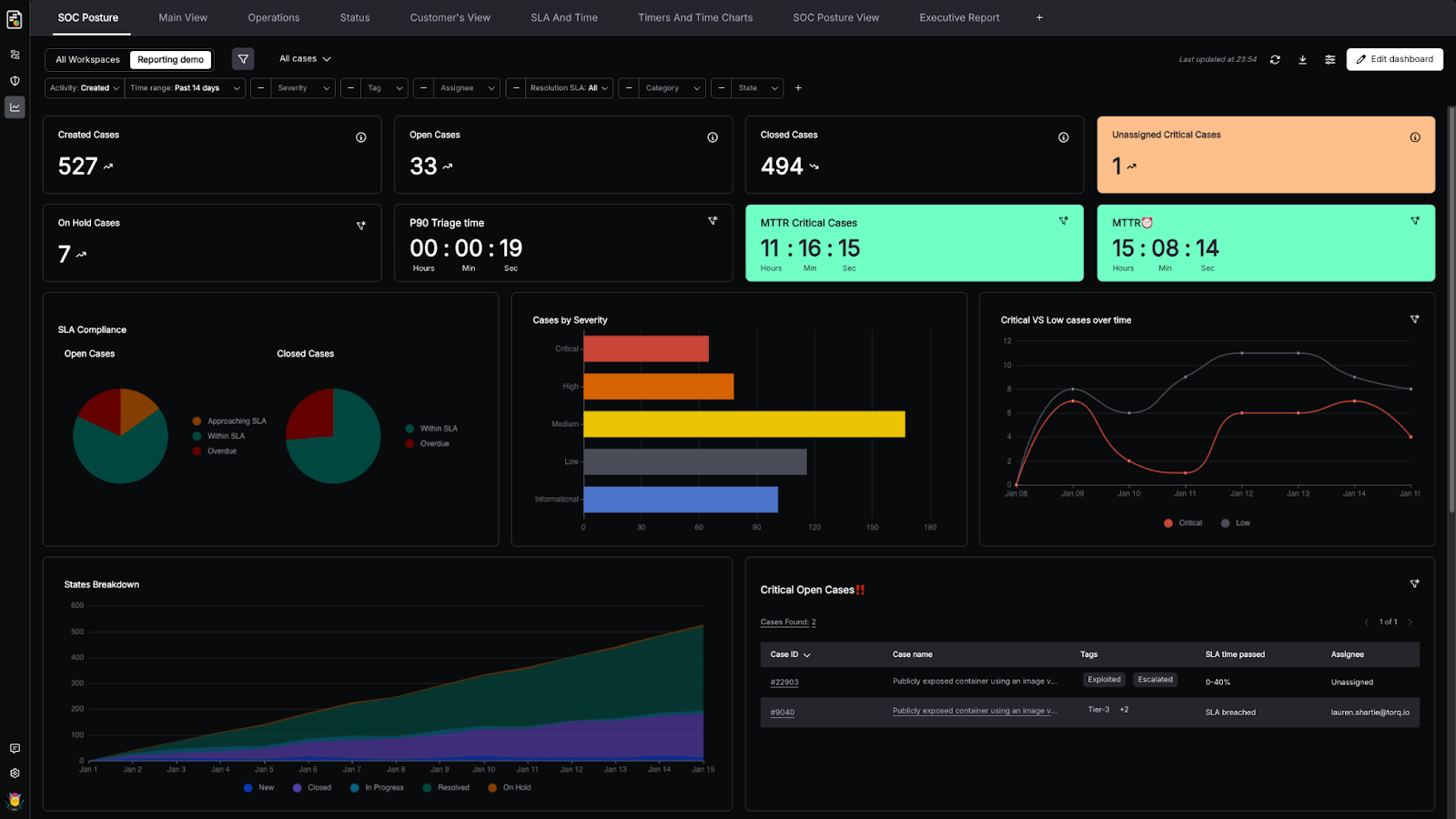
Torq Cases Dashboard showing trend widgets
Track case volume, severity mix, SLA compliance, and throughput in real time, then zoom in when something starts drifting.

Move from a Metric to the Cases Behind It

When a number looks off, you shouldn’t have to guess why. Cases Dashboards let you jump directly from a widget into the underlying cases that produced it: investigation and process follow-up are one click away. That’s what turns dashboards into a working tool: a spike isn’t just a spike — it’s a set of cases you can inspect and act upon.

Click any widget to see the cases behind the numbers — investigate and act without leaving the dashboard.

Start with the SOC Posture Template (Then Tailor It)

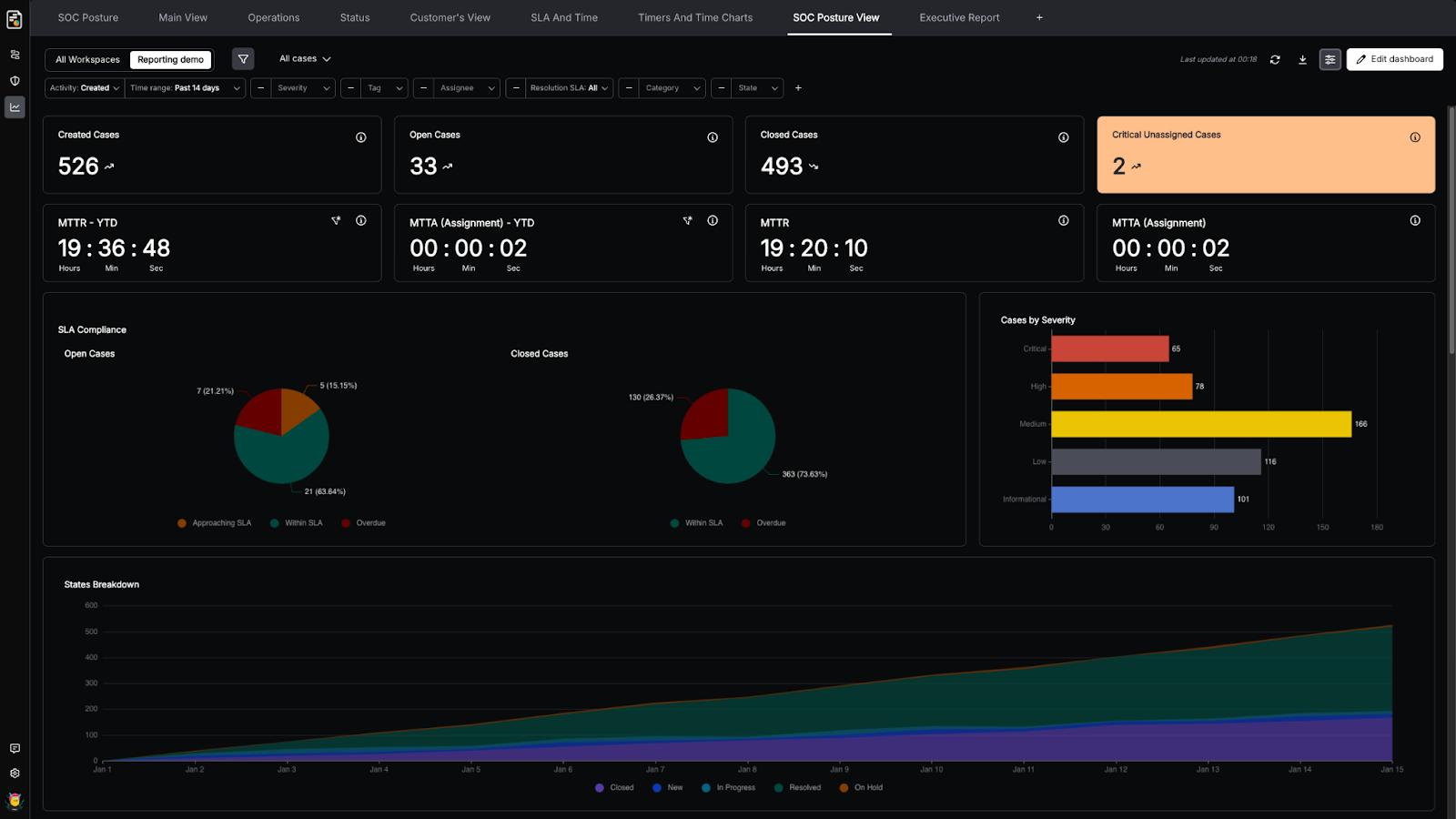
The SOC Posture Template gives you a head start on day one. Reuse it as is, or tailor versions for specific audiences, such as leadership, SecOps, a particular workspace, or a report for a business unit. You keep the common language, but each audience gets the view that fits their unique needs.

Tailor versions for leadership, SecOps, or specific business units.

Share the Story with Stakeholders

Dashboards are meant to be shared. When it’s time to update leadership, customers, or auditors, you can share a consistent view and point back to the same operational truth the SOC uses day to day. This means faster updates, with less friction and more alignment to the same data.

Cases Dashboards Customer Benefits

At its most basic distillation, Cases Dashboards deliver three practical outcomes:

  1. Less manual reporting work: Fewer exports, fewer screenshots, fewer “can you pull this number?” requests
  2. Faster operational decisions: Trends and risk are visible early which means quicker, better-informed decisions
  3. Clearer communication: A consistent view you can share internally or externally

How SOC Teams Use Cases Dashboards

Turn Cross-Case Data into Repeatable Answers with Widget Builder

The Widget Builder is where dashboards become specific to your SOC. You choose what you want to measure, how to break it down, and how to visualize it, so the same questions don’t have to be re-solved every week. You may even want to track the number of cases handled by AI or automation. The flexibility is yours.

  • Case count shows how many cases match your filters and groupings, so you can track volume, mix, and distribution across your case data.
  • Case events show what changed during a case lifecycle, so you can measure escalations, on-hold movements, and other transitions as they happened and assess your SOC health — not just what cases look like right now.
  • SLA timers show time-based performance using standard or custom SLAs. You can summarize performance using averages, medians, or long-tail-safe metrics like P90, then break it down by any dimension to understand where time is being spent.

You can group by one or more dimensions and choose the right visualization to see trends and breakdowns, for example, by SLA, category, assignee, tags, business unit, or any custom attribute. 

The following video shows how easy it is to create a dashboard widget that tracks the number of cases closed by our AI SOC Analyst, Socrates, over the last month, and categorizes them by resolution type (True Positive: Benign, Malicious, etc).

Create a widget that tracks cases closed by Socrates over the last month, categorized by resolution type

Operate Across Customers with Omni-View

For MSSPs and MDRs, the challenge is staying consistent across many customers without losing separation and control.

Omni-View lets you monitor posture and performance across workspaces in a single, convenient location, with cross-customer controls to keep visibility and access scoped appropriately. You can keep a reusable, board-ready view across tenants, then pivot to a specific customer when needed and tailor dashboards per customer.

One view across all your customers, with the controls to keep them separate.

Filter Live Dashboards and Drill into What Matters

In security operations, the goal is focus. Teams filter dashboards to the scope they care about — a team, a workspace, a case type, a severity band — and immediately see what’s changing.

When something looks particularly interesting, drill down from the metric to the underlying cases to take action. This keeps dashboards lightweight but actionable: spot the risk, click into the work, and move.

Filter dashboards by team, workspace, case type, or severity — then click any metric to drill into the underlying cases and take action.

Keep Dedicated Views for Each Audience

Teams can create dedicated dashboards for different outcomes — SOC Posture, Efficiency Report, SOC Operations, Compliance Report, or Executive Summary — each tuned to the audience and the decision it supports, and easy to share or export as a fixed snapshot when needed.

Instead of a single dashboard trying to serve everyone, senior leaders get a clear, board-friendly view, while the SOC focuses on operational details, all backed by the same live case data.

Get Started with Cases Dashboards

Cases Dashboards turn Torq HyperSOC case data into tailored, real-time operational visibility, which helps SOC teams track trends, understand posture, accelerate investigations, and communicate more clearly with stakeholders.

Torq is transforming SecOps for enterprises like Carvana, Valvoline, Virgin Atlantic, and PepsiCo. See how agentic AI and Hyperautomation can do the same for your team.

SEE TORQ IN ACTION

Ready to automate everything?

“Torq takes the vision that’s in your head and actually puts it on paper and into practice.”

Corey Kaemming, Senior Director of InfoSec

“Torq HyperSOC offers unprecedented protection and drives extraordinary efficiency for RSM and our customers.”

Todd Willoughby, Director

Compuquip logo in white

“Torq saves hundreds of hours a month on analysis. Alert fatigue is a thing of the past.”

Phillip Tarrant, SOC Technical Manager

Fiverr logo in black

“The only limit Torq has is people’s imaginations.”

Gai Hanochi, VP Business Technologies

Carvana logo in black

“Torq Agentic AI now handles 100% of Carvana’s Tier-1 security alerts.”

Dina Mathers, CISO

Riskified logo in white

“Torq has transformed efficiency for all five of my security teams and enabled them to focus on much more high-value strategic work.”

Yossi Yeshua, CISO

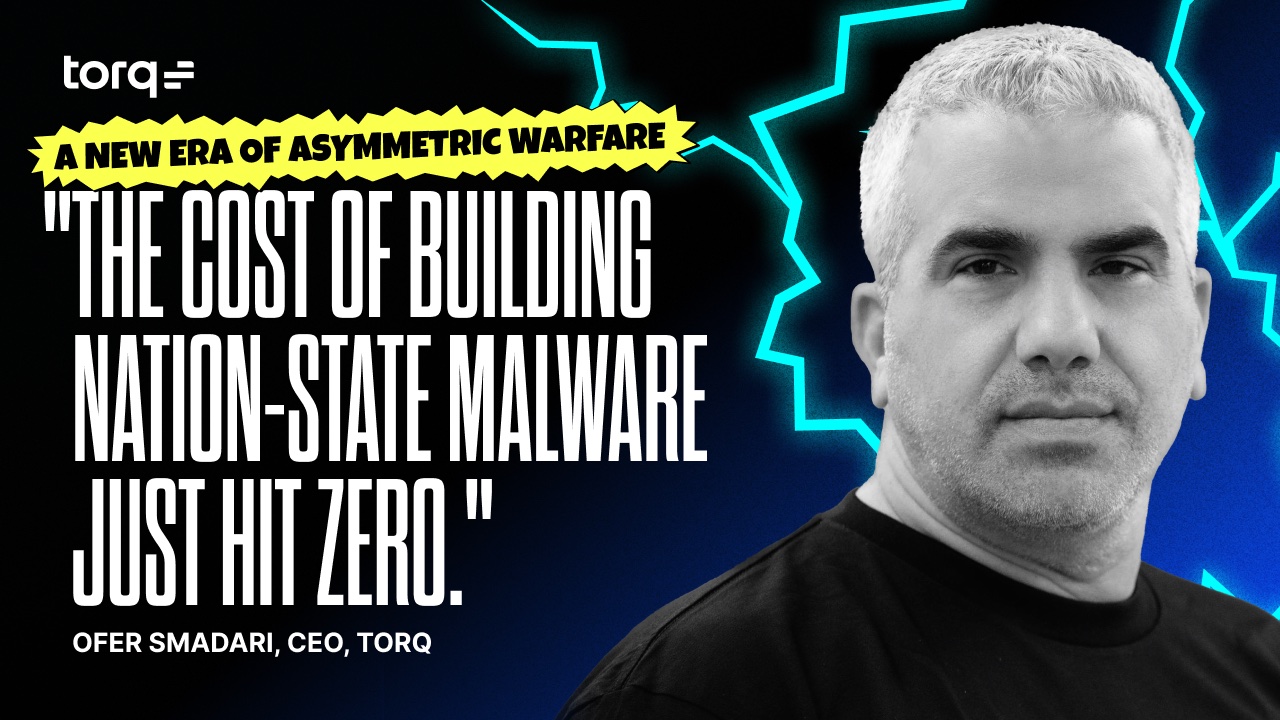
A New Era of Asymmetric Warfare: The Case for the Agentic SOC

Contents

Get a Personalized Demo

See how Torq harnesses AI in your SOC to detect, prioritize, and respond to threats faster.

Request a Demo

For the last decade, the cybersecurity industry has attempted to solve a technology problem with a human solution. We looked at the rising tide of alerts and the complexity of the threat landscape, and our answer was always “hire more people.” That approach has created a dangerous asymmetric warfare dynamic — one where attackers scale infinitely while defenders stay stuck in manual mode.

We recruited brilliant analysts and placed them in SOCs where we essentially forced them to act like robots. We asked them to stare at dashboards, copy-paste data between tools, run repetitive scripts, and manually close tickets. 

It didn’t work. It led to burnout, turnover, and missed threats. And as of this week, that strategy is not just failing, it is officially obsolete. 

You cannot fight machine speed with human speed.

Check Point Research recently published its findings on VoidLink, and it serves as a grim milestone for our industry.

We’ve seen AI-generated scripts before. We’ve seen attackers use LLMs to write better phishing emails. But VoidLink is different. This is one of the first known instances where AI was used to architect, build, and deploy an entire advanced malware framework — complete with rootkits, implants, and modular plugins.

The most terrifying metric from the research isn’t technical; it’s temporal. The researchers found that AI enabled a single actor to condense what used to be months of nation-state-level development into mere days.

The Economics of Cybercrime Have Flipped

This is a turning point. The barrier to entry for sophisticated, high-velocity attacks has collapsed.

In the past, building a complex malware framework required a well-funded team, significant time, and deep expertise. Today, the investment required to build sophisticated threats is dropping near zero.

When the cost of attack creates a floor of near-zero, the volume of attacks will naturally hit a ceiling of infinity. The incentive for attackers has never been higher because the risk and resource requirements have never been lower.

The Asymmetrical Warfare Gap

This creates a velocity gap that human teams can no longer bridge. We are now facing an asymmetry canyon:

  • The attackers are using AI to code, adapt, and scale attacks at machine speed.
  • The defenders are largely still waiting for a human analyst to wake up, read an alert, interpret the context, and manually run a playbook.

You can’t fight AI speed with human speed. If you try, you will lose every time. The “1-10-60” rule (1 minute to detect, 10 to investigate, 60 to remediate) is dead. In the age of VoidLink, 60 minutes is an eternity.

Enter the Agentic SOC

This reality is exactly why Torq raised our $140M Series D. We recognized that better automation wasn’t the answer. Automation is linear Iteration that follows a script. But AI-driven threats are dynamic. They don’t follow scripts.

We’re building the agentic SOC.

We’re moving the industry away from static, simple playbooks and toward autonomous AI Agents. These agents don’t just follow if/then logic. They possess the reasoning capabilities to investigate alerts, understand context, make decisions, and execute complex remediation autonomously.

We’re building a defense architecture where machines fight machines, freeing our human defenders to do what they do best: strategy, threat hunting, and high-level decision-making.

Machine-vs-Machine Defense: The Only Way to Win Asymmetric Warfare

The era of the Tier 1 analyst as a data-fetcher is over. We have to stop fighting the future with the past. The only way to survive asymmetric warfare in the VoidLink era is to fight fire with fire — or, more accurately, to counter autonomous threats with autonomous defense.

VoidLink is just the first wave of this new reality. And at Torq, we’re just getting started.

Asymmetric warfare demands an asymmetric response. The human-speed SOC can’t win against machine-speed threats — but the agentic SOC can. See how Torq is rewriting the rules of security operations.

SEE TORQ IN ACTION

Ready to automate everything?

“Torq takes the vision that’s in your head and actually puts it on paper and into practice.”

Corey Kaemming, Senior Director of InfoSec

“Torq HyperSOC offers unprecedented protection and drives extraordinary efficiency for RSM and our customers.”

Todd Willoughby, Director

Compuquip logo in white

“Torq saves hundreds of hours a month on analysis. Alert fatigue is a thing of the past.”

Phillip Tarrant, SOC Technical Manager

Fiverr logo in black

“The only limit Torq has is people’s imaginations.”

Gai Hanochi, VP Business Technologies

Carvana logo in black

“Torq Agentic AI now handles 100% of Carvana’s Tier-1 security alerts.”

Dina Mathers, CISO

Riskified logo in white

“Torq has transformed efficiency for all five of my security teams and enabled them to focus on much more high-value strategic work.”

Yossi Yeshua, CISO

10 AI SOC Benefits That Actually Transform Security Operations

Contents

Get a Personalized Demo

See how Torq harnesses AI in your SOC to detect, prioritize, and respond to threats faster.

Request a Demo

Your SOC is drowning. Industry estimates suggest that up to 60% of SOC analyst time is spent on Tier 1 triage, leaving less time for addressing real threats. According to Splunk’s State of Security 2025 report, 59% of security teams report being overwhelmed by too many alerts, and 55% waste precious hours chasing false positives. Analysts are burning out — 52% are considering leaving the field entirely due to stress.

Here’s the uncomfortable truth: legacy SOAR was supposed to fix this… but it didn’t. Instead, security teams got brittle playbooks, endless integration headaches, and automation that breaks every time the threat landscape shifts.

A true AI-driven SOC is fundamentally different. We’re not talking about slapping a chatbot on your existing tools or adding ML to triage. We’re talking about agentic insights, action, and automation which spans the entire incident lifecycle, from triage through remediation, that suppresses noise, prioritizes actual threats, and works alongside your staff. 

Here are the 10 AI SOC benefits driving that transformation.

What is an AI SOC?

Traditional SOCs run on manual labor. Analysts triage alerts one by one, pivot between disconnected consoles to gather context, and execute remediation scripts by hand. It’s slow, tedious, and doesn’t scale.

In an AI SOC, agentic AI and automation act as connective tissue across your entire security stack — autonomously ingesting alerts, investigating across tools, making decisions based on logic and continuous learning, and executing remediation at machine speed. Human analysts apply their judgment and expertise to prioritized threats, while also providing oversight to their agentic counterparts. Your team spends their time on work with  higher-value impact, instead of repetitive ditch-digging.

Top 10 AI SOC Benefits

1. Faster Threat Detection 

Hackers use automation. If your defense relies on a human reading a ticket, you have already lost.

AI processes telemetry in milliseconds. One of the primary AI SOC benefits is the ability to detect a behavioral anomaly (like an impossible travel login combined with a massive data download) and trigger an alert instantly, drastically reducing Mean Time to Detect (MTTD).

Torq’s AI SOC Analyst, Socrates, handles the full case lifecycle autonomously. It doesn’t just tell you something looks suspicious — it investigates, gathers evidence, takes containment actions, and documents everything. By day 90 of a Torq implementation, customers typically see 90% of Tier-1 alerts resolved end-to-end without human intervention.

2. Reduced Alert Fatigue 

The average SOC analyst is bombarded with thousands of alerts daily. This leads to burnout and decision fatigue, where real threats are ignored because they look like false positives.

The old approach was to tune your SIEM to suppress alerts and hope you don’t suppress the wrong ones. The AI SOC approach is smarter. Intelligent suppression reduces noise while retaining full evidence trails. When Torq suppresses an alert, it’s not deleting information; it’s clearing false positives, making informed decisions based on context and keeping the receipts in case you need them later.

AI acts as the ultimate filter. It autonomously triages low-fidelity alerts, correlates them, and closes the noise. It only wakes a human up for high-confidence, verified threats.

3. Machine-Speed Detection and Response

Here’s a number that should terrify you: the average legacy SOAR investigation takes hours. Sometimes days. Meanwhile, attackers move in minutes.

AI SOC benefits include collapsing that timeline dramatically. Torq’s multi-agent system deploys specialized AI Agents working in parallel — one analyzing network traffic, another checking identity logs, another correlating threat intelligence — all simultaneously. What used to take an analyst hours of manual pivoting happens in seconds.

Customers routinely achieve 60%+ MTTR reduction. One financial services organization went from day-long IAM investigations to three-minute resolutions. Not because they hired more analysts, but because AI handles the grunt work at machine speed.

4. Continuous Learning That Adapts

Static playbooks are the Achilles’ heel of legacy SOAR. You spend months building them, and they work… until the threat landscape shifts. Then you’re back to square one, manually updating brittle logic while attackers exploit the gaps.

True AI SOC platforms utilize adaptive reasoning rather than rigid rules. Torq learns from analyst feedback continuously. When an analyst corrects a decision or adds context to a case, that knowledge improves future automation.

This continuous learning means your SOC continuously improves. The AI evolves with threats automatically, adapting to new attack patterns without requiring your team to anticipate every possible scenario in advance.

5. Consistent Correlation Across Data Sources

78% of organizations are fighting with dispersed, disconnected tools. Every investigation requires manual pivoting between a dozen consoles. Critical context lives in silos that don’t talk to each other.

This fragmentation can be dangerous. Attackers exploit gaps between tools. A threat that appears benign in your SIEM may become obviously malicious when correlated with EDR telemetry, identity logs, and cloud activity.

AI SOC platforms excel at data fusion. Torq connects to 300+ tools out of the box — SIEM, EDR, cloud platforms, identity providers, ITSM, threat intelligence feeds — and correlates signals across all of them simultaneously.

Our multi-agent system doesn’t just aggregate data, it synthesizes insights. Disparate signals become coherent threat narratives. Analysts see the full picture, not fragments they have to piece together manually. Organizations with unified platforms achieve 59% faster incident response. When AI sees your entire environment at once, it catches what fragmented analysis misses.

6. Empowering Human Analysts 

AI isn’t coming for your analysts’ jobs. What AI should do is handle the repetitive work that’s driving your best people out of the industry. Remember that 52% considering leaving? They’re not burned out from threat hunting. They’re burned out from clicking through the same alert types hundreds of times a day.

AI SOC benefits include genuine analyst empowerment through three key capabilities:

  1. Orchestration coordinates actions across your entire tool stack automatically. No more manual pivoting between consoles or copy-pasting IOCs from one system to another.
  2. Enrichment adds critical context to every alert before an analyst sees it. Threat intelligence, asset information, user history, related incidents — all surfaced automatically.
  3. Guided response provides recommended actions based on similar past incidents and best practices. Analysts make decisions faster because they don’t have to start from scratch every time.

Valvoline‘s team saves six to seven hours per analyst each day with Torq. That time goes to threat hunting, detection engineering, and complex investigations that actually require human judgment.

The result isn’t fewer analysts. It’s analysts doing work that matters.

7. Proactive Threat Hunting

Traditional SOCs are reactive, waiting for the bell to ring. By the time you’re responding to alerts, attackers have already achieved initial access — quite likely more. The best SOCs don’t just respond to threats; they hunt them before alerts ever fire.

AI SOC platforms enable proactive threat hunting through predictive analytics. GenAI identifies patterns that precede known attack chains, flagging suspicious activity before it escalates into full-blown incidents.

Torq’s continuous learning means these predictive capabilities improve over time. The system learns what “normal” looks like in your environment, making deviations visible before attackers achieve their objectives.

8. Faster Root Cause and Impact Analysis

When an incident hits, seconds count: what’s happening, what’s the severity, and how do we contain it. These questions are soon followed by: how did this happen, how do we prevent it from happening again, and how do we recover?

With traditional investigation, analysts dig through logs, correlate timestamps, and build timelines manually. Sometimes days pass without any updates. Meanwhile, the scope of compromise remains unclear, and leadership wants answers.

AI SOC benefits include automated triage that answers these questions in minutes. Torq’s AI Agents automatically trace attack paths, identifying initial access vectors, lateral movement, and affected assets without manual log diving.

Impact analysis happens simultaneously. Which systems were touched? What data was accessed? Are there other indicators of the same attack elsewhere in the environment? AI correlates these signals across your entire infrastructure, automatically building comprehensive incident timelines.

9. Better Compliance and Reporting

Audit season shouldn’t mean weeks of manual evidence gathering. But for most SOCs, it does. Compliance requirements keep expanding. Every action needs documentation. Every decision needs justification. Every incident needs a complete paper trail.

AI SOC platforms make compliance automatic. Torq generates full audit trails for every automated action — what was detected, what was analyzed, what decisions were made, what actions were taken, and why. 

This transforms compliance from a burden into a byproduct. When an auditor asks for incident documentation, you don’t spend days reconstructing what happened. You pull the automatically generated reports and move on.

10. Cost Efficiency and Resource Optimization

Every dollar spent on manual processes is a dollar not spent on better tools, better training, or better talent.

AI SOC benefits include measurable, provable ROI — typically within 90 days:

  • Days 1-30: Initial automations live, alert noise dropping, quick wins demonstrated
  • Days 31-60: Core use cases automated, MTTR improvements measurable
  • Days 61-90: 90% Tier-1 automation coverage, 60%+ MTTR reduction, full ROI realized

Real-World Use Cases: AI SOC Benefits in Action

HWG Sababa: Years of Automation Built in Weeks

Global MSSP HWG Sababa‘s custom-coded automation couldn’t keep pace with their growing customer portfolio. After switching to Torq, they recreated years’ worth of automations in just weeks.

The transformation: 

  • Torq now automatically manages 55% of total monthly alert volume end-to-end
  • MTTI/MTTR improved by 95% for medium- and low-priority cases
  • 85% improvement for high-priority cases
  • Investigation and response now occur simultaneously in under eight minutes
  • SOC productivity nearly doubled without adding headcount

Beyond efficiency, HWG Sababa focused on analyst experience. As Gianmaria Castagna, their Supervisor of Automation, explains: “It’s annoying for SOC analysts to do the same tedious tasks every day, so we try to help them by automating the most time-consuming processes so they can focus more on the interesting analysis that requires high-level thought.”

The impact extends to their MSSP customers too. Torq enables HWG Sababa to perform containment and remediation actions on the customer side — capabilities they couldn’t deliver manually at scale. For large clients, automated actions save days of reclaimed time.

Marco Fattorelli, Head of Innovation, notes that Torq has become a competitive differentiator: “By accelerating our automations and responses, Torq Hyperautomation helps us stay ahead of the curve and the competition.”

Check Point: Solving a 40% Staffing Gap

Check Point‘s SOC was operating 30-40% below optimal staffing. Too many alerts, too few analysts — a recipe for missed threats. 

“If you have an alert that you’re not addressing, that alert might become an incident,” CISO Jonathan Fischbein said. “And that is something that, as the CISO, I don’t want.” Check Point chose Torq for its analyst-centric design and rapid deployment capabilities.

The transformation:

  • Deployed more than two dozen AI-driven playbooks within days of the POC
  • Torq now investigates, triages, and auto-remediates alerts without human intervention
  • High-priority incidents are intelligently routed for analyst oversight
  • Natural language processing enables the platform to ingest proprietary playbooks and cross-reference industry frameworks like MITRE ATT&CK during investigations

When human intervention is needed, the platform summarizes its workflows, presents relevant data, and offers next-step recommendations — helping analysts make faster, better-informed decisions.

True AI SOC Platform vs Legacy Approaches

CapabilityLegacy SOARAI-Enhanced ToolsTrue AI SOC Platform (Torq)
Detection speedRule-based, reactiveFaster triageReal-time pattern analysis
Alert filteringManual tuningBasic MLContextual intelligent filtering
False positive rateHighModerateLow with continuous learning
ScalabilityLimitedVariesCloud-native, unlimited
Data correlationManual pivotingPartialFull cross-platform fusion
Analyst experienceTool fatigueSome reliefOrchestration + enrichment
Threat huntingResource-prohibitiveLimitedAI-enabled proactive hunting
Root cause analysisManual investigationAssistedAutomated triage
ComplianceManual documentationPartialAuto-generated evidence
Time to ROI6-12 monthsVaries30-90 days

Is Your SOC Ready for AI?

Take a quick assessment:

  • Are analysts spending more time on tools than actual threats?
  • Do false positives consume over 50% of triage time?
  • Is MTTR measured in hours instead of minutes?
  • Are your tools disconnected, requiring manual data pivoting?
  • Has analyst turnover exceeded 20% in the past year?
  • Do investigations lack full context and evidence?
  • Does deploying new integrations take months?
  • Can you clearly measure automation ROI?

If you checked three or more boxes, your SOC needs an AI transformation.

Stop Chasing Alerts. Start Transforming Your SOC.

AI SOC benefits aren’t about incremental improvement. They’re about fundamental transformation — from reactive alert chasing to proactive security operations, from analyst burnout to analyst empowerment, from months-to-value to weeks-to-value.

Torq delivers full lifecycle automation, proven 90-day ROI, and enterprise-scale performance that works for teams of any size. Organizations across the Fortune 500 have already made the shift.

Ready to transform your security operations?

FAQs

What is an AI SOC?

An AI SOC utilizes agentic AI and automation to manage the entire security incident lifecycle autonomously — from triage through remediation — rather than just alert triage alone. True AI SOC platforms, like Torq, use adaptive reasoning that learns and evolves, replacing static playbooks with intelligent automation.

What's the difference between AI-enhanced tools and a true AI SOC platform?

AI-enhanced tools often limit automation to alert triage, then hand everything back to analysts. True AI SOC platforms like Torq streamline the entire incident lifecycle: triage, investigation, containment, remediation, and documentation, end-to-end.


What are the main AI SOC benefits?

The primary AI SOC benefits include faster threat prioritization (due to machine speed), reduced alert fatigue for analysts, lower false positive rates through improved context, and the ability to scale incident response operations without adding headcount.

How does AI improve threat detection?

AI improves threat detection by analyzing vast amounts of telemetry data to identify subtle patterns and anomalies that static correlation rules often miss. It can detect unknown unknowns by learning what normal looks like for your environment.

Can AI replace human SOC analysts?

No. AI replaces tasks, not roles. It automates the repetitive Tier-1 work (triage, data enrichment), allowing human analysts to focus on high-value, creative, and strategic security work.

What is the ROI of AI in SOC operations?

The ROI comes from two main areas: Risk reduction (stopping breaches faster, minimizing financial impact) and operational efficiency (allowing the existing team to handle 5x-10x more alerts without increasing headcount).

How quickly can we see ROI from an AI-driven SOC?

With Torq, customers see measurable impact within 30 days and achieve 90% tier-1 automation coverage with 60%+ MTTR reduction by day 90. Traditional SOAR deployments take 6-12 months to reach similar value.

SEE TORQ IN ACTION

Ready to automate everything?

“Torq takes the vision that’s in your head and actually puts it on paper and into practice.”

Corey Kaemming, Senior Director of InfoSec

“Torq HyperSOC offers unprecedented protection and drives extraordinary efficiency for RSM and our customers.”

Todd Willoughby, Director

Compuquip logo in white

“Torq saves hundreds of hours a month on analysis. Alert fatigue is a thing of the past.”

Phillip Tarrant, SOC Technical Manager

Fiverr logo in black

“The only limit Torq has is people’s imaginations.”

Gai Hanochi, VP Business Technologies

Carvana logo in black

“Torq Agentic AI now handles 100% of Carvana’s Tier-1 security alerts.”

Dina Mathers, CISO

Riskified logo in white

“Torq has transformed efficiency for all five of my security teams and enabled them to focus on much more high-value strategic work.”

Yossi Yeshua, CISO

The Week Torq Became a Unicorn — And What It Means for the Future of SecOps

Contents

Get a Personalized Demo

See how Torq harnesses AI in your SOC to detect, prioritize, and respond to threats faster.

Request a Demo

$140 million Series D. $1.2 billion valuation. A Nasdaq takeover. Trevor loose in Manhattan.

It’s been a week.

From Bloomberg breaking the news to our Torq skeleton on screen through Times Square, Torq’s unicorn moment played out across every major business and cybersecurity outlet — and a few NYC sidewalks. But beyond the headlines (and the chaos), the coverage revealed something bigger: the market has officially declared that the AI SOC is the future of security operations.

Here’s the full recap.

The Headlines

Bloomberg kicked off the week with an exclusive, and the coverage snowballed from there. Over 100 global media placements later, the message was clear: the AI SOC era has arrived, and Torq is leading it. 

Bloomberg: “The Israeli cybersecurity startup Torq is planning to announce Sunday that it has closed a $140 million funding round, raising its valuation to $1.2 billion.”

Forbes: “As new entrants crowd into the space with ambitious roadmaps and evolving terminology, Torq increasingly functions as the reference point others are measured against. In that sense, Torq is more or less the de facto leader of the AI SOC space.

Reuters: “This funding accelerates our mission to define and dominate the AI SOC market,” said Ofer Smadari, CEO and co-founder, Torq.”

SiliconANGLE: “Rather than using simple scripted playbooks that run the same steps every time, Torq uses AI and multi-agent systems that can adapt to changing threat contexts, triage alerts, enrich data with context and decide on next actions autonomously.”

TechRepublic: “‘Our agents are now deeply embedded in the SOCs of Fortune 500 leaders like Marriott, PepsiCo, Procter & Gamble, Siemens, Uber, and Virgin Atlantic. They are running millions of agentic security actions every single day — handling everything from complex investigations to rapid response,’ said Ofer Smadari, CEO & Co-Founder, Torq.”

SecurityWeek: “‘Torq is redefining security operations. They’ve fused automation and human judgment into a new AI SOC Platform built for asymmetric threats and real-world scale,’ Merlin Ventures managing partner Shay Michel said.”

Unicorn status: official. 🦄

Read the official press release >

Read Ofer’s take on what this means for the AI SOC era >

Let’s Hear it For New York…

While the press was filing stories, Torq took over Manhattan.

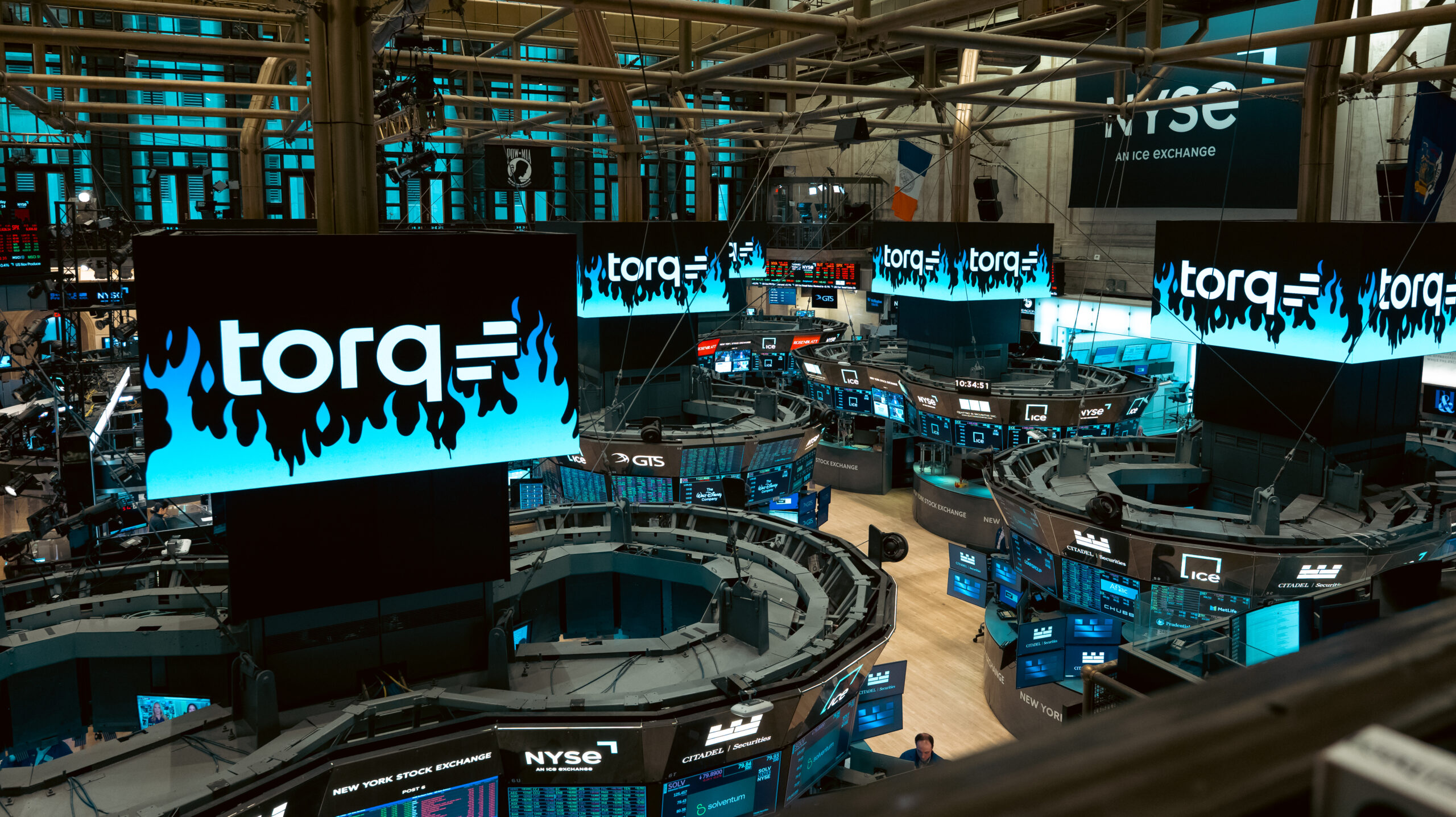
The Nasdaq Tower: Yes, we put skeletons and lasers on the  Nasdaq marquee in Times Square. 

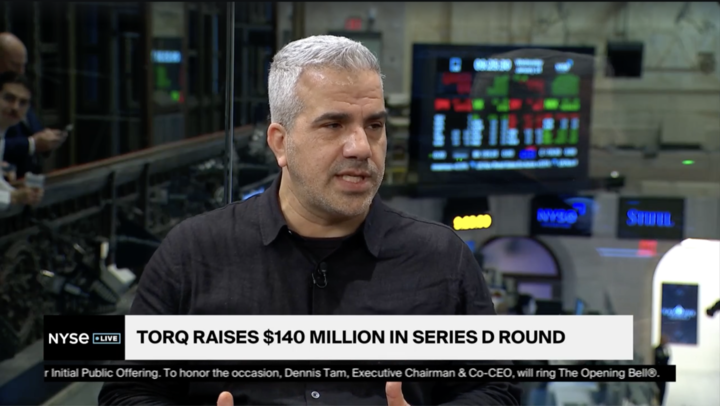
The New York Stock Exchange: Ofer sat down with NYSE Live to talk about Torq’s momentum. 

  • On the competition: “We’re fighting big competitors — and we’re winning almost 100% of those.” 
  • On the market: “$40 billion today, $100 billion in five years. We want to take as much as possible out of it.” 
  • On federal expansion: “We have a huge pipeline in the federal market. The need from federal agencies is huge.” 

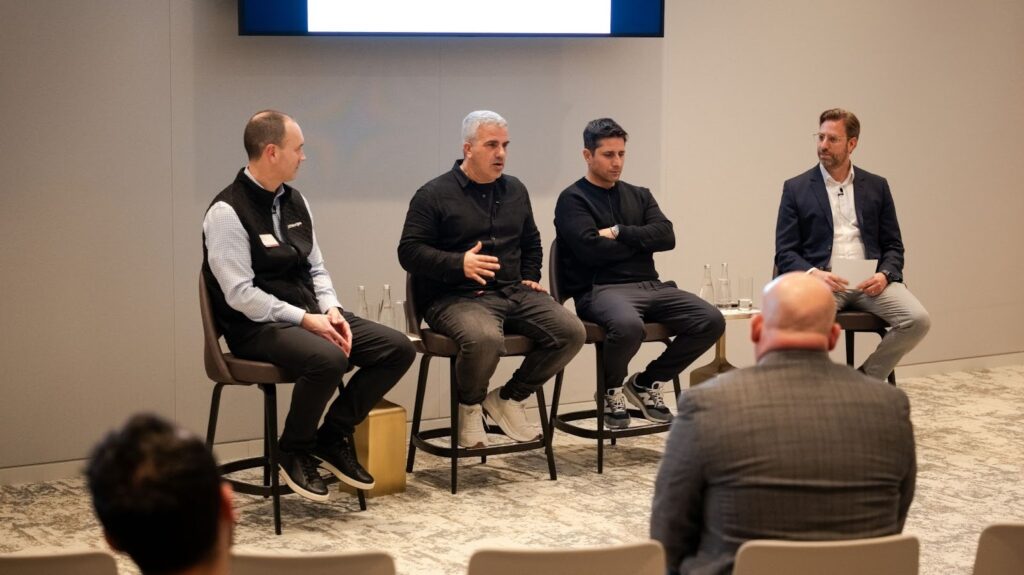
J.P. Morgan HQ: CEO Smadari and Merlin Ventures Managing Partner Shay Michel joined a panel at J.P. Morgan headquarters to discuss the future of AI in the SOC. 

The Series D Party: You don’t hit $1.2B valuation without celebrating. The Torq team and our partners, Evolution Equity Partners, Notable Capital, Bessemer Venture Partners, Insight Partners, and Greenfield Partners, gathered in NYC to mark the milestone.

Trevor’s NYC Adventure: Trevor, our media intern, also made the trip to New York — unauthorized and unapproved by HR. Seems like he had fun.

What’s Next For Torq

This funding accelerates three priorities:

Scaling the AI SOC.More integrations. Deeper automation. Expanded multi-agent capabilities. We’re building the infrastructure that lets security teams do more without adding headcount.

U.S. Federal market expansion. With Merlin Ventures as a partner, we’re accelerating into federal and public sector markets — bringing autonomous security operations to the agencies protecting critical infrastructure.

Growing the Torq team. We’re hiring 200+ people in 2026 across engineering, go-to-market, and customer success. If you want to build the future of security operations, join us.

This is Just the Beginning

This week validated what we’ve been building since 2020: a fundamentally different approach to security operations, built on agentic AI and Hyperautomation, and designed for enterprise scale.

The AI SOC isn’t coming. It’s here. And Torq is just getting started.

🔥 LFG.

SEE TORQ IN ACTION

Ready to automate everything?

“Torq takes the vision that’s in your head and actually puts it on paper and into practice.”

Corey Kaemming, Senior Director of InfoSec

“Torq HyperSOC offers unprecedented protection and drives extraordinary efficiency for RSM and our customers.”

Todd Willoughby, Director

Compuquip logo in white

“Torq saves hundreds of hours a month on analysis. Alert fatigue is a thing of the past.”

Phillip Tarrant, SOC Technical Manager

Fiverr logo in black

“The only limit Torq has is people’s imaginations.”

Gai Hanochi, VP Business Technologies

Carvana logo in black

“Torq Agentic AI now handles 100% of Carvana’s Tier-1 security alerts.”

Dina Mathers, CISO

Riskified logo in white

“Torq has transformed efficiency for all five of my security teams and enabled them to focus on much more high-value strategic work.”

Yossi Yeshua, CISO

Alert Fatigue Is Killing Your SOC. Here’s What Actually Works in 2026.

Contents

Get a Personalized Demo

See how Torq harnesses AI in your SOC to detect, prioritize, and respond to threats faster.

Request a Demo

Your SOC received 10,000 alerts yesterday. How many were real threats?

Most SOC teams operate in a constant state of triage. Alerts pour in from dozens of tools, each one demanding attention, each one potentially critical. The reality? Your analysts are making high-stakes decisions about which alerts to investigate based on gut instinct and whatever time they have left in their shift.

This approach worked when SOCs dealt with hundreds of alerts per day. It’s completely unsustainable at 10,000+.

The math is brutal: 59% of leaders report too many alerts as their main source of inefficiency. Your team is burning cognitive energy on noise while sophisticated threats exploit the chaos. Attackers know this. They’re counting on it.

Something has to change. In 2026, it finally is.

The Alert Fatigue Crisis: Why Traditional Approaches Failed

Alert fatigue isn’t about volume alone. It’s about the cognitive load of constantly context-switching between tools, the frustration of investigating the same false positives repeatedly, and the pressure of knowing a missed alert could mean catastrophe.

Research shows that 47% of analysts point to alerting issues as the most common source of inefficiency in the SOC — work that’s repetitive, draining, and prone to human error. When you’re reviewing your 8,000th alert of the day, even critical indicators start to blur together.

The psychological toll is staggering. Analyst burnout rates hit record highs in 2025, with the average analyst only staying in the role 3-5 years

The consequences compound. High turnover means institutional knowledge walks out the door. New analysts take months to ramp up, and meanwhile, attackers keep evolving, and alert volumes keep climbing.

Traditional solutions haven’t solved this. Adding more analysts just distributes the misery. Tuning SIEM rules creates blind spots. Legacy SOAR promised automation but delivered brittle playbooks that break constantly.

The problem isn’t effort. It’s architecture. Modern cybersecurity alert management requires a fundamentally different approach.

What’s Changed: The Rise of Agentic AI in Alert Management

The 2026 SOC looks nothing like its predecessors. 

From rule-based to reasoning-based. Traditional alert management relied on static rules: if X happens, do Y. But threats don’t follow predictable patterns. Agentic AI uses adaptive reasoning to evaluate alerts in context, making decisions based on learning rather than rigid logic.

From triage-only to end-to-end. Legacy tools automated the easiest part — sorting alerts into buckets. Then they handed everything back to analysts. Modern AI SOC platforms handle the full lifecycle: detection, triage, investigation, containment, and remediation. Autonomously.

From single-tool to cross-environment. Attacks pivot across email, endpoint, cloud, and identity. Effective cybersecurity alert management requires correlating signals across your entire stack simultaneously — something humans can’t do at scale, but multi-agent systems can.

From black-box to explainable. Early AI security tools made decisions nobody could understand or trust. Today’s platforms show their work. Every action is logged, auditable, and reversible. Analysts can see exactly why the AI made each decision.

How AI-Powered Alert Management Actually Works

The best way to understand modern alert management is to follow an alert through the system.

Step 1: Intelligent Ingestion

An alert fires from your SIEM: suspicious login from an unusual location. In a traditional SOC, this joins a queue of hundreds waiting for human review.

With Torq, the alert is immediately ingested and enriched. The system pulls context automatically: the user’s normal login patterns, endpoint health, recent authentication history, and threat intelligence on the source IP.

Step 2: Automated Investigation

Torq’s Multi-Agent System deploys specialized AI Agents to investigate in parallel. One checks identity logs. Another queries the endpoint. Another correlates with recent phishing attempts targeting this user. All simultaneously.

What would take an analyst 30-45 minutes of manual pivoting happens in seconds.

Step 3: Contextual Decision-Making

The AI evaluates the evidence: This user normally logs in from the US. The login came from Eastern Europe. But the user also submitted a travel request last week for a conference in Prague. The endpoint shows no signs of compromise. Recent MFA challenge was successful.

Verdict: legitimate travel, not a threat. The alert is suppressed with full evidence retained.

Step 4: Autonomous Action or Escalation

For confirmed threats, the AI takes immediate containment action — isolating endpoints, revoking sessions, blocking IPs — all within seconds. For ambiguous cases, it escalates to analysts with a complete investigation summary and recommended next steps.

The analyst doesn’t start from scratch. They review the AI’s work and make the final call.

Step 5: Continuous Learning

When analysts correct or confirm AI decisions, the system learns. Accuracy improves over time. The AI adapts to your specific environment, your risk tolerance, and your organizational patterns.

This is what modern cybersecurity alert management looks like. Not humans racing against an endless queue, but humans and AI working together, each doing what they do best.

8 Criteria for Choosing the Right Alert Management Solution

Not all SOC automation is created equal. When evaluating alert management platforms for 2026, demand answers to these questions:

  1. Does it eliminate, not just reduce, false positives? Look for solutions that achieve false positive reduction rates above 90%. Anything less still leaves analysts buried.
  2. Can it handle your alert volume today and tomorrow? Scalability isn’t optional. The system should process alerts at machine speed regardless of volume spikes.
  3. Does it integrate natively with your existing stack? Pre-built integrations with your SIEM, EDR, cloud security tools, and ticketing systems are non-negotiable. Custom API work shouldn’t be required.
  4. How transparent is the decision-making process? Black box AI erodes trust. Choose platforms that explain why alerts were prioritized, escalated, or dismissed.
  5. Can analysts teach it what matters to your organization? The best systems learn from feedback. Every analyst decision should improve the model.
  6. Does it automate response, not just detection? Alert management should trigger automated containment, isolation, or remediation for known threat patterns.
  7. What’s the time to value? Deployment shouldn’t take months. Modern platforms deliver measurable impact within weeks.
  8. Can it prove ROI? Demand concrete metrics: hours saved, MTTR improved, and analyst capacity freed up.

How AI SOC Platforms Actually Solve Alert Overload

The shift from traditional SOAR to AI SOC platforms represents a fundamental change in how organizations manage security operations. Instead of forcing analysts to adapt to rigid playbooks, modern solutions like Torq adapt to how your team actually works.

Here’s what sets AI SOC platforms apart:

Agentic AI that reasons, not just executes: Traditional automation follows if-then logic. AI agents reason through problems. When an alert fires, Torq’s AI Agents don’t just check a playbook — they investigate, correlate signals across your entire stack, and determine what the alert actually means for your specific environment. An authentication failure from a known test account gets automatically dismissed. That same failure from a privileged user at 3am triggers immediate escalation with full context.

Multi-agent systems that work together: Torq’s Multi-Agent System deploys specialized AI Agents that collaborate autonomously. A Case Management Agent handles triage and prioritization. Enrichment Agents gather context from threat intelligence, asset inventories, and user behavior analytics. Investigation Agents perform automated analysis. Response Agents execute containment. All working in concert, without human intervention, at machine speed.

Context that evolves with your environment: Static rules become obsolete the moment threats evolve. Torq Hyperautomation™ continuously adapts to analyst decisions, threat intelligence, and your environment’s behavior patterns. The system gets smarter every day, automatically adjusting prioritization as your threat landscape shifts.

Cloud-native speed and scale: Legacy SOAR platforms can’t keep pace with cloud-speed threats. Torq’s cloud-native architecture processes alerts at machine speed regardless of volume spikes. When your environment generates 50,000 alerts during a campaign, Torq scales instantly — no performance degradation, no missed threats.

Real Results: Organizations Transforming Alert Management

Agoda: End-to-End Phishing Automation

Online travel platform Agoda needed to scale security operations with a lean, distributed team during a major cloud migration.

With Torq, employees report suspicious emails with one click. The platform automatically enriches data, analyzes attachments, classifies threats with AI, and responds to users, all without human intervention. 

“Torq completely removes manual intervention for phishing,” says Laksh Gudipaty, Security Incident Response Manager at Agoda. “It’s now end-to-end automated on a 24×7 basis.”

Results: 47% reduction in missed SLOs for cloud security and incident reports generated in 30 minutes instead of 7 hours.

Valvoline: 7 Analyst Hours Saved Daily

Valvoline‘s security team was cut in half during a divestiture. Their legacy SOAR was code-heavy, and only a few people could maintain it.

Torq transformed their phishing workflows — previously consuming up to 12 hours daily — into fully automated processes. An integration their legacy SOAR couldn’t complete after hundreds of hours was running in under a week.

“My team is in love with the product,” says Corey Kaemming, Senior Director of InfoSec at Valvoline. “Sometimes, I have to tell them to stop having so much fun.”

Results: 6-7 analyst hours saved per day and operational ROI within 48 hours.

Global Money Transfer Platform: Day-Long Tasks in 3 Minutes

This financial services company was drowning in manual alert management. Their in-house tool couldn’t scale with alert volumes or integrate with their security stack.

Torq was implemented in days, not the months their previous system required. The vast majority of alerts are now automatically identified, analyzed, and remediated.

Results: 30% time savings across the security team and IAM tasks reduced from a full day to 3 minutes.

Your 90-Day Roadmap to Autonomous Alert Management

Organizations successfully transforming their alert management with Torq follow this proven 90 day approach.

Month 1: Foundation Building 

In the first 30 days, the focus is on standing up the platform, connecting your stack, and shipping quick wins. Guided by a dedicated Torq team, your SOC enables SSO and role mapping, lights up core integrations like M365/Defender, Okta/Entra, CrowdStrike, Slack, Jira, and AWS, and launches the first workflows — phishing triage, EDR alert handling, or cloud misconfiguration detection.

Your builders are trained on workflow design, testing, and debugging. By the end of the first month, automations are live, Tier-1 alert noise is already dropping, and analysts are reclaiming hours once lost to swivel-chair triage.

What to Measure:

  • First workflows deployed and delivering value
  • Tier-1 analyst workload beginning to decline
  • Platform familiarity achieved across the builder team
  • Baseline MTTR and alert volumes documented

Month 2: Process Optimization 

The next 30 days focus on scaling and simplifying. A second wave of workflows expands coverage into IAM offboarding, IOC enrichment, login anomaly detection, and user behavior signals. Socrates, Torq’s AI SOC Analyst, is deployed to handle Tier-1 triage, enrichment, and case summaries.

Teams tune thresholds, implement deduplication and correlation rules, and adopt modular subflows and templates to accelerate workflow reuse. Automation KPIs like MTTR, suppression rate, and analyst touches per case are established to measure impact.

What to Measure:

  • Automation coverage tracking (percentage of Tier-1 alerts handled end-to-end)
  • Suppression rate (false positives automatically identified and closed)
  • Builder teams creating workflows independently
  • Alert fatigue reduced through smarter case thresholds

Month 3: Full Autonomy 

By the end of three months, your SOC begins operating as an autonomous system with human-in-the-loop guardrails. Socrates orchestrates the entire case management lifecycle from ingestion through enrichment, correlation, decision, response, and documentation. Analysts only step in for escalated incidents.

Standard operating procedures and runbooks are finalized, intake and closure criteria are standardized, and before-and-after benchmarking is completed to prepare for the first quarterly business review.

What to Measure:

  • Up to 90% of Tier-1 alerts automated end-to-end
  • MTTR drops by 60%+ on core use cases
  • Analyst touches per case approaching zero for Tier-1 incidents
  • Analysts shift from reactive case handling to proactive oversight and threat hunting
  • Tool consolidation savings documented (legacy SOAR licenses retired)

The Future of Alert Management Is Here

Cybersecurity alert management has been broken for years. The answer was never more analysts, more tools, or more rules. It was a fundamental shift in how alerts get processed — from human-speed to machine-speed, from manual triage to autonomous resolution, from reactive firefighting to proactive defense.

That shift is happening now. Organizations running AI SOC platforms are achieving what seemed impossible just two years ago: 95%+ Tier 1 automation, 60%+ MTTR reduction, and analysts who actually want to stay in their jobs.

The technology exists. The results are proven. The only question is how long you’ll wait while your competitors make the leap.

Torq is the enterprise-grade autonomous SecOps platform that combines adaptive agentic insights and automation to triage, investigate, and remediate your most critical threats. The platform streamlines every step from alert through fix, working alongside your SecOps staff to transform overwhelming alert volumes into manageable, prioritized action.

The future of security operations is autonomous. The platform is Torq. The timeline is 90 days.

Get the 90-Day Roadmap to see exactly how Torq customers achieve SOC autonomy in three months.

FAQs

What is alert fatigue in cybersecurity?

Alert fatigue occurs when SOC analysts become desensitized to security alerts due to high volumes and frequent false positives, leading to missed threats and analyst burnout.

How does AI improve alert management?

AI-powered systems use agentic reasoning to automatically classify, prioritize, enrich, and investigate alerts at machine speed, dramatically reducing false positives while accelerating response to genuine threats.

What's the difference between traditional SOAR and AI-powered alert management?

Traditional SOAR relies on static playbooks and rule-based automation. AI-powered platforms use adaptive reasoning that learns from context, evolves with threats, and handles complex scenarios without predefined rules.

How quickly can organizations see ROI from automated alert management?

Leading platforms deliver measurable impact within 2-4 weeks, with most organizations achieving 70%+ false positive reduction and significant MTTI improvements in the first 90 days.

Can small security teams benefit from AI-powered alert management?

Absolutely. AI-powered automation is a force multiplier for lean teams, enabling 2-3 analysts to manage alert volumes that would typically require 10+ people using traditional methods.

SEE TORQ IN ACTION

Ready to automate everything?

“Torq takes the vision that’s in your head and actually puts it on paper and into practice.”

Corey Kaemming, Senior Director of InfoSec

“Torq HyperSOC offers unprecedented protection and drives extraordinary efficiency for RSM and our customers.”

Todd Willoughby, Director

Compuquip logo in white

“Torq saves hundreds of hours a month on analysis. Alert fatigue is a thing of the past.”

Phillip Tarrant, SOC Technical Manager

Fiverr logo in black

“The only limit Torq has is people’s imaginations.”

Gai Hanochi, VP Business Technologies

Carvana logo in black

“Torq Agentic AI now handles 100% of Carvana’s Tier-1 security alerts.”

Dina Mathers, CISO

Riskified logo in white

“Torq has transformed efficiency for all five of my security teams and enabled them to focus on much more high-value strategic work.”

Yossi Yeshua, CISO

Best AI SOC Platforms for 2026: ​​How to Choose the Right One

Contents

Get a Personalized Demo

See how Torq harnesses AI in your SOC to detect, prioritize, and respond to threats faster.

Request a Demo

If you are evaluating security platforms in 2026 based on which one has the best chatbot or can write a slightly better Python script for you, you’re fighting the last war. 

Attackers are already using AI to scale their operations with speed and precision. If your “AI SOC platform” is just a co-pilot that summarizes tickets while humans do all the work, you’re behind.

The modern SOC is shifting from automated (static playbooks and scripts) to autonomous — an AI SOC platform powered by agentic AI that can reason, plan, and act within explicit guardrails.

We break down what the best AI SOC platforms actually need to deliver, how leading architectures differ, and why platform choice now is really an architecture decision.

What Sets Top AI SOC Platform Architectures Apart in 2026

To operate at machine speed, defend against AI-enhanced adversaries, and eliminate manual work, a next-generation AI SOC platform must deliver five core capabilities. These capabilities map directly to where legacy systems fail: data sprawl, slow investigations, brittle automation, and siloed case management.

1. A Unified Operational Data Layer

Legacy architectures assumed that every alert and log file had to be funneled into a SIEM for analysis, creating a massive data bottleneck and a single point of failure. As cybersecurity analyst Francis Odum noted at Torq’s SKO 2025: “Legacy SOAR assumed everything starts in the SIEM. Now, teams connect automation directly to EDR, email, and identity systems”.

A true AI SOC platform must deliver:

  • SIEM-agnostic connectivity: The platform should consume alerts and logs from any SIEM (Splunk, Sentinel, QRadar, Sumo Logic, Elastic) without forcing data migration or lock-in.
  • Native integrations across identity, cloud, SaaS, EDR, NDR, and email security: This includes Okta, Entra ID, AWS/GCP/Azure, CrowdStrike, SentinelOne, Proofpoint, Zscaler, Netskope, and more.
  • Decentralized processing: Instead of aggregating data into a centralized point before taking action, the platform integrates directly with data lakes and tools to create a unified control plane.

When SOC tools and data are disconnected, SOCs suffer higher mean time to respond (MTTR), more context switching, and lower detection quality. The best AI SOC platforms treat unified, real-time telemetry as a non-negotiable foundation.

2. Autonomous Investigation and Response 

In a next-generation SOC, analysts should never have to manually:

  • Enrich alerts
  • Pivot across six browser tabs
  • Copy and paste logs
  • Correlate IPs, hashes, and identities
  • Ask users “Was this you?”
  • Check cloud exposure severity
  • Determine whether an alert is real or noise

A true AI SOC platform takes over these tasks and autonomously executes:

  • Identity enrichment (such as roles, MFA events, privileges, and historic activity)
  • Endpoint posture and behavioral indicators
  • SaaS OAuth scope analysis
  • Network and cloud asset risk context
  • Threat intelligence lookups
  • Log retrieval, summarization, and normalization
  • Evidence collection for case management

This shift significantly improves critical metrics like MTTD and MTTR by removing the latency of manual investigation.

3. Agentic AI Capabilities 

The best AI SOC platforms must include agentic AI, which is AI that can reason, plan, adapt, and take actions within defined guardrails. In a fully realized AI-native SOC, a multi-agent system (MAS) can handle 90%+ of Tier-1 security analysts’ tasks.

Agentic AI enables:

  • Goal-driven planning: Instead of executing a static playbook, the AI determines how to reach an outcome (e.g., “Validate whether this login is malicious”).
  • Dynamic tool use: AI selects which systems to query — SIEM, identity provider, EDR, cloud APIs — based on context.
  • Contextual memory: The AI remembers case details, user signals, prior actions, and earlier investigations.
  • Independent decision-making: Within guardrails, AI decides:
    • Is the alert true or false?
    • Should a user be challenged?
    • Is the cloud resource exposed?
    • Which action mitigates the threat fastest?

The platform must ensure this happens safely, predictably, and auditably — not as “black box” reasoning.

4. Native Case Management 

Traditional ticketing systems were never designed for security investigations. They fragment context, slow down collaboration, and give AI very little structure to reason over.

A true AI SOC platform needs native case management designed specifically for security operations with:

  • Autonomous case generation: Cases should be created automatically from alerts based on severity, correlation, identity risk, or cloud exposure.
  • AI-driven prioritization: AI analyzes blast radius, business criticality, and user behavior to determine which cases matter most.
  • Integrated collaboration: Slack, Teams, email, and ticketing systems (like Jira or ServiceNow) are synced without forcing analysts to leave the AI SOC console.
  • Full evidence timeline: Every alert, enrichment, AI decision, human approval, and automated action must be fully logged.
  • Audit-ready transparency: Compliance and cyber insurance increasingly require AI explainability. Native case management makes this possible.

5. Open Ecosystem + Model Context Protocol (MCP)

Flexibility is the difference between a scalable AI SOC platform and a platform that traps you in inefficiencies.

Top AI SOC platforms must provide:

  • Comprehensive integrations: Hundreds of connectors for identity, cloud, EDR, SIEM, firewalls, ticketing, SaaS, DevOps tools, and threat intelligence solutions.
  • No-code + low-code workflow creation: Analysts should be able to build or edit automation with zero Python dependency.
  • Support for API-first and event-driven architecture: AI should react instantly to events — not wait for cron jobs or polling intervals.
  • Rapid onboarding without professional service or engineering dependency: If it takes weeks of professional services to onboard new integrations, it’s already obsolete.
  • Model Context Protocol (MCP) support: To facilitate reliable communication between AI agents and tools, leading architectures now support MCP, an open protocol that standardizes the way applications provide context to AI agents.

AI SOC Platform Architecture Comparison

Most products marketed as an “AI SOC platform” fall into three architectural categories.

1. AI-Enhanced Platforms 

Many products marketed as AI SOC platforms are better described as AI-enhanced security platforms. Architecturally, these solutions are centralized detection and analytics ecosystems that rely on large-scale data aggregation to improve visibility, correlation, and analyst productivity.

Aggregating and normalizing telemetry across identity, endpoint, cloud, network, and SaaS tools is essential for agentic reasoning at scale. When signals are locked inside individual silos, each tool only sees part of the picture — and understands it in part. Aggregation sets the stage for AI to correlate related activity, assemble the whole picture, and surface real risks that would otherwise remain obscured.

The architectural challenge arises from how that aggregation is implemented.

Platforms like Cortex XSIAM and Microsoft Sentinel require customers to ingest the majority of their telemetry into vendor-owned, proprietary data lakes to unlock their most advanced AI capabilities. While this can improve detection and analytics within the platform, it introduces several structural risks security leaders must evaluate carefully, such as:

  • Vendor lock-in by design: Once large volumes of historical telemetry are stored in proprietary formats, migration becomes costly and operationally disruptive. This creates renewal leverage for the vendor, limiting long-term architectural flexibility.
  • Captive storage economics: Customers are locked into premium ingestion and retention pricing models with limited tiering or external storage options, despite growing data volumes year over year.
  • Integration asymmetry: These platforms typically offer deep, native integrations for tools within their own ecosystem, while providing shallower or less capable integrations for competing third-party security products.
  • Platform-first optimization: The data lake is optimized to retain customers within a single ecosystem, rather than enabling best-of-breed security architectures across vendors.

As a result, the AI experience can initially feel powerful — until teams need to investigate or remediate across tools the vendor doesn’t own. At that point, automation often degrades into brittle connectors, custom engineering, or manual analyst effort. This is what many security leaders now refer to as the ‘integration tax’.

A true AI SOC platform still aggregates and normalizes data, but does so without holding that data hostage. It favors open standards (such as OCSF), vendor-agnostic access, and flexible storage choices. The goal isn’t centralization for its own sake; it’s open, normalized telemetry that empowers agentic AI to reason and act across heterogeneous, multi-vendor environments.

2. Legacy SOAR

Legacy SOAR platforms helped define automation years ago, but they were never architected for autonomous operations or agentic AI. These systems still rely on playbook-driven, script-heavy automation, using Python and operator-defined logic. 

Because SOAR engines were built for manual playbook triggering, not autonomous reasoning, vendors layer generative AI on top rather than rebuilding the stack around it.

Legacy SOAR tools fall short because:

  • Their core automation engine is still script-based, brittle, and infrastructure-heavy
  • AI cannot operate beyond summarizing or accelerating playbook creation
  • They cannot autonomously investigate, correlate, or remediate cases
  • Scalability and maintainability depend heavily on engineering resources
  • AI is bolted on, not built into the core reasoning and execution layer

In short: the AI is a feature, not the engine of the platform.

3. A True AI SOC (AI-Architected)

Torq pioneered the AI SOC category because traditional SOAR couldn’t handle the scale of modern hybrid cloud enterprises.

A true AI SOC platform must:

  • Correlate and reason over multi-vendor, multi-cloud telemetry
  • Generate and prioritize cases automatically
  • Make policy-aware decisions in real time
  • Execute remediation actions safely and autonomously
  • Maintain full auditability and operational control

Torq delivers this through:

  • Generative AI for investigation, summarization, and communication
  • Agentic AI for adaptive reasoning and action
  • Hyperautomation to orchestrate actions across your entire security stack
  • Case Management to unify triage, investigation, and response in a single view
  • Multi-Agent System Architecture for coordinated, parallel execution across tools

Torq’s AI SOC agents, led by Socrates and bolstered by HyperAgents, don’t just suggest actions — they can execute them within your guardrails. For example, they can:

  • Interview users via Slack or Teams to validate activity
  • Investigate alerts across SIEM, EDR, IAM, cloud, and SaaS tools
  • Enrich, correlate, and summarize findings into a native case
  • Remediate threats automatically where policy allows
  • Maintain an immutable, auditable trail of every step

Torq works well for all SOCs, but especially lean teams that want to eliminate backlog, and enterprises that need an AI SOC platform that can scale without inheriting the fragility and maintenance burden of script-heavy legacy systems.

“As new entrants crowd into the space with ambitious roadmaps and evolving terminology, Torq increasingly functions as the reference point others are measured against…. In that sense, Torq is more or less the de facto leader of the AI SOC space. While the category is now being treated as emerging, Torq’s position reflects something closer to incumbency — an established platform in a market that is only just catching up to what it represents.

Forbes, The AI SOC Boom Is Real, But The Work Started Long Before The Buzz

10 Questions to Ask Before Choosing an AI SOC Platform

Ask these ten questions during your next demo to separate the AI SOC platform contenders from the pretenders.

  1. Can the AI autonomously investigate and resolve security cases using predefined runbooks written in natural language?
  2. Does the AI provide structured, evidence-linked case summaries with direct citations to original forensic data?
  3. Can the platform safely execute containment actions with human-in-the-loop approvals and predefined guardrails?
  4. Does the solution integrate natively with your existing SIEM, EDR, IAM, cloud, and SaaS stack without custom engineering?
  5. Does the vendor use customer data to train or fine-tune AI models, or is all data kept isolated?
  6. Is the system compliant with SOC 2 Type II, HIPAA, GDPR, and other major trust frameworks?
  7. Does the solution provide immutable logs of all AI-driven actions, inputs, and outputs for auditing and insurance needs?
  8. Is the AI restricted to act only within explicitly enabled workflows, with no standalone entitlements to IT assets?
  9. Does the architecture support true multi-tenancy isolation for MSSP or multi-business-unit deployments?
  10. How does the AI SOC Analyst license work, and are there extra costs tied to usage, tuning, or model quotas?

How Valvoline Transformed Security with an AI SOC Platform

Valvoline’s experience illustrates what separates a true AI SOC platform from legacy SOAR and point solutions that limit AI capabilities to just the first 30 seconds of triage. When Valvoline’s security team was cut in half during a major divestiture, their legacy SOAR couldn’t keep up. Critical integrations failed, phishing alerts overwhelmed analysts, and investigations stalled under manual workload.

Some vendors claim AI capabilities while stopping at alert classification — telling you which alerts to investigate, then handing everything else back to your overwhelmed analysts. Valvoline needed a platform that handled the entire incident lifecycle: detect, triage, investigate, contain, and remediate. 

Torq transformed that reality in days. Within 48 hours of deployment, Valvoline automated high-volume, repetitive Tier-1 tasks, especially phishing triage, which previously consumed up to 12 analyst hours per day. Torq’s no-code workflows, agentic AI decisioning, and unified case management allowed the team to streamline investigations, accelerate containment, and eliminate manual steps that previously buried analysts.

With Torq, Valvoline now:

  • Saves 6–7 analyst hours every day through automated email and alert triage
  • Executes real-time containment when users click malicious links, including password resets, session termination, and cross-platform isolation
  • Correlates evidence automatically across Microsoft 365, Defender, CrowdStrike, Rapid7, and more
  • Runs workflows built by non-developers, thanks to Torq’s intuitive no-code design
  • Maintains full auditability through native case management with complete evidence timelines

“Torq takes the vision that’s in your head and actually puts it on paper and into practice.”

– Corey Kaemming, CISO, Valvoline

The Best AI SOC Platform Is an Architecture Choice

The security landscape of 2026 demands more than a slightly faster version of your 2020 stack. It requires a fundamental shift in how your SOC operates.

The future isn’t about who has the prettiest chatbot. It’s about which AI SOC platform architecture gives you:

  • An aggregated and normalized security data lake
  • De-duplicated and correlated telemetry, to reduce noise
  • Transparent agentic triage with guardrails, for clarity and focus
  • Native, auditable case management
  • Autonomous investigation and response actions
  • An open ecosystem that deeply integrates with your security stack

Build an autonomous SOC that fights at machine speed, with humans firmly in control of risk and policy. Get the AI or Die Manifesto to learn how to deploy AI in the SOC the right way.

FAQs

What is an AI SOC platform and how does it differ from traditional security tools?

An AI SOC platform uses artificial intelligence to automate threat detection, investigation, and response across your security stack. Unlike traditional tools that rely on static rules and manual analysis, AI-driven platforms can process thousands of alerts simultaneously, recognize patterns in attack behavior, make contextual decisions about threat severity, and execute dynamic response strategies. 

This enables SOCs to handle enterprise-scale alert volumes without proportionally scaling headcount. Organizations with lean teams have been able to scale through automation with Torq, achieving end-to-end phishing response with zero analyst intervention on a 24/7 basis.

What key features should I look for when evaluating AI SOC platforms?

When evaluating AI SOC platforms, prioritize these capabilities: autonomous triage and Tier-1 remediation that reduces alert fatigue, real-time enrichment with threat intelligence and business context, no-code/low-code workflow building accessible to analysts at all skill levels, extensive pre-built integrations (300+ for enterprise environments), native case management that unifies alerts into coherent narratives, and scalable cloud-native architecture. Also assess deployment speed. With Torq, leading organizations achieve operational ROI within 48 hours, with some launching 100+ workflows in just 3 months without costly professional services.

Can AI SOC platforms work with my existing security tools, or do I need to replace my stack?

Leading AI SOC platforms are designed to integrate with your existing security stack, not replace it. Torq offers 300+ pre-built integrations covering SIEM, EDR, IAM, cloud platforms, ITSM, and collaboration tools through an agentless, API-first architecture. 

What ROI can organizations expect from implementing an AI SOC platform?

Organizations implementing AI SOC platforms see measurable ROI across multiple dimensions:

Response Time Improvements:

  • 75% reduction in MTTR for common security incidents
  • 60x faster MTTR — from two hours to two minutes
  • 8.2x faster incident detection-to-containment timelines
  • 50% improvement in Mean-Time-To-Detection (MTTD)

Operational Efficiency Gains:

  • 90% of Tier-1 tickets auto-remediated without human involvement
  • 95% decrease in manual tasks for Tier-1 SOC analysts
  • 80% reduction in alert fatigue
  • 10x faster security operations efficiency
  • 83% decrease in escalations to Tier-2/3 analysts for routine matters
  • 68% reduction in time spent on manual data correlation

Scalability Benefits:

  • 4x capability to handle security alerts with the same size team
  • 3.5x increase in customer-to-analyst ratio without sacrificing service quality
  • 100% of Tier-1 alerts handled by agentic AI
  • 3.8x increase in security coverage across environments

Business Impact:

  • 35% reduction in the probability of a major breach
  • 50% decrease in average cost per incident
  • 41% improvement in customer retention rates
  • 63% reduction in time spent generating compliance reports
  • 4.2x improvement in SLA adherence for critical security events


SEE TORQ IN ACTION

Ready to automate everything?

“Torq takes the vision that’s in your head and actually puts it on paper and into practice.”

Corey Kaemming, Senior Director of InfoSec

“Torq HyperSOC offers unprecedented protection and drives extraordinary efficiency for RSM and our customers.”

Todd Willoughby, Director

Compuquip logo in white

“Torq saves hundreds of hours a month on analysis. Alert fatigue is a thing of the past.”

Phillip Tarrant, SOC Technical Manager

Fiverr logo in black

“The only limit Torq has is people’s imaginations.”

Gai Hanochi, VP Business Technologies

Carvana logo in black

“Torq Agentic AI now handles 100% of Carvana’s Tier-1 security alerts.”

Dina Mathers, CISO

Riskified logo in white

“Torq has transformed efficiency for all five of my security teams and enabled them to focus on much more high-value strategic work.”

Yossi Yeshua, CISO

Automated Incident Management: Detection to Resolution Without the Fire Drill

Contents

Get a Personalized Demo

See how Torq harnesses AI in your SOC to detect, prioritize, and respond to threats faster.

Request a Demo

TL;DR: What should you know about automated incident management?

  • The average organization faces 960 alerts daily; 40% are never investigated.
  • Data breaches now cost $4.88M on average, up 10% from last year.
  • AI and automation cut breach identification and containment time by nearly 100 days.
  • Torq automates every phase: detection, triage, containment, recovery, and post-incident review.
  • Result: faster MTTR, consistent playbooks, and analysts who aren’t burned out.

Security incidents aren’t slowing down. Yet, most security teams are still fighting fires with buckets instead of firehoses. 

It’s time to put the buckets down. 

The numbers tell a brutal story: the global average cost of a data breach reached $4.88 million in 2024, a 10% increase from the prior year and the largest yearly jump since the pandemic. Meanwhile, the average organization receives 960 alerts daily from approximately 28 different security tools, and 40% of those alerts are never investigated.

The gap between incoming threats and the capacity to respond isn’t just widening, it’s becoming a chasm. But with the right automation in place, security teams can move from reactive to a structured, repeatable response, without burning out analysts.

That’s where Torq Hyperautomation™ comes in.

What is Incident Management?

Incident management in cybersecurity is the structured process of detecting, triaging, responding to, and recovering from security events that threaten an organization’s operations, data, or systems. An incident, by definition, is an occurrence that can disrupt or cause a loss of operations, services, or functions.

The scope is broad: phishing attacks, malware infections, unauthorized access attempts, cloud misconfigurations, insider threats, and ransomware. Basically, any event that degrades security posture or interrupts business operations qualifies. Incidents can vary widely in severity, ranging from an entire global web service crashing to a small number of users having intermittent errors.

Incident management isn’t only about putting out fires. It’s about minimizing damage, reducing recovery time, and restoring normal operations as quickly as possible. Typically, this process is owned by the Security Operations Center (SOC) and incident response (IR) teams, supported by defined playbooks and runbooks that standardize how different incident types are handled.

An incident is resolved when the affected service resumes functioning in its intended state. This includes only those tasks required to mitigate impact and restore functionality. 

The Phases of Security Incident Management

Effective incident management follows a lifecycle. Each phase builds on the last, and skipping steps creates gaps that attackers exploit. Here’s how the process breaks down.

1. Detection and Alerting

Everything starts with visibility. Security tools like SIEMs, EDRs, cloud security platforms, and threat intelligence feeds continuously monitor environments and generate alerts when anomalies are detected. An incident can come from anywhere: an employee, a customer, a vendor, monitoring systems. The goal at this stage is simple: identify that something is wrong, and identify it fast. A 2024 SANS survey found that 67% of organizations now track MTTR to measure their cyber defense effectiveness. Proof that speed matters. 

2. Triage and Investigation

Not every alert is a true positive. Triage separates signal from noise: Is this a real threat or a false positive? What’s the scope? Who owns the affected asset? This is the process where you determine whether you’ve been breached and begin to understand what you’re dealing with. Proper categorization and prioritization at this stage directly impact how quickly the incident gets resolved.

3. Containment and Response

Once a threat is confirmed, the priority shifts to stopping the bleeding. When a breach is first discovered, your initial instinct may be to securely delete everything so you can just get rid of it. However, that will likely hurt you in the long run since you’ll be destroying valuable evidence. Instead, containment focuses on isolating affected systems, revoking compromised credentials, blocking malicious IPs, and preventing lateral movement, all while preserving forensic data.

4. Recovery

With the threat contained, operations need to resume. This means restoring systems from clean backups, redeploying patched configurations, and verifying that normal service has been restored. It’s important to get your systems and business operations back up and running without fear of another breach. Monitoring continues to ensure the threat doesn’t resurface.

5. Post-Incident Review

The incident is closed, but the work isn’t done. Post-incident reviews, sometimes called retrospectives or postmortems, capture lessons learned: What worked? What didn’t? How can detection be improved? This is where you will analyze and document everything about the breach and use those insights to strengthen playbooks, tune detection rules, and improve future response.

Torq Hyperautomation takes care of each of these phases, from ingesting alerts and enriching them with context to executing containment actions and logging every step for post-incident analysis.

Why Traditional Incident Management Fails

Most security teams aren’t struggling because they lack talent or tools. They’re struggling because their processes were built for a different era, one with fewer alerts, simpler environments, and slower-moving attackers. Here’s where traditional approaches break down:

  • Manual ticketing and coordination: Security, IT, and DevOps teams still rely on emails, spreadsheets, Slack messages, and manual ticket creation to coordinate incident response. By the time the right people are looped in and context is shared, attackers have already moved laterally.
  • Alert overload leads to delays: According to Osterman Research, almost 90% of SOCs are overwhelmed by backlogs and false positives, while 80% of analysts report feeling consistently behind in their work. Analysts triage incidents hours — sometimes days — after they start, giving threats time to escalate. 61% of teams admitted to ignoring alerts that later proved critical.
  • Tools don’t talk to each other: Data from SIEMs, EDRs, cloud platforms, identity providers, and threat intelligence feeds sits in silos. Analysts spend precious time pivoting between consoles, manually correlating information that should flow together automatically.
  • Every team follows a different process: Without standardization, incident response becomes a game of improvisation. One analyst handles a phishing incident one way; another handles it differently. The result is inconsistent outcomes, missed steps, and compliance headaches, especially during audits. Torq eliminates these bottlenecks by enabling a unified, automated incident response workflow that connects every tool, every team, and every process into a single orchestrated system.

How Automated Incident Management Works

Automation doesn’t replace analysts; it amplifies them. Here’s what automated incident management looks like in practice.

Connect to All Your Sources

Automated incident management starts with integration. SIEMs, XDRs, IAM platforms, cloud logs, ticketing systems, and threat intelligence feeds all become inputs into a unified workflow. No more swivel-chairing between consoles.

Trigger Dynamic Playbooks

Hyperautomation playbooks are key. When an alert fires, automation kicks in. Based on alert type, severity, affected asset, user risk score, or time of day, the right playbook executes automatically. A credential compromise triggers a different response than a cloud misconfiguration, and the system knows the difference.

Enrich Alerts in Real Time

Raw alerts lack context. Automated enrichment adds asset ownership, user identity, geolocation, historical behavior, threat intelligence matches, and risk scores, everything an analyst needs to make a fast decision, delivered in seconds instead of minutes.

Route Incidents to the Right Responders

Not every incident needs a Tier 3 analyst. Automation routes incidents to the appropriate responder — the on-call engineer, the cloud security team, the identity specialist — based on predefined criteria. Escalation happens automatically when thresholds are exceeded.

Remediate and Escalate Automatically

For known threat patterns, automated remediation takes action without waiting for human approval: disabling compromised accounts, isolating infected endpoints, revoking API keys, and quarantining malicious emails. When automation can’t resolve the issue, it escalates to a human with full context attached.

Log and Learn

Every action, every decision, every outcome is logged. Resolution time, workflow steps, ownership, and exceptions are all captured automatically. This data feeds continuous improvement, helping teams refine playbooks and identify recurring issues.

Benefits of Automating Incident Management

Organizations that embrace automated incident management see measurable improvements across every metric that matters:

  • Faster detection-to-resolution time: According to IBM’s Cost of a Data Breach Report 2024, organizations using AI and automation saw their time to identify and contain a breach lowered by nearly 100 days on average. When every phase of the incident lifecycle is automated, MTTR drops from hours to minutes.
  • Reduced manual effort for Tier-1 teams: According to the SANS 2025 SOC Survey, 66% of teams cannot keep pace with incoming alert volumes. Automation handles the repetitive, time-consuming work — enrichment, triage, initial response — so human analysts can focus on complex threats that actually require their expertise.
  • More consistent playbook execution: Under pressure, humans make mistakes. Automation doesn’t. Standardized workflows ensure every incident is handled the same way, every time — reducing errors, improving compliance, and creating reliable audit trails.
  • Better cross-team collaboration: When security, IT, and DevOps share a unified incident management platform, handoffs disappear. Everyone works from the same data, the same timeline, the same playbooks. Torq customers like Check Point have seen transformative results: “With Torq HyperSOC, we can react automatically to problems before they become security incidents,” says Jonathan Fischbein, CISO at Check Point.
  • Complete auditability: Regulators and auditors want proof that incidents were handled properly. Automated incident management provides it: every step tracked, every handoff logged, every action timestamped. No more reconstructing timelines from memory or scattered notes.

How Torq Streamlines Incident Management from End to End

Torq’s Hyperautomation platform was built for exactly this challenge: bringing structure, speed, and sanity to incident management without requiring security teams to become full-time developers.

With Torq, security teams can ingest alerts in real time from SIEM, EDR, CSPM, and cloud logs, all normalized and correlated automatically. Contextual enrichment adds user, asset, and threat data instantly. Conditional logic triggers the right playbook based on alert type, risk score, asset criticality, or any custom criteria.

Smart routing and escalation push incidents to the right teams via Slack, Jira, ServiceNow, or email, with full context attached. Automated remediation actions execute in seconds: isolating compromised hosts, disabling accounts, revoking keys, or notifying legal and HR when incidents require broader coordination.

And everything is visible in real time. Dashboard reporting tracks response time, ownership, and incident trends, giving security leaders the visibility they need to optimize operations and demonstrate value.

As Tyler Young, CISO at BigID, puts it: “What would normally require 10 security engineers just needs one or two with Torq.”

Valvoline’s security team saw similar results after migrating away from their legacy SOAR platform. Within 48 hours of deploying Torq, they cut analyst workload by 7 hours a day and gained the ability to respond to threats at machine speed.

Start Responding with Automated Incident Response 

Security incidents will keep happening. The question isn’t whether your organization will face a breach attempt; it’s how you’ll respond when it does.

Traditional incident management is buckling under the weight of alert volume, tool sprawl, and staffing shortages. The math simply doesn’t work: 70% of breached organizations reported that the breach caused significant or very significant disruption, and recovery often takes months.

But automation changes the equation. By orchestrating every phase of incident management — from detection to resolution — Torq helps security teams respond faster, more consistently, and with less manual effort. Fewer war rooms. More closed cases. And analysts who can finally focus on the work that matters.

Ready to learn how to automate your incident management? 

FAQs

What is incident management in cybersecurity?

Incident management is the structured process of detecting, triaging, responding to, and recovering from security events that threaten an organization’s operations, data, or systems. It encompasses everything from phishing and malware to insider threats and cloud misconfigurations, aiming to minimize damage, reduce recovery time, and restore normal operations as quickly as possible.

How does automated incident management work? 

Automated incident management connects your security tools, SIEMs, EDRs, cloud platforms, and identity providers into a unified workflow. When an alert fires, automation triggers dynamic playbooks, enriches alerts with real-time context, routes incidents to the right responders, executes remediation actions such as isolating endpoints or revoking credentials, and logs every step for compliance and continuous improvement.

What's the difference between incident management and incident response?

Incident response is one component of the broader incident management process. Incident response focuses specifically on the actions taken to contain and remediate an active threat. Incident management includes response but also covers detection, triage, recovery, post-incident review, and the ongoing improvement of processes and playbooks.

What tools help manage security incidents? 

Effective incident management typically requires alerting systems (SIEM, EDR, XDR), security automation platforms like Torq, communication tools (Slack, Microsoft Teams), ticketing systems (Jira, ServiceNow), and threat intelligence feeds. The key is integration; tools that talk to each other reduce manual effort and accelerate response.

How can I reduce incident response time (MTTR)? 

To reduce MTTR, automate repetitive tasks like alert enrichment, triage, and initial containment. Use standardized playbooks so every incident follows a proven process. Integrate your security stack so data flows automatically instead of requiring manual correlation. According to IBM’s 2024 Cost of a Data Breach Report, organizations using AI and automation reduced their time to identify and contain breaches by nearly 100 days.

SEE TORQ IN ACTION

Ready to automate everything?

“Torq takes the vision that’s in your head and actually puts it on paper and into practice.”

Corey Kaemming, Senior Director of InfoSec

“Torq HyperSOC offers unprecedented protection and drives extraordinary efficiency for RSM and our customers.”

Todd Willoughby, Director

Compuquip logo in white

“Torq saves hundreds of hours a month on analysis. Alert fatigue is a thing of the past.”

Phillip Tarrant, SOC Technical Manager

Fiverr logo in black

“The only limit Torq has is people’s imaginations.”

Gai Hanochi, VP Business Technologies

Carvana logo in black

“Torq Agentic AI now handles 100% of Carvana’s Tier-1 security alerts.”

Dina Mathers, CISO

Riskified logo in white

“Torq has transformed efficiency for all five of my security teams and enabled them to focus on much more high-value strategic work.”

Yossi Yeshua, CISO

Top Cybersecurity Tools to Secure Your Business in 2026

Contents

Get a Personalized Demo

See how Torq harnesses AI in your SOC to detect, prioritize, and respond to threats faster.

Request a Demo

TL;DR: Essential Cybersecurity Tools for 2026

  • Cybercrime projected to cost $15.63 trillion globally by 2029 — businesses need layered security, not single solutions
  • The 10 essential tool categories: EDR, SIEM, IAM, CSPM, email security, vulnerability management, threat intelligence, web app security testing, penetration testing, and Hyperautomation
  • 88% of breaches involve compromised credentials, making identity and access management critical
  • Individual tools aren’t enough — integration is what separates secure organizations from breached ones
  • Hyperautomation platforms connect your stack and cut response times from hours to under a minute
  • Choose tools based on your environment, threat landscape, team capacity, and integration capabilities — not just features

Cybercrime will cost the global economy as much as $15.63 trillion by 2029.

The math is simple: businesses run on digital infrastructure, and that infrastructure is under constant attack. More cloud environments, more remote endpoints, more third-party integrations, more ways in for attackers. The attack surface isn’t just expanding; it’s exploding.

But here’s what’s changed: cybersecurity tools have gotten dramatically better. The challenge isn’t whether good SOC tools exist — it’s knowing which ones actually matter for your organization and, most importantly, how to make them work together. This guide covers the essential categories, what each tool does, and how to evaluate them.

What is Cybersecurity?

Cybersecurity is the practice of protecting systems, networks, and data from digital attacks. That’s the textbook definition. The business definition is more visceral: it’s what stands between you and regulatory fines, reputational damage, and the kind of operational downtime that tanks quarterly earnings.

IBM pegged the average cost of a data breach at $4.4 million in 2025. Though that number was a 9% decrease YoY, companies still clearly can’t afford to pull back on cybersecurity measures. 

But no single tool does it all. Effective cybersecurity requires layers — different security tools covering different threat vectors, working together as a system. The organizations that get breached aren’t usually missing tools. They’re missing integration.

Why Businesses Need Cybersecurity Tools

The threat landscape has fundamentally changed. Fifteen years ago, cybersecurity was an IT problem. Today, it’s a matter of whether or not your business survives.

Attackers have professionalized. Ransomware-as-a-service means sophisticated attacks are available to anyone willing to pay. Nation-state tactics trickle down to criminal groups within months. AI is accelerating both sides of the battle — but attackers don’t have compliance requirements or change management processes slowing them down.

Meanwhile, your attack surface keeps expanding. Every SaaS application, every cloud workload, every remote employee, every API integration creates new entry points. The average enterprise now manages hundreds of applications and thousands of identities. Manual security can’t keep pace.

And the consequences of failure have never been higher. Regulatory frameworks like GDPR, CCPA, and industry-specific mandates (HIPAA, PCI DSS, SOX) carry real penalties. Customers expect data protection. Boards ask about cyber risk in every meeting. A single breach can wipe out years of brand equity overnight.

Benefits of Cybersecurity Tools

The right security stack delivers measurable value across the organization:

  • Reduced breach risk: Layered defenses catch threats that single tools miss, dramatically lowering the probability and impact of successful attacks
  • Faster incident response: Automated detection and response shrinks dwell time from months to minutes, limiting damage before it spreads
  • Operational efficiency: Automation eliminates manual, repetitive tasks, so security teams focus on high-value work instead of copy-pasting between consoles
  • Regulatory compliance: Built-in logging, reporting, and controls satisfy auditor requirements without last-minute scrambles
  • Business continuity: Proactive threat detection and response keeps operations running instead of scrambling to recover from preventable incidents
  • Cost savings: Preventing breaches is dramatically cheaper than recovering from them
  • Scalability: Cybersecurity tools that automate and integrate allow security programs to grow with the business without linear headcount increases
  • Visibility: Centralized dashboards and correlated data give security leaders a clear picture of risk posture instead of fragmented guesswork

10 Essential Cybersecurity Tools for 2026

1. Endpoint Detection and Response (EDR)

EDR monitors endpoints —  laptops, servers, mobile devices, anything with an IP address — for suspicious activity and provides tools to investigate and contain threats. With remote work now permanent, endpoints are the new perimeter.

Why it matters: Attackers don’t break through firewalls anymore. They log in through compromised endpoints using stolen credentials. EDR is your visibility into what’s actually happening on every device in your environment.

Key players: CrowdStrike, SentinelOne, Microsoft Defender, Carbon Black

2. Security Information and Event Management (SIEM)

A SIEM aggregates log data from across your entire environment — firewalls, endpoints, applications, cloud services — and analyzes it to detect threats and anomalies. It’s command central for security visibility.

Why it matters: Threats hide in the gaps between systems. A SIEM connects the dots, correlating events across your infrastructure to surface attacks that would otherwise go unnoticed.

Key players: Splunk, Microsoft Sentinel, Google Chronicle, IBM QRadar

3. Identity and Access Management (IAM)

IAM controls who can access what in your environment and enforces authentication policies like multi-factor authentication (MFA), single sign-on (SSO), and privileged access controls. Identity has become the most critical security layer.

Why it matters: 88% of breaches involve compromised credentials. You can have the best tools in every other category, but if attackers can simply log in as legitimate users, none of it matters.

Key players: Okta, Microsoft Entra ID, Ping Identity, CyberArk

4. Cloud Security Posture Management (CSPM)

CSPM continuously monitors cloud environments for misconfigurations, compliance violations, and security risks. As infrastructure moves to the cloud, so do the vulnerabilities.

Why it matters: Most cloud breaches aren’t sophisticated zero-days. They’re misconfigurations — a publicly accessible S3 bucket, an overly permissive IAM policy. CSPM catches these before attackers do.

Key players: Wiz, Orca, Prisma Cloud, Lacework

5. Email Security

Email security detects and blocks phishing, malware, and business email compromise before messages reach users. Despite all the sophisticated attack vectors out there, email remains number one.

Why it matters: Your employees receive hundreds of emails daily. One convincing phish is all it takes to compromise credentials or drop malware. Email security is your first line of defense against the most common attack vector.

Key players: Proofpoint, Mimecast, Abnormal Security, Microsoft Defender for Office 365

6. Vulnerability Management

Vulnerability management tools scan your environment for known vulnerabilities, prioritize them by actual risk, and track remediation. New common vulnerabilities and exposures (CVEs) drop constantly — you need a system to keep up.

Why it matters: Security teams can’t patch everything simultaneously. Vulnerability management tells you what to fix first based on exploitability and business impact, not just CVSS scores.

Key players: Tenable, Qualys, Rapid7, CrowdStrike Falcon Spotlight

7. Threat Intelligence Platforms (TIP)

Threat intelligence platforms aggregate, correlate, and operationalize threat data from multiple sources — commercial feeds, open-source intelligence, industry sharing groups, and internal telemetry. They turn raw data into actionable context.

Why it matters: Knowing an IP address is malicious isn’t useful if that knowledge sits in a spreadsheet. TIPs integrate threat intel directly into your security stack, enriching alerts with context and enabling proactive defense against emerging threats.

Key players: Recorded Future, Mandiant Threat Intelligence, Anomali, ThreatConnect

8. Web Application Security Testing (DAST/SAST)

Web application security testing tools identify vulnerabilities in your applications before attackers do. Dynamic Application Security Testing (DAST) tests running applications from the outside; Static Application Security Testing (SAST) analyzes source code for flaws during development.

Why it matters: Applications are a prime attack vector — especially customer-facing web apps. Testing in production isn’t a strategy. These tools shift security left, catching vulnerabilities before they ship.

Key players: OWASP ZAP, Checkmarx, Snyk, Veracode

9. Penetration Testing & Exploitation Frameworks

Penetration testing tools simulate real-world attacks against your infrastructure, applications, and people. They help security teams think like attackers — finding weaknesses before someone with worse intentions does.

Why it matters: Vulnerability scanners find known issues. Pen testing finds how those issues chain together into actual attack paths. It’s the difference between knowing you have unlocked doors and knowing someone can walk through them into your vault.

Key players: Metasploit, Cobalt Strike, Kali Linux, Pentera, Horizon3.ai

10. Hyperautomation

Hyperautomation connects security tools, automates complex workflows, and accelerates incident response using AI-driven orchestration. It’s the evolution beyond legacy SOAR — which promised automation but delivered rigid playbooks, six-month integrations, and constant maintenance.

Why it matters: SOC teams face thousands of alerts daily. Without automation, analysts burn out on repetitive tasks while actual threats slip through. Legacy SOAR tried to solve this but created its own problems: brittle playbooks that break when anything changes, integrations requiring professional services, and specialized skills most teams don’t have.

Hyperautomation takes a fundamentally different approach. AI-driven workflows adapt without constant manual tuning. Integrations take days, not months. Automation extends beyond simple playbooks to complex, multi-step processes across the entire security organization — not just the SOC.

Key players: Torq

How These Tools Work Together

Here’s the thing about security tools: none of them work in isolation. A stack full of best-in-class point solutions means nothing if they can’t talk to each other.

Without integration, security operations look like this: An alert fires in one console. An analyst sees it, copies the relevant data, pivots to another tool to enrich it, manually checks a third system for context, then opens a ticket in a fourth. Multiply that by hundreds of alerts per day. With the right integration layer, those same tools become a system that responds automatically, consistently, and at machine speed.

Imagine this phishing response scenario: 

  • Without automation: Email security flags a suspicious message. An analyst sees the alert (eventually), manually pulls the email headers, searches threat intel for the sender domain, checks if the user clicked any links, pivots to EDR to scan the endpoint, decides whether to reset credentials, opens a ticket, documents the incident, and notifies the user. Best case: 45 minutes. Realistic case: hours, if it happens at all before the next alert demands attention.
  • With Hyperautomation: Email security flags the phishing message and triggers an automated workflow. Within seconds: the email is quarantined, threat intelligence enriches the alert with context on the sender and any known campaigns, EDR scans the recipient’s endpoint for malicious payloads, IAM resets the user’s credentials as a precaution and enforces a step-up authentication on next login, SIEM logs the entire incident chain for investigation and compliance, and the user receives a notification explaining what happened. Total time: under a minute. Analyst involvement: zero for Tier-1 resolution, escalation only if anomalies require human judgment.

Cybersecurity Tools Working Together: Results From Torq Customers

Kenvue

Kenvue, the consumer health giant behind brands like BAND-AID, Listerine, and Neutrogena, started with an outsourced SOC model. It provided coverage at scale but came with trade-offs: limited visibility, no ability to measure effectiveness, and a reactive security approach.

When Kenvue decided to bring operations in-house, they needed more than just automation. They needed a platform that could unify their tools, enforce consistency across incident types, and provide the data to prove their SOC’s value to the business.

With Torq, Kenvue hit their end-of-year automation goals in six months and now automates 89% of cases. MTTR dropped 60% within two months. But the bigger win was strategic: analysts who previously spent their time on manual data collection can now go “ten layers deeper” into investigations, catching subtle indicators of compromise that would have been missed before.

As Dustin Nowak, Kenvue’s Sr. Manager of Threat Detection & Hunt, put it: “We can now go to the business and say, ‘Here’s where the risk is, here’s how we brought that risk down, and we’re getting better at buying that risk down.'”

HWG Sababa

For managed security services provider HWG Sababa, their in-house automation tool required custom coding for every workflow, and they couldn’t build fast enough to keep up with their growing customer portfolio.

After switching to Torq, HWG Sababa recreated years’ worth of automation development in just weeks — something they couldn’t replicate with any other solution they evaluated. The platform now automatically manages 55% of their total monthly alert volume, from acknowledgment through investigation and response. MTTI/MTTR improved by 95% for medium- and low-priority cases and 85% for high-priority cases.

The ROI extends directly to customers. Torq automates containment and remediation actions that previously required customer involvement, saving large clients days of reclaimed time. HWG Sababa tracks every automated action and reports concrete time savings back to customers, including tasks handled outside business hours when customer teams aren’t available.

The result: a stronger security posture, happier analysts freed from tedious manual work, and a competitive MSSP advantage when pitching new prospects.

How to Choose the Right Cybersecurity Tool Stack for Your Environment

There’s no universal “correct” security stack. The right combination depends on your infrastructure, threat profile, team size, compliance requirements, and budget. But the selection process follows the same logic regardless of your situation.

  1. Start with your environment. Cloud-native? Multi-cloud? Hybrid with legacy on-prem systems? Your infrastructure dictates which cybersecurity tools matter most. A company running entirely on AWS has different needs than one managing data centers alongside Azure and GCP workloads.
  2. Map your threat landscape. What are you actually defending against? A financial services firm faces different threats than a healthcare provider or a SaaS startup. Understand where attacks are most likely to come from — email, endpoints, applications, supply chain — and prioritize tools that address those vectors.
  3. Assess your team’s capacity. The most powerful tool is useless if your team can’t operate it. Be honest about skills, headcount, and bandwidth. A five-person security team can’t manage the same stack as a 50-person SOC. Choose security tools that match your operational reality, not your aspirations.
  4. Prioritize integration over features. A tool with 100 features that doesn’t integrate with your stack creates more problems than it solves. Every security tool you add should connect to the others — sharing data, triggering workflows, and operating as part of a system rather than another silo to manage.
  5. Plan for scale. Your environment will grow. Alert volumes will increase. New security tools will get added. Choose a stack that can grow with you without requiring a full rearchitecture every 18 months.

Here’s the reality: even the best-selected tools won’t deliver value if they operate in isolation. You can check every box (EDR, SIEM, IAM, CSPM, email security, vulnerability management) and still have a security program that’s slower and more manual than it should be.

That’s where Torq comes in. Torq Hyperautomation™ is the layer that brings your entire stack together. With out-of-the-box integrations to over 300 security products, Torq connects your environment (whatever it looks like) and automates the workflows that tie detection to response to remediation. 

The cybersecurity tools you choose matter. But what matters more is making them work together. Torq makes that happen.

Make Your Tools Work Together

The right cybersecurity tools protect your business. But only if they work together.

A disconnected stack — where analysts manually shuttle data between consoles, where integrations take months, where automation means “slightly faster manual work” — isn’t a security program.

Integration and automation are the force multipliers. They’re what separate security teams that stay ahead from those perpetually playing catch-up.

Torq Hyperautomation connects your entire security stack and automates response at machine speed, without rigid playbooks, six-month integration projects, or adding to your team’s workload.

Get the Don’t Die, Get Torq manifesto to learn how your SOC tools can work together to protect your business.

FAQs

What are the most important cybersecurity tools for businesses in 2026?

The essential cybersecurity tools for businesses include Endpoint Detection and Response (EDR) for device-level threat visibility, Security Information and Event Management (SIEM) for centralized log analysis and correlation, Identity and Access Management (IAM) for controlling user access and authentication, Cloud Security Posture Management (CSPM) for monitoring cloud misconfigurations, email security for blocking phishing and business email compromise, and vulnerability management for prioritizing and tracking remediation.

However, tools alone aren’t enough — Hyperautomation platforms like Torq connect these tools and automate response workflows so they operate as a unified system rather than isolated point solutions.

How do cybersecurity tools work together to protect an organization?

Cybersecurity tools work together through integration and automated workflows. When tools share data and trigger actions across systems, they transform from isolated point solutions into a coordinated defense.

For example, when email security detects a phishing message, it can automatically trigger threat intelligence enrichment, endpoint scans, credential resets, and user notifications — all within seconds. Without integration, analysts manually copy data between consoles, delaying response and increasing the chance that threats slip through. Hyperautomation platforms serve as the orchestration layer that connects security tools and automates these multi-step workflows at machine speed.

How do I choose the right cybersecurity tools for my business?

Choosing the right cybersecurity tools starts with understanding your environment, threat landscape, and team capacity. First, map your infrastructure — cloud-native, hybrid, or on-prem environments have different requirements. Second, identify your most likely threat vectors based on your industry and data sensitivity. Third, be honest about your team’s size and skills; the most powerful tool is useless if your team can’t operate it. Fourth, prioritize integration over features — tools that don’t connect to your existing stack create more problems than they solve.

Finally, plan for scale so you don’t need to rearchitect every 18 months. The most critical factor is ensuring your tools work together as a system, which is why organizations increasingly adopt Hyperautomation platforms to unify their stack and automate cross-tool workflows.

SEE TORQ IN ACTION

Ready to automate everything?

“Torq takes the vision that’s in your head and actually puts it on paper and into practice.”

Corey Kaemming, Senior Director of InfoSec

“Torq HyperSOC offers unprecedented protection and drives extraordinary efficiency for RSM and our customers.”

Todd Willoughby, Director

Compuquip logo in white

“Torq saves hundreds of hours a month on analysis. Alert fatigue is a thing of the past.”

Phillip Tarrant, SOC Technical Manager

Fiverr logo in black

“The only limit Torq has is people’s imaginations.”

Gai Hanochi, VP Business Technologies

Carvana logo in black

“Torq Agentic AI now handles 100% of Carvana’s Tier-1 security alerts.”

Dina Mathers, CISO

Riskified logo in white

“Torq has transformed efficiency for all five of my security teams and enabled them to focus on much more high-value strategic work.”

Yossi Yeshua, CISO

The Agentic SOC is Here: Torq Raises $140M Series D to Dominate the Future of Security Operations

Contents

Get a Personalized Demo

See how Torq harnesses AI in your SOC to detect, prioritize, and respond to threats faster.

Request a Demo

We are witnessing the end of the legacy SOC and the rise of something entirely new.

I’m incredibly proud to announce Torq has closed a $140 million Series D, valuing our company at $1.2 billion. This brings our total funding to $332 million. But let’s be clear: this isn’t just a fundraising milestone. It is a declaration that the Agentic SOC is no longer a future concept — it’s the operational reality for the world’s most advanced enterprises, and Torq is leading the charge.

Rebuilding the SOC with Pure Agentic Capabilities

From day one, our mission wasn’t to build a better SOAR or a faster automation tool. We set out to fundamentally rebuild the SOC around agentic AI.

AI Agents are driving a change in multiple software industries as we speak. Torq shows that the application of this technology to security operations can bring tremendous outcomes and this is what we are after: the opportunity of breaking away from “being an important tool for security professionals” and delivering on our true mission: providing outcomes that revolutionize security operations and make the overall security posture of an organization much stronger then ever before. We plan not only to deliver agentic technologies, but to restructure the whole experience for our customers, focusing on outcomes.

The industry has been stuck with bolt-on automation and legacy tools that require endless tuning and heavy services. That era is over. Torq is delivering pure agentic capabilities — a fully agentic, AI-first security operations platform that works at true enterprise scale.

We are delivering the only end-to-end solution designed for Hyperautomation, intelligent alert triage, and complete operational autonomy. We aren’t just assisting analysts, but liberating them. We are eliminating alert fatigue so security teams can evolve from reactive responders to proactive strategists.

Market Domination: Proven Value, Not Hype

The adoption of Torq AI Agents has been explosive because the value is undeniable. Unlike traditional tools that take months to deploy, Torq provides immediate, measurable impact.

Our agents are now deeply embedded in the SOCs of Fortune 500 leaders like Marriott, PepsiCo, Procter & Gamble, Siemens, Uber, and Virgin Atlantic. They are running millions of agentic security actions every single day — handling everything from complex investigations to rapid response.

The feedback from our customers is the only validation that matters.

“Torq delivers fast, measurable value to Valvoline’s SOC and eliminates the manual tasks that once consumed our analysts’ time,” said Corey Kaemming, CISO, Valvoline. “Within 48 hours of deployment, our team was using Torq’s AI SOC Platform for automating phishing triage, accelerating alert handling, and reducing response times across the board.”

“Our results with Torq were transformative. Analysts reclaimed hours of time, containment actions became automatic, and the security team evolved from reactive responders to proactive strategists. Torq took the vision that was in our heads and actually put it into practice. My team is in love with Torq.”

– Corey Kaemming, CISO, Valvoline

“We’re always innovating our security operations approach at Virgin Atlantic and the Torq AI SOC Platform is driving significant benefits for us,” said John White, CISO, Virgin Atlantic. “Today, innovation stems from an AI-first approach, which Torq excels at. Torq is making our security operations simpler and more efficient, and providing us with complete coverage across our security stack. Torq is now our umbrella platform.” 

This is what Agentic SOC market domination looks like: bottom-up adoption that transforms Torq from a point solution into the beating heart of the modern security stack.

Fueling the Revolution

This funding enables us to accelerate. We’re doubling down on speed, including speed of innovation, speed of go-to-market, and speed of value for customers.

A major focus of this next chapter is expanding into the U.S. Federal and Public Sector markets. We’re ready to navigate the complexities of FedRAMP and bring the power of the Agentic SOC to protect the nation’s most critical infrastructure. The stakes are high, and our platform is proven.

Our Partners in Vision

We’re thrilled to have Merlin Ventures lead this round. As a firm with deep roots in both commercial and U.S. public sectors, they understand exactly where the market is going.

“Torq is redefining security operations,” said Shay Michel, Managing Partner, Merlin Ventures. “They’ve fused automation and human judgment into a new AI SOC Platform built for asymmetric threats and real-world scale. This is why Merlin is leading the investment. Our focus now is speed — accelerating go-to-market, expanding across commercial and government markets, and building the next global category leader in AI security operations.”

It’s also a powerful vote of confidence that every single one of our existing investors doubled down in this round, including Evolution Equity Partners, Notable Capital, Bessemer Venture Partners, Insight Partners, and Greenfield Partners. Thank you for believing in our vision, our team, and the future we are building.

To the Torq Team and Our Customers

To my team: this milestone belongs to you. Your relentless focus and belief that security operations can be radically better is what got us here.

To our customers: thank you for trusting us to protect your organizations.

The Agentic SOC is here. We’re just getting started.

Let’s go!

SEE TORQ IN ACTION

Ready to automate everything?

“Torq takes the vision that’s in your head and actually puts it on paper and into practice.”

Corey Kaemming, Senior Director of InfoSec

“Torq HyperSOC offers unprecedented protection and drives extraordinary efficiency for RSM and our customers.”

Todd Willoughby, Director

Compuquip logo in white

“Torq saves hundreds of hours a month on analysis. Alert fatigue is a thing of the past.”

Phillip Tarrant, SOC Technical Manager

Fiverr logo in black

“The only limit Torq has is people’s imaginations.”

Gai Hanochi, VP Business Technologies

Carvana logo in black

“Torq Agentic AI now handles 100% of Carvana’s Tier-1 security alerts.”

Dina Mathers, CISO

Riskified logo in white

“Torq has transformed efficiency for all five of my security teams and enabled them to focus on much more high-value strategic work.”

Yossi Yeshua, CISO