Full SIEM Ahead: How Hyperautomation Unleashes SIEM’s Full Potential

Contents

Get a Personalized Demo

See how Torq harnesses AI in your SOC to detect, prioritize, and respond to threats faster.

Request a Demo

Security Information and Event Management (SIEM) tools bring much-needed visibility by aggregating and analyzing all data in one place. But detection is just the beginning.

Without fast, automated response, SIEM solutions become a bottleneck. Security Hyperautomation platforms like Torq extend the power of SIEM by transforming alerts into real-time, intelligent action, closing the detection-response gap with precision, speed, and scale. Here’s how modern security teams use Torq to unlock their SIEM investment’s full value.

What is SIEM and What Does It Do?

Here’s what a SIEM does:

  • Centralizes logs and events from endpoints, servers, firewalls, cloud services, and applications
  • Correlates and analyzes events in real time to detect anomalies and suspicious behavior
  • Generates alerts when specific patterns or rule thresholds are triggered
  • Supports compliance by providing audit trails and automated reporting for frameworks like HIPAA, PCI-DSS, and GDPR
  • Enables incident investigation by storing and organizing historical security data for forensic analysis

While SIEM platforms are SOC essentials for visibility and detection, they don’t take action on their own. That’s why modern SOCs pair SIEM with Hyperautomation platforms like Torq to turn alerts into fully automated, real-time incident response.

Limitations of SIEM (And What Torq Adds)

Despite its significant advantages, SIEM alone is not enough to keep pace with today’s fast-evolving threat landscape. It excels at centralizing visibility and detecting threats, but detection without response leads to delay, fatigue, and missed opportunities. 

Torq doesn’t replace your SIEM solution; it makes it more effective. By layering intelligent automation, orchestration, and agentic AI over your existing SIEM infrastructure, Torq Hyerautomation transforms passive alerting into autonomous action. Here’s how Torq fills the gaps SIEMs leave behind:

  • SIEMs generate alerts, but don’t take action: SIEM tools detect threats, but rely on security analysts for response. Torq closes this gap with fully automated, AI-driven remediation workflows that execute in seconds.
  • SIEMs still require heavy manual tuning and rule maintenance: Torq reduces the overhead with no-code, adaptive workflows that evolve with your environment — no constant rule updates required.
  • SIEMs can be expensive and slow to deploy: Torq’s cloud-native platform integrates with SIEMs out of the box, accelerating time to value without the cost or complexity of traditional solutions.
  • SIEMs struggle with newer cloud-native environments: Torq was built for hybrid and cloud-native stacks, offering easy-to-deploy integrations, and full context across dynamic infrastructure.
  • SIEMs often lack automation, enrichment, and remediation: Torq enriches SIEM alerts with contextual data from across your ecosystem and auto-remediates routine threats to keep your SOC analysts focused on what matters most.

Top SIEM Benefits + How Torq Takes Them to the Next Level

SIEM solutions offer several benefits, primarily focused on enhancing cybersecurity operations and compliance. These benefits include real-time threat detection, improved incident response, compliance reporting, and enhanced visibility into an organization’s security posture. 

But a SIEM’s true potential is only unlocked when paired with a Hyperautomation platform like Torq, which can act on those insights in real time, with speed, precision, and scale. Let’s break down the key benefits and how Torq Hyperautomation elevates each one.

Centralized Visibility Across the Enterprise

What SIEM does: Consolidates data from multiple sources (endpoints, firewalls, cloud services, applications) into one platform for unified monitoring.

What Torq adds: Torq builds on this centralization by automatically triggering workflows based on SIEM alerts. It enriches those alerts with additional telemetry from tools like EDR, IAM, and cloud infrastructure, giving security analysts a fully contextualized, real-time view of threats, without manual data gathering.

Faster Threat Detection and Response

What SIEM does: Detects threats by correlating logs and identifying anomalies.

What Torq adds: Torq turns alerts into automated actions. As soon as a threat is identified, Torq can initiate an AI-driven workflow to isolate affected assets, revoke credentials, notify responders, and even contain the incident, shrinking mean time to respond (MTTR) from hours to minutes.

Better Context and Correlation Across Events

What SIEM does: Links disparate events across systems to create a clearer threat picture.

What Torq adds: Torq enriches alerts with threat intelligence, user behavior data, and system metadata from across your stack automatically. This eliminates the need for manual correlation and enables faster, more accurate decisions during investigation.

Improved Incident Investigation and Forensics

What SIEM does: Stores and organizes historical event data for deep-dive analysis.

What Torq adds: Torq automates forensic workflows, pre-populating investigation tickets with enriched event details, artifacts, and recommended next steps. It can also automatically launch post-incident reports and feed findings back into your detection logic for continuous improvement.

Easier Compliance and Audit Readiness

What SIEM does: Provides logs and dashboards needed to meet compliance mandates and internal policies.

What Torq adds: Torq automates audit preparation, collecting evidence, populating reports, and tracking remediation progress across regulatory frameworks like HIPAA, PCI DSS, and ISO 27001. It also ensures that every response action is documented in a traceable, repeatable workflow.

Reduces Alert Fatigue with Intelligent Filtering

What SIEM does: Uses rule-based logic to suppress low-priority alerts and highlight high-risk events.

What Torq adds: Torq offloads routine alert handling entirely. With agentic AI and adaptive logic, Torq identifies, triages, and resolves known issues autonomously, freeing analysts to focus on complex, novel threats instead of digging through alert queues.

Enables Long-Term Log Retention and Trend Analysis

What SIEM does: Stores large volumes of event data for retrospective threat hunting and compliance.

What Torq adds: Torq automates trend analysis by triggering investigative workflows based on historical patterns. It can scan logs for dormant threats, lateral movement, or changes in attacker behavior, surfacing early indicators of compromise that static tools often miss.

SIEM gives you visibility; Torq gives you velocity. Together, they form a modern detection and response powerhouse, one that’s intelligent, autonomous, and built to meet the scale and complexity of today’s threat landscape.

SIEM + Hyperautomation: Automate, Orchestrate, and Accelerate Your SOC

Traditional SIEM tools provide crucial visibility, but they stop short at the most critical moment: taking action. Torq Hyperautomation™ bridges that gap, automatically translating detection into a real-time, orchestrated response.

Orchestrating Automated Incident Response

Torq Hyperautomation is the connective tissue between your SIEM and the rest of your security stack. When a threat is detected, Torq automatically launches the appropriate response workflow — escalating to the right team, isolating endpoints, blocking IPs, or disabling compromised accounts — without requiring human intervention. The result is a quick, consistent incident response that scales with your environment.

Enriching Alerts with Real-Time Context

A plain old SIEM alert rarely tells the whole story. Data enrichment from Torq gathers intelligence from both internal systems (like asset management, identity platforms, and vulnerability scanners) and external sources (such as VirusTotal, WHOIS, and threat intelligence feeds). This added context enables your security operations center (SOC) to rapidly understand the scope and severity of an alert, so every response is informed and accurate.

Connecting SIEM with External Systems

Torq’s integrations natively connect SIEM tools with hundreds of other technologies: IAM systems, EDR, XDR, cloud providers, ticketing systems, SOAR platforms, and beyond. This unifies your environment and allows for fully automated, cross-platform workflows that eliminate alert silos and enable cohesive security operations.

Auto-Remediating Low-Risk Threats

Not every alert needs a human touch. With Torq remediation workflows, SOC teams can auto-resolve routine incidents like quarantining a phishing email, resetting a password, or blocking a suspicious IP. These workflows reduce noise, remove low-risk tasks from analysts’ queues, and address minor issues before they escalate.

Reducing MTTR and Cybersecurity Analyst Fatigue

Torq enables security teams to prioritize critical threats and offload repetitive tasks by combining agentic AI with dynamic workflows. Alerts are triaged in real time, cases are automatically created and enriched, and remediation actions are executed autonomously, cutting MTTR from hours to minutes, and giving analysts time back to focus on higher-value initiatives.

FeatureSIEM AloneSIEM + Torq Hyperautomation
Threat ResponseAlert-only, manual responseAutomated, AI-driven incident response
Deployment ComplexityHigh; slow deploymentLow; rapid integration and deployment
Cloud Environment SupportLimited, manual adjustments neededComprehensive, real-time cloud integration
Automation and RemediationMinimal; manual-heavy processesFull-cycle automated remediation
MTTR ReductionModerateDramatic; from hours to minutes

Maximizing SIEM Benefits with Hyperautomation: The Check Point Success Story

Check Point, a leading cybersecurity company, faced a common challenge: too many SIEM alerts, too few analysts. Their overburdened SOC struggled to keep pace with a constant flood of threat signals. With a 30–40% staffing shortfall, manual triage wasn’t just inefficient — it was a security risk.

To close the gap between detection and action, Check Point deployed Torq Hyperautomation. Within days, over two dozen automated workflows were live, instantly handling repetitive alerts and streamlining response processes. Unlike legacy SOAR tools, Torq integrated effortlessly with Check Point’s existing SIEM and security stack, ingesting data, enriching alerts, and executing response actions autonomously.

Now, Torq HyperSOC automatically investigates and remediates many internal alerts. It intelligently escalates cases to analysts with full context and AI-suggested next steps for critical or ambiguous threats. Natural language processing also enables Torq to learn from internal documentation, making triage faster and more accurate.

Within weeks, Check Point reduced phishing remediation time from hours to minutes, accelerated overall SOC efficiency by 10x, and cut manual workloads dramatically — without hiring a single additional analyst.

“It’s a cat-and-mouse game. And, with Torq, we can catch the mouse more easily.”

Jonathan Fischbein, CISO at Check Point

Unlock SIEM’s Full Potential with Torq Hyperautomation

While SIEM tools are essential for centralized threat detection and visibility, they weren’t built to solve today’s most pressing security challenges alone. The alert volume is too high. Security analyst resources are too stretched. And the speed of modern cyberattacks demands more than just passive monitoring. 

By integrating SIEM with Torq Hyperautomation, security teams don’t just detect threats; they act on them instantly. Torq empowers teams to automate the entire response lifecycle, from triage and enrichment to remediation and escalation. It reduces time-to-response from hours to minutes, minimizes manual effort, and ensures that even short-staffed SOCs can operate with maximum efficiency.

Detection is just the start. Let Torq take you the rest of the way.
SEE TORQ IN ACTION

Ready to automate everything?

“Torq takes the vision that’s in your head and actually puts it on paper and into practice.”

Corey Kaemming, Senior Director of InfoSec

“Torq HyperSOC offers unprecedented protection and drives extraordinary efficiency for RSM and our customers.”

Todd Willoughby, Director

Compuquip logo in white

“Torq saves hundreds of hours a month on analysis. Alert fatigue is a thing of the past.”

Phillip Tarrant, SOC Technical Manager

Fiverr logo in black

“The only limit Torq has is people’s imaginations.”

Gai Hanochi, VP Business Technologies

Carvana logo in black

“Torq Agentic AI now handles 100% of Carvana’s Tier-1 security alerts.”

Dina Mathers, CISO

Riskified logo in white

“Torq has transformed efficiency for all five of my security teams and enabled them to focus on much more high-value strategic work.”

Yossi Yeshua, CISO

All Gas, No Brakes: The Autonomous SOC Revolution is Here

Contents

Get a Personalized Demo

See how Torq harnesses AI in your SOC to detect, prioritize, and respond to threats faster.

Request a Demo

The era of static playbooks and reactive security is over. A new generation of AI-driven security operations is emerging — one that combines cloud-native scale with intelligent, agentic automation to redefine how Security Operations Centers (SOCs) work. 

As CEO of Torq, I’ve had a front-row seat to this transformation. In speaking with countless CISOs and analysts, one theme rings loud and clear: We can’t fight modern threats with yesterday’s tools. SOC teams today are wilting under an onslaught of alerts and “busywork,” creating an existential crisis in security operations. It’s time for a bold leap forward.

Leading the Charge: Torq HyperSOC-2o and the Revrod Leap

Earlier this month, we took a decisive step into the future by launching Torq HyperSOC-2o, fresh on the heels of our acquisition of Revrod — a stealth-mode Israeli AI startup with advanced multi-agent AI expertise. This move isn’t just about adding features; it positions Torq at the forefront of the autonomous SOC revolution. 

Torq HyperSOC-2o is built around a comprehensive OmniAgent that can identify, prioritize, and remediate threats across the entire organization. By integrating Revrod’s cutting-edge multi-agent RAG (Retrieval-Augmented Generation) technology, we’ve supercharged our platform’s ability to do deep research, planning, and generative reasoning in the SOC. In plain terms: HyperSOC-2o can analyze threats and coordinate responses with near-human-level insight and precision at machine speed.

This isn’t hype — it’s happening now. Torq was recently named an “AI Startup to Watch” by Business Insider, recognizing the momentum and innovation behind our approach. With Revrod’s team now part of Torq, that momentum accelerates. 

“Torq is at least 18 months ahead of the pack in delivering true autonomy for security operations.”

I can confidently say Torq is at least 18 months ahead of the pack in delivering true autonomy for security operations. Revrod’s technology “fundamentally changes what’s possible in a SOC,” and by weaving it into HyperSOC-2o, we’re giving our customers the ability to operate faster and smarter than ever. In demos at RSA Conference, attendees will see firsthand that the autonomous SOC isn’t a distant vision — it’s here, and Torq is leading it.

Beyond Legacy SOAR: A Generational Leap in SOC Automation

To understand why this leap matters, consider the tools many SOCs have relied on until now: legacy SOAR platforms like Palo Alto’s Cortex XSOAR (Demisto), Splunk Phantom, or Siemplify. These systems were pioneering in their day, but they were built for a different era and a different scale. Traditional SOAR demanded extensive coding and constant maintenance to keep up with new threats and systems. 

In contrast, Torq HyperSOC is built on an agentic architecture where AI agents actively collaborate, reason, and take initiative across the full security stack. We’ve developed an OmniAgent that can orchestrate a team of specialized AI agents, each with its own focus area, dynamically working together like a human SOC team.

Compared to the rigid, one-track automations of legacy SOAR, Torq’s multi-agent brain represents a generational leap. It’s the difference between a scripted assistant and an autonomous colleague. It auto-calibrates its response playbooks and tools on the fly to mitigate threats faster and more accurately than any static playbook could.

Inside Torq HyperSOC-2o: AI Agents on the Front Lines

Rather than a monolithic black box, Torq HyperSOC-2o is an ensemble of intelligent agents working in concert — a “virtual SOC team” that never gets tired. Here’s a closer look at the AI agents powering HyperSOC-2o:

  • Investigation Agent — Performs deep-dive investigations in seconds, uncovering hidden patterns across disparate data sources and tools to pinpoint root causes and assess threat impact.
  • Case Management Agent — Gathers real-time and historical data, organizes case timelines, highlights key indicators, and reprioritizes incidents based on evolving information.
  • Runbook Agent — Autonomously executes and adapts incident response runbooks with institution-specific knowledge built-in.
  • Remediation Agent — Executes remediation actions autonomously, closing the loop with verifiable outcomes, operating in orchestrated or human-in-the-loop configurations.

Together, these agents function as an AI-powered SOC unit: ingesting alerts, investigating, collaborating, and remediating as a cohesive intelligence.

Real Results: Faster Responses, Greater Scale, Happier Analysts

Fortune 500 companies have already deployed Torq’s agentic SOC platform. In early deployments, organizations saw:

  • Up to 90% reduction in investigation time.
  • 3–5× increase in alert handling capacity with no added headcount.
  • 95%+ of Tier-1 security tasks automated.
  • Significant improvements in key SOC KPIs like MTTR (mean time to respond).

Security leaders can now shift from a reactive stance to a proactive strategy. They can spend more time on strategic initiatives because the AI agents have their backs on the front lines.

The Road Ahead: How AI Agents Will Redefine Cybersecurity Operations

The introduction of intelligent, collaborative AI agents into the SOC is not just an incremental improvement — it’s a tectonic shift. Security operations will never be the same.

Organizations will be able to achieve a level of security posture and responsiveness previously limited to only the most well-staffed enterprises — not by hiring armies of analysts, but by deploying intelligent agents that work like armies of analysts.

The autonomous SOC is here, and it’s here to stay.

SEE TORQ IN ACTION

Ready to automate everything?

“Torq takes the vision that’s in your head and actually puts it on paper and into practice.”

Corey Kaemming, Senior Director of InfoSec

“Torq HyperSOC offers unprecedented protection and drives extraordinary efficiency for RSM and our customers.”

Todd Willoughby, Director

Compuquip logo in white

“Torq saves hundreds of hours a month on analysis. Alert fatigue is a thing of the past.”

Phillip Tarrant, SOC Technical Manager

Fiverr logo in black

“The only limit Torq has is people’s imaginations.”

Gai Hanochi, VP Business Technologies

Carvana logo in black

“Torq Agentic AI now handles 100% of Carvana’s Tier-1 security alerts.”

Dina Mathers, CISO

Riskified logo in white

“Torq has transformed efficiency for all five of my security teams and enabled them to focus on much more high-value strategic work.”

Yossi Yeshua, CISO

The Fast Eat the Slow: AI Adoption for Survival in Modern Cybersecurity

Contents

Get a Personalized Demo

See how Torq harnesses AI in your SOC to detect, prioritize, and respond to threats faster.

Request a Demo

John Quinsey, regional director at Torq

John Quinsey (also known as “JQ”) is a regional director at Torq with 25 years in software and SaaS sales, solving business problems with disruptive technologies. He firmly believes AI has the power to revolutionize modern security operations.

Just five years ago, the average dwell time for a ransomware attack was seven months. Today, it’s five days and shrinking. Lateral movement breakout times have also accelerated significantly, dropping from 62 minutes to 48 minutes, with the fastest recorded breakout happening in just 51 seconds.

Why? Among other reasons, the bad guys are now leveraging AI to increase both the speed and breadth of their attacks. To put it bluntly, they’ve gotten a hell of a lot faster — and SOCs are struggling to keep up.

Don’t Play Checkers While Attackers Play Chess

Security teams today face an overwhelming number of alerts, many of which result from harmless Internet activity. With countless alerts pouring in daily, identifying the real threats becomes incredibly difficult, and serious vulnerabilities can go unnoticed amid the noise. This is where AI in the SOC comes in. 

AI has become essential for detecting and stopping sophisticated threats at scale. By rapidly filtering out irrelevant traffic, an AI SOC analyst can give human analysts a clear head start. Capable of tirelessly sifting through millions of data points, auto-remediating the majority of Tier-1 alerts, and intelligently escalating critical cases, an AI SOC analyst enables human analysts to tackle high-priority threats in real time.

This combination of AI-driven anomaly detection and response with human-led investigation for critical events is essential in today’s cybersecurity landscape, where attackers are constantly evolving their tactics. Relying on traditional methods to defend your organization against a modern attack is akin to playing checkers while the bad guys play chess. 

The Early Adopter Advantage in the Age of AI

A few years ago, embracing an early adopter mindset in IT and security operations was considered risky, a gamble on unproven technology. Today, AI adoption in the SOC has become a necessity to combat existential threats. Organizations that are slow to adopt AI run the risk of being eaten alive.

The new cutting edge in AI for SecOps is agentic AI, a paradigm shift that empowers autonomous SOC operations. Agentic AI can coordinate specialized AI agents to autonomously handle cases, build workflows, write case summaries and reports, transform data, and more. 

Making the shift to an early adopter mindset for AI in SecOps involves more than just deploying new tools. It requires investment in training so that security teams are equipped to leverage AI effectively and responsibly. It also requires a strategic approach to building trust in AI systems through transparency, explainability, and guardrails, ensuring that AI-driven decisions are reliable and aligned with organizational objectives.

‘The Best Practical Use of AI From Any Vendor’

Torq has GenAI and agentic AI embedded throughout our platform. We use it to help with integrations, to help build workflow automations, and to improve the quality of life of human analysts. By automating routine tasks and providing enriched insights, AI adoption in the SOC frees human analysts to focus on the most critical threats, enabling faster and more effective responses.

I was recently on a call with the CISO at a Fortune 500 company that has been a customer for over a year. She said, and I quote, “Torq has the best practical use of AI I’ve seen from any vendor.” 

Ready to turbocharge your SOC with AI so you don’t get eaten alive? Get the AI or Die Manifesto to learn how to deploy AI the right way, so your SOC — and the humans in it — survive.

SEE TORQ IN ACTION

Ready to automate everything?

“Torq takes the vision that’s in your head and actually puts it on paper and into practice.”

Corey Kaemming, Senior Director of InfoSec

“Torq HyperSOC offers unprecedented protection and drives extraordinary efficiency for RSM and our customers.”

Todd Willoughby, Director

Compuquip logo in white

“Torq saves hundreds of hours a month on analysis. Alert fatigue is a thing of the past.”

Phillip Tarrant, SOC Technical Manager

Fiverr logo in black

“The only limit Torq has is people’s imaginations.”

Gai Hanochi, VP Business Technologies

Carvana logo in black

“Torq Agentic AI now handles 100% of Carvana’s Tier-1 security alerts.”

Dina Mathers, CISO

Riskified logo in white

“Torq has transformed efficiency for all five of my security teams and enabled them to focus on much more high-value strategic work.”

Yossi Yeshua, CISO

12 Common Cybersecurity Attacks and How to Stop Them with Hyperautomation

Contents

Get a Personalized Demo

See how Torq harnesses AI in your SOC to detect, prioritize, and respond to threats faster.

Request a Demo

Every second an alert goes untriaged, a misconfiguration goes unnoticed, or a phishing email sits in an inbox, the odds tip in an attacker’s favor. And as threats evolve in speed, stealth, and scale, manual response doesn’t stand a chance.

This guide breaks down the most prevalent types of cybersecurity attacks and how they continue to evade traditional defenses. More importantly, it shows how modern SOCs are automating their defenses with Torq Hyperautomation™ — using AI-powered detection, investigation, and response to identify, prioritize, and eliminate threats at machine speed.

What Is a Cyberattack?

It’s not just about stolen data or defaced websites anymore. Today’s cybercriminals and hackers are strategic. They exploit weaknesses across your people, processes, and technology — whether it’s a vulnerable application, a misconfigured cloud setting, or a team member who clicks on the wrong link.

The motivations vary — financial gain, espionage, political disruption, or even pure sabotage — but the outcome is always costly. Successful cyberattacks can cripple operations, exfiltrate customer or proprietary data, and inflict long-term reputational damage. For regulated industries, the fallout often includes hefty compliance fines and legal consequences.

12 Types Cyberattacks — and How to Stop Them with Hyperautomation

1. Phishing & Spear Phishing

Phishing attacks are among the most widespread and successful forms of cyberattacks. They typically arrive via email, SMS, or social media, disguised as legitimate communications from trusted entities. The goal is to lure recipients into clicking malicious links, downloading malware, or submitting sensitive data such as credentials, banking information, or PII.

When it comes to spear phishing, instead of sending mass emails, threat actors craft personalized messages using information about their targets (often scraped from LinkedIn, websites, or previous breaches). This makes them highly convincing and highly effective.

Successful phishing can lead to full account takeovers, data breaches, financial theft, or further malware infections. It remains one of the top initial access vectors for ransomware attacks.

Torq Advantage: Torq Hyperautomation™ integrates with several key partners to help organizations prevent and mitigate phishing attacks and avoid costly data breaches. To defend against phishing attacks, the first line of automated protection is the email inbox. Torq integrates with Secure Email Gateway (SEG) providers like Abnormal Security, Microsoft, Proofpoint, and Mimecast to improve detection and response by correlating insights across platforms. Once a threat is identified, Torq automatically removes malicious emails and enforces updated security controls.

Key tactics include analyzing multiple email attributes for risk signals, detonating suspicious content in sandbox environments to confirm threats safely, and blocking malicious senders and domains organization-wide to stop future attacks.

2. Denial-of-Service (DoS & DDoS)

DoS attacks flood a system or server with traffic until it becomes unresponsive. DDoS attacks (Distributed Denial-of-Service) use networks of infected devices (botnets) to generate massive traffic volumes from multiple sources, making them harder to block.

DDoS attacks can cripple online services, e-commerce platforms, or customer portals, especially during peak hours. While often used to cause disruption, they can also serve as cover for more covert cyber intrusions.

Torq Advantage: Torq defends against DoS and DDoS attacks by integrating with providers like Cloudflare, Akamai, and AWS to automate real-time detection, response, and remediation. Triggered by Cloudflare alerts, Torq workflows can correlate traffic anomalies, block malicious IPs or domains, adjust firewall or rate-limiting rules, and alert teams via Slack, Teams, or ITSM.

3. Spoofing

Spoofing tricks users or systems into believing a malicious source is trustworthy, via email, IP, DNS, or even internal system impersonation. Domain lookalikes and deepfake voice or video are increasingly used in spoofing, particularly in executive impersonation fraud.

Torq Advantage: For impersonation-based spoofing like CEO fraud or Slack impersonation, Torq uses behavior analytics from IAM tools like Okta and Microsoft Entra ID: flag anomalies in sender behavior, access requests, or login locations and auto-enforce multi-factor authentication (MFA), revoke sessions, or escalate for identity verification.

4. Code Injections

SQL Injection (SQLi) is a code injection technique targeting web applications that interact with databases. Hackers can manipulate backend databases by inserting malicious SQL statements into input fields (such as login forms).

SQLi can expose or tamper with sensitive records, bypass authentication mechanisms, and even escalate access privileges. It’s especially dangerous for e-commerce, SaaS, and any app handling sensitive or financial data.

Torq Advantage: Torq protects against malicious code injection attacks by sanitizing all user inputs and workflow data using built-in utilities like jsonEscape and Escape JSON String. These steps ensure malicious payloads can’t be interpreted as executable code during automation. All scripts in Torq run in a secure, sandboxed environment with strict access controls. Torq also applies input validation and enforces least-privilege access to prevent unauthorized actions, even if injection is attempted. Additionally, every workflow execution is logged and monitored, enabling automated responses to any suspicious behavior.

5. Password Attacks

Password-based attacks aim to compromise user credentials. They come in multiple forms:

  • Brute force: trying every possible combination
  • Dictionary attacks: using common passwords
  • Credential stuffing: reusing leaked credentials across services

Weak passwords, lack of MFA, and poor password hygiene make systems more vulnerable. Gaining access to even one user account can allow hackers to escalate privileges, exfiltrate data, or distribute malware internally.

Torq Advantage: Torq helps protect against password attacks by automating identity-centric security workflows across your entire authentication stack. It integrates with IAM, MFA, and SSO providers like Okta, Azure AD, Duo, and Ping Identity to monitor suspicious login activity, such as brute force attempts or credential stuffing. When anomalies are detected, Torq can:

  • Automatically block IPs or user accounts after repeated failed logins
  • Enforce step-up authentication or password resets based on contextual risk
  • Notify SecOps teams via Slack, Teams, or ticketing systems
  • Correlate identity signals with threat intel to identify compromised accounts
  • Trigger full response workflows, including deprovisioning or re-authentication flows

By automating detection, correlation, and response, Torq reduces the exposure window and prevents password-based compromises from escalating into breaches.

6. Insider Threats

Insider threats arise from individuals within the organization — employees, contractors, or partners — who misuse their access. These threats can be malicious (data theft, sabotage) or negligent (falling for phishing, misconfiguring systems).

Insiders bypass perimeter defenses and often have direct access to sensitive assets. Detecting insider activity is difficult, making this a high-risk attack vector in regulated industries like finance and healthcare.

Torq Advantage: Torq protects against insider threats by automating the continuous monitoring, detection, and response to anomalous user behavior across identity, endpoint, and cloud systems. It integrates with platforms like Okta, CrowdStrike, Microsoft Defender, and data loss prevention (DLP) tools to detect deviations from normal activity, such as unusual login times, excessive data downloads, or privilege escalation.

7. Supply Chain Attacks

A supply chain attack targets third-party vendors, software dependencies, or service providers to reach a larger target organization. Examples include:

  • Malware in software updates (e.g., SolarWinds)
  • Compromised APIs or SDKs
  • Vulnerabilities in third-party platforms or logistics partners

These attacks are stealthy, difficult to detect, and highly scalable. They exploit trust relationships to bypass traditional defenses, often affecting hundreds or thousands of downstream organizations.

Torq Advantage: Torq helps prevent supply chain attacks by continuously monitoring and securing third-party integrations, tools, and services. It integrates with code repositories, SaaS platforms, package managers, and CI/CD pipelines to detect anomalies, unauthorized changes, and known vulnerabilities before they can be exploited.

8. Social Engineering Attacks

These attacks exploit human behavior rather than technical flaws. Threat actors may impersonate executives (CEO fraud), fake emergencies, or build trust over time (pretexting) to trick victims into disclosing sensitive data or performing unauthorized actions.

Social engineering can bypass even the most robust technical controls. It’s often used as the first step in broader attacks like business email compromise (BEC) or ransomware deployment.

Torq Advantage: Torq protects against social engineering attacks by integrating with identity platforms to detect suspicious account activity in real time. When unusual behavior is detected, it can automatically trigger actions like step-up authentication, account lockdown, or escalation to analysts. 

Torq enriches alerts with threat intelligence and behavioral context to distinguish real threats from false positives. For confirmed attacks, it automates full response, isolating users, blocking malicious domains, and notifying teams through Slack, Teams, or ticketing systems. This automation reduces analyst fatigue and ensures faster, more accurate responses to identity-based threats.

9. Zero-Day Exploits

Zero-day attacks take advantage of unknown or unpatched software vulnerabilities. Because the vendor is unaware and no fix exists at the time of the attack, these threats are extremely dangerous. Organizations have no immediate defense, making zero-days a favorite tool for sophisticated threat actors. Once disclosed, the race is on to patch before mass exploitation begins.

Torq Advantage: Torq protects against zero-day exploits by automating rapid detection, enrichment, and response workflows across your security stack. When suspicious activity or anomalous behavior is flagged by tools like EDR, NDR, or threat intelligence platforms, Torq immediately correlates the event across systems to determine risk level. 

Torq enhances visibility into potential zero-day indicators using real-time enrichment from threat feeds and behavioral data. It then automatically triggers protective actions such as quarantining endpoints, isolating network segments, or blocking suspicious domains. By eliminating manual delay, Torq helps security teams contain and remediate zero-day threats before they can escalate.

10. Malware 

Malware (malicious software) encompasses viruses, worms, spyware, trojans, and ransomware. It infiltrates systems to damage, disrupt, or steal data. Ransomware, in particular, encrypts files and demands a ransom payment — often in cryptocurrency — for the decryption key.

Malware is among the most prevalent cybersecurity threats, encompassing various malicious software types designed to compromise and damage systems:

  • Viruses attach themselves to legitimate files or programs, spread from one system to another, corrupt or destroy data, and affect system performance.
  • Worms replicate independently across networks, rapidly spreading without user action, causing bandwidth overload and potential system crashes.
  • Trojans masquerade as legitimate software, tricking users into downloading malware that provides attackers with unauthorized access to systems.
  • Spyware secretly gathers sensitive user information, such as login credentials and financial details, without consent.
  • Ransomware encrypts data, holding systems hostage until ransom payments are made, severely impacting business continuity.

Torq Advantage: When tools like EDR, SIEM, or email security platforms identify suspicious file behavior, Torq automatically enriches the alert with threat intelligence, correlates it across systems, and launches predefined remediation workflows. These can include isolating infected endpoints, disabling compromised accounts, blocking malicious domains, and alerting internal stakeholders via Slack or ticketing systems.

11. Ransomware

Modern ransomware groups operate like organized businesses, using affiliate models (RaaS) and combining extortion with data leaks to increase pressure on victims.

Ransomware can shut down entire business operations for days or weeks. The financial impact includes ransom payments, incident response costs, lost revenue, and reputational damage. Sectors like healthcare, government, and retail are frequent targets.

Torq Advantage: Torq’s Hyperautomation capabilities help stop the attack early by instantly identifying abnormal encryption activity or lateral movement, triggering actions like locking down file shares, suspending network access, and kicking off recovery protocols. Torq also enables proactive protection by scanning IOCs from threat intelligence sources and applying them across your environment, preventing known malware from ever reaching your systems.

By automating investigation and response from detection to remediation, Torq helps reduce dwell time, minimize damage, and keep ransomware and malware threats from escalating into full-blown business crises.

12. AI-Powered Attacks

AI-powered threats aren’t just more efficient — they’re more deceptive, personalized, and scalable than anything seen before. They mimic humans, adjust based on feedback, and execute attacks autonomously at a scale no SOC could keep up with manually.

AI-powered cyberattacks differ from traditional threats due to:

  • Smarter threat intelligence: Unlike static, rules-based attacks, AI-powered threats learn from failed attempts and continuously optimize their strategies.
  • Autonomous targeting: AI automates target discovery, scouring public data, social profiles, and exposed assets to pinpoint weaknesses.
  • Personalized deception: Spear phishing becomes supercharged. AI customizes phishing campaigns based on granular details about each target, dramatically increasing success rates.
  • Deepfake impersonation: AI enables real-time creation of convincing voice or video deepfakes, fueling new forms.

As AI continues to evolve, so do the threats, making intelligent, automated defense essential.

How to Protect Against Cyberattacks

  • Employee training: Regularly train staff to recognize and report phishing, BEC, and social engineering threats.
  • Multi-factor authentication: Add identity layers like biometrics or tokens to stop attackers, even if passwords are stolen.
  • Password policies: Enforce strong, unique passwords and promote password manager use to prevent easy account takeovers.
  • Security audits: Run regular audits and vulnerability scans to find and fix security gaps before attackers do.
  • Threat detection tools: Use AI-driven tools for real-time visibility and faster threat detection across your environment.
  • Incident response plans: Create and test IR plans to act fast, minimize damage, and recover quickly after attacks.
  • Automate with Torq Hyperautomation: Eliminate manual tasks with AI-driven workflows that detect, triage, and respond to threats in real time.

Combatting Cyberattacks with Hyperautomation

The speed, volume, and complexity of today’s cyberattacks have outpaced what humans can handle alone. Traditional security models rely heavily on manual processes — analysts combing through alerts, chasing down indicators of compromise, and triggering containment steps one by one. That’s not just inefficient — it’s dangerous.

By combining intelligent automation with AI-driven decisioning, Torq Hyperautomation empowers security teams to detect, investigate, and respond to threats at machine speed. Instead of drowning in noise, analysts are armed with context-rich insights, automated playbooks, and dynamic workflows that act instantly across their entire security stack.

Here’s how: 

  • Instant threat detection and prioritization: Torq listens across your entire security stack, continuously ingesting and analyzing signals. Our multi-agent system instantly triages threats based on risk, business context, and policy.
  • End-to-end case automation: Torq auto-generates security cases, populates them with all the evidence and context, and assigns them based on team workflows. No more swivel-chair analysis. Just the right response, right now.
  • AI-driven investigation and remediation: With Socrates, our agentic AI SOC Analyst, Torq doesn’t just respond; it thinks. It uses real-time threat intelligence, enriches alerts, recommends the next best action, and even auto-remediates incidents across your environment.

Stay Ahead of Cyber Threats with Torq Hyperautomation

Cyberattacks aren’t slowing down, and neither should your defenses. Understanding the most common types of cyberattacks is only the beginning. The real advantage comes from responding faster, smarter, and at scale. Torq Hyperautomation transforms your SOC with intelligent, AI-driven workflows that detect, investigate, and neutralize threats in real time, before damage is done.

Ready to see how Torq can revolutionize your cybersecurity operations with advanced automation and AI-driven security response?

SEE TORQ IN ACTION

Ready to automate everything?

“Torq takes the vision that’s in your head and actually puts it on paper and into practice.”

Corey Kaemming, Senior Director of InfoSec

“Torq HyperSOC offers unprecedented protection and drives extraordinary efficiency for RSM and our customers.”

Todd Willoughby, Director

Compuquip logo in white

“Torq saves hundreds of hours a month on analysis. Alert fatigue is a thing of the past.”

Phillip Tarrant, SOC Technical Manager

Fiverr logo in black

“The only limit Torq has is people’s imaginations.”

Gai Hanochi, VP Business Technologies

Carvana logo in black

“Torq Agentic AI now handles 100% of Carvana’s Tier-1 security alerts.”

Dina Mathers, CISO

Riskified logo in white

“Torq has transformed efficiency for all five of my security teams and enabled them to focus on much more high-value strategic work.”

Yossi Yeshua, CISO

Understanding Security Incident Categories: A Guide to Smarter, Faster Response

Contents

Get a Personalized Demo

See how Torq harnesses AI in your SOC to detect, prioritize, and respond to threats faster.

Request a Demo

In security operations centers, the sheer volume of alerts can be overwhelming, so sorting out chaos starts with knowing what you’re looking at. Quickly distinguishing between a routine cybersecurity event and a genuine cybersecurity incident isn’t merely a matter of semantics — it’s fundamental to effective defense. 

This blog breaks down the most prevalent types of cybersecurity attacks and how they continue to evade traditional defenses. More importantly, it shows how modern SOCs are automating their defenses with Torq Hyperautomation™ — using AI-powered detection, investigation, and incident response to turn security incident categories into action.

What is a Security Incident? (And Why Categorization Matters)

Security Incident vs. Security Event

Not every security event is an incident. A security event is any observable occurrence or change within a system or network, such as a login attempt or a file access. A security incident, however, means an event with the potential for negative consequences is actually happening or has happened. 

Fifty phishing emails landing in user inboxes? That’s an event. A user replying to a phishing email to share confidential information? Now it’s an incident.

Examples of Security Incidents

  • A user clicks on a malicious link in a phishing email
  • Malware installed through a fake browser update
  • An employee accidentally emailed a sensitive file to the wrong recipient
  • A brute-force attack against user login portals
  • Unusual traffic spikes that turn out to be a DDoS attack

What are the Two Types of Security Incidents?

Cybersecurity incidents generally fall into two camps:

  1. Intentional: Think malware infections, privilege abuse, social engineering attacks, or targeted phishing attacks
  2. Accidental: Misconfigurations, user error, or lost devices (still very much incidents!)

What is an Information Security Incident?

An information security incident focuses specifically on threats to data, such as unauthorized access, exposure, modification, or deletion of sensitive information. If your intellectual property, customer data, or credentials are at risk, it’s in this bucket.

Why Categorizing Incidents is Critical for Consistent Response and Automation

Widely recognized frameworks like NIST (National Institute of Standards and Technology) and MITRE ATT&CK offer authoritative models for incident definition and classification, establishing a common operational language. Other established frameworks, such as ISO/IEC 27035, SANS cybersecurity incident categories, and ENISA guidelines, shape how organizations define and structure types of security incidents, particularly within regulated or global environments. 

Categorizing incidents helps cybersecurity teams:

  • Rapidly understand a threat’s nature and potential impact
  • Triage faster with more context
  • Ensure consistent and predictable incident response
  • Lay the groundwork for incident response automation

The true power of incident categorization emerges when it informs and enables automated incident response. In the Torq platform, categorization directly feeds into the design and execution of security workflows and dictates escalation paths.

For example, when an alert is categorized as “malware,” an automated response workflow can be instantly triggered. This workflow might automatically isolate the compromised host and dispatch a contextual alert to the SOC team. This systematic approach substantially reduces alert fatigue, allowing security analysts to concentrate on complex, high-priority investigations rather than wading through noise. The result is significantly faster and more consistent response.

The 6 Most Common Security Incident Categories In Enterprise Environments — and How to Automate Them

Let’s break down the usual suspects. Here are the security incident categories you’ll encounter most in enterprise settings and how Torq Hyperautomation speeds up response.

1. Malware and Ransomware

Malware refers to malicious software designed to disrupt, damage, or gain unauthorized access to computer systems. Ransomware, a specific and highly disruptive type of malware attack, encrypts data and demands payment to get it back.

  • Example: A finance department user downloads an Excel file disguised as an invoice. Boom. The entire shared drive gets encrypted, accompanied by a ransom demand. This scenario can rapidly halt critical business operations.
  • Torq in Action: When malware attacks strike, Torq kicks in immediately — isolating infected endpoints, correlating alerts across systems, triggering EDR scans, and notifying the SOC automatically.

2. Phishing and Social Engineering

Social engineering uses psychological manipulation to trick users to take risky actions or disclose confidential data. Phishing is a type of social engineering that involves deceptive tactics, typically through emails or fraudulent websites, to dupe users into divulging sensitive information. 

  • Example: An executive receives a highly convincing email seemingly from their bank, requesting immediate account verification. Clicking the embedded link directs them to a spoofed website, where their login credentials are harvested and then used for unauthorized financial transactions.
  • Torq in Action: Torq integrates with leading secure email gateways to flag risky messages, strip malicious links, and remove phishing attempts before users click. Confirmed phishing attacks trigger user notifications and IOC enrichment instantly.

3. Unauthorized Access and Privilege Misuse

Unauthorized access occurs when an individual gains entry to systems or networks without permission. Privilege misuse describes a situation where a user with legitimate access privileges abuses those permissions to access or exfiltrate data outside the scope of their authorized duties.

  • Example: A recently departed employee’s account remains active. Days later, the sensitive project documentation is downloaded.
  • Torq in Action: Torq automatically revokes stale credentials, triggers re-authentication flows, and alerts identity teams when suspicious access patterns emerge.

4. Insider Threats (Accidental and Malicious)

Insider threats originate from within an organization. They can be accidental, such as an employee inadvertently misconfiguring a critical server, or malicious, where an employee deliberately seeks to harm the organization, perhaps through intellectual property theft or system sabotage.

  • Example (accidental): An employee uploads sensitive information like customer data to a personal Google Drive for convenience.
  • Example (malicious): A disgruntled contractor copies or steals intellectual property before offboarding.
  • Torq in Action: Torq monitors user behavior across endpoints, identity platforms, and cloud systems to detect anomalies. Unusual activity like bulk file downloads, strange login times, or privilege escalation? Torq flags it and launches workflows to lock accounts, revoke access, and notify HR and legal — automatically.

5. Denial-of-Service (DoS/DDoS)

A Denial-of-Service (DoS) attack aims to render a service unavailable by overwhelming it with excessive traffic or requests, thereby preventing legitimate users from accessing it. A Distributed Denial-of-Service (DDoS) attack achieves the same objective but utilizes multiple compromised systems, making mitigation significantly more challenging.

  • Example: A botnet sends millions of requests to your login page, knocking it offline.
  • Torq in Action: Torq integrates with tools like Cloudflare and Akamai to detect traffic anomalies, block bad IPs, and notify your team. 

6. Data Breaches and Exfiltration

A data breach is unauthorized access to sensitive, protected, or confidential data. Data exfiltration is the unauthorized data transfer from a system or network to an external destination. (A data breach usually comes before exfiltration).

  • Example: A healthcare provider discovers that protected health information (PHI), including patient identities and medical histories, has been accessed and copied by an attacker.
  • Torq in Action: Torq listens for signs of exfiltration — like abnormal API calls or outbound traffic spikes — then correlates them across systems. If the signals stack up, it kicks off investigation, isolates affected systems, and accelerates breach response.

How Subcategories and Signals Drive Better Detection

Security incident subcategories enable much finer detection capabilities and facilitate highly targeted responses. Think of a crime scene investigation: rather than simply labeling an event as a “burglary”, categorizing it as “forced entry during specific hours” provides far greater context and detail.

Cybersecurity Incident Subcategories That Add Granularity

Some common sub-types of security incidents include:

  • Business Email Compromise (BEC): This is a subcategory of social engineering where an attacker impersonates a senior executive to deceive an employee into conducting unauthorized financial transfers or disclosing sensitive data. (You know the one: “Hey, it’s your CEO. Quick favor: I’m stuck in a board meeting and really need five $200 Apple gift cards for a client thing. Text me the codes ASAP, thanks! 🙏”)
  • Keylogger: This subcategory of malware is designed to record user keystrokes, potentially capturing credentials and confidential information.
  • Credential Stuffing: This is a subcategory of account compromise in which stolen username/password pairs (often sourced from unrelated data breaches) are used to gain unauthorized access to user accounts.

Detection Cues: Precursors vs. Indicators

Two types of signals help with detecting cybersecurity incidents. 

  1. Precursors = Early warning signals: These signals suggest an attack may be imminent, offering an opportunity for proactive intervention or prevention. For example, a sudden surge in failed login attempts against a critical system, or an unusual volume of emails containing suspicious attachments. 
  2. Indicators = Evidence of compromise: These represent direct evidence that a cybersecurity incident has occurred or is actively underway. For example, unauthorized file modifications on a critical server or a dormant account suddenly logging in from an atypical geographic location and exfiltrating substantial data volumes.

Security Incident Categorization Best Practices

To ensure effective categorization of security incidents, organizations should implement standardized frameworks like the NIST Cybersecurity Framework. Regular training for security personnel to familiarize them with the latest threats and incident types is crucial.

Additionally, utilizing Torq Hyperautomation™ can streamline the categorization process, allowing teams to focus their efforts on high-priority incidents.

Common Challenges in Security Incident Categorization

Despite having a robust categorization framework in place, organizations often encounter security incident categorization challenges such as a lack of real-time visibility into incidents or inadequate data for analysis. This is where Torq Hyperautomation™ shines, providing immediate insights and automating responses based on categorized incidents.

Categorization Is the First Step Toward Autonomous SOCs

Effective security incident classification isn’t merely a procedural step. Security incident categories enable intelligent triage, which fuels automation and accelerates response — all critical for building scalable, autonomous SOCs that can handle modern threat volume and complexity.

Learn how your SOC can move from reactive alert clickers to a strategic value center in the Don’t Die Manifesto.

FAQs

Why is categorizing security incidents important for an organization?

Categorizing security incidents speeds up everything — from understanding threats to triggering the right response. Clear categories help teams triage smarter, tailor responses, prioritize efforts, and allocate resources effectively. Additionally, accurate categorization lays the groundwork for automation, enabling organizations to implement specific automated responses that minimize reaction time and lessen the impact of cyber threats.

How does Torq Hyperautomation enhance incident categorization?

Torq Hyperautomation streamlines the incident detection and identification and rapidly correlates security incidents with historical data — so your team doesn’t have to start from scratch every time an alert fires.

Can security incident categories evolve over time?

Absolutely. New threats = new security incident categories. That’s why staying current on security incident categorization frameworks to account for changes in the risk landscape is important. Staying agile in your response strategy ensures that your incident management system remains relevant and effective.

What role do employee training and awareness play in minimizing security incidents?

Well-trained employees are your first line of cybersecurity defense — especially against cybersecurity incidents like phishing and accidental leaks. Educating employees about common security threats and ensuring they understand how to recognize and report potential security events not only decreases security incident occurrence but also speeds up incident response and fosters a culture of security awareness.

How can an organization measure the effectiveness of its incident categorization processes?

Track metrics like response times (MTTR), accuracy of tagging, and resolution rates. If things are moving faster across the board, you’re on the right track.

What can organizations do to prepare for new types of security incidents?

Organizations should adopt a proactive approach that includes regular threat assessments and engaging with cybersecurity communities to stay informed on emerging threats. Keep tools current, threat intel flowing, and security incident response playbooks updated with what you’re learning.

How can an organization differentiate between a minor security incident and a major one?

It comes down to impact. Look at the number of compromised systems, the sensitivity of the data involved, legal implications, and business disruption. Use a risk framework to guide the incident response plan based on the severity of the security breach.

What tools can assist in the categorization of security incidents?

SIEMs, EDRs, and threat intel platforms all help with security incident categorization — especially when integrated with something like Torq to drive automated incident response.

How should organizations document security incidents for future reference?

Log the what, when, who, and how of the cyber incident. Torq makes it easy with AI-generated case summaries to help teams analyze trends and sharpen response over time.

What are some future trends in security incident categorization?

Smarter AI, adaptive frameworks, and real-time categorization that evolves as threats change. Torq’s already building toward that future.

SEE TORQ IN ACTION

Ready to automate everything?

“Torq takes the vision that’s in your head and actually puts it on paper and into practice.”

Corey Kaemming, Senior Director of InfoSec

“Torq HyperSOC offers unprecedented protection and drives extraordinary efficiency for RSM and our customers.”

Todd Willoughby, Director

Compuquip logo in white

“Torq saves hundreds of hours a month on analysis. Alert fatigue is a thing of the past.”

Phillip Tarrant, SOC Technical Manager

Fiverr logo in black

“The only limit Torq has is people’s imaginations.”

Gai Hanochi, VP Business Technologies

Carvana logo in black

“Torq Agentic AI now handles 100% of Carvana’s Tier-1 security alerts.”

Dina Mathers, CISO

Riskified logo in white

“Torq has transformed efficiency for all five of my security teams and enabled them to focus on much more high-value strategic work.”

Yossi Yeshua, CISO

Evolution Equity Partners’ Portfolio Companies Tackle a Cyber Crisis

Contents

Get a Personalized Demo

See how Torq harnesses AI in your SOC to detect, prioritize, and respond to threats faster.

Request a Demo

Patrick Orzechowski (also known as “PO”) is Torq’s Field CISO, bringing his years of experience and expertise as a SOC leader to our customers. PO is a seasoned security veteran with a deep understanding of the modern security landscape. You can find him talking to SOC leaders and CISOs from major brands at cybersecurity events around the world.

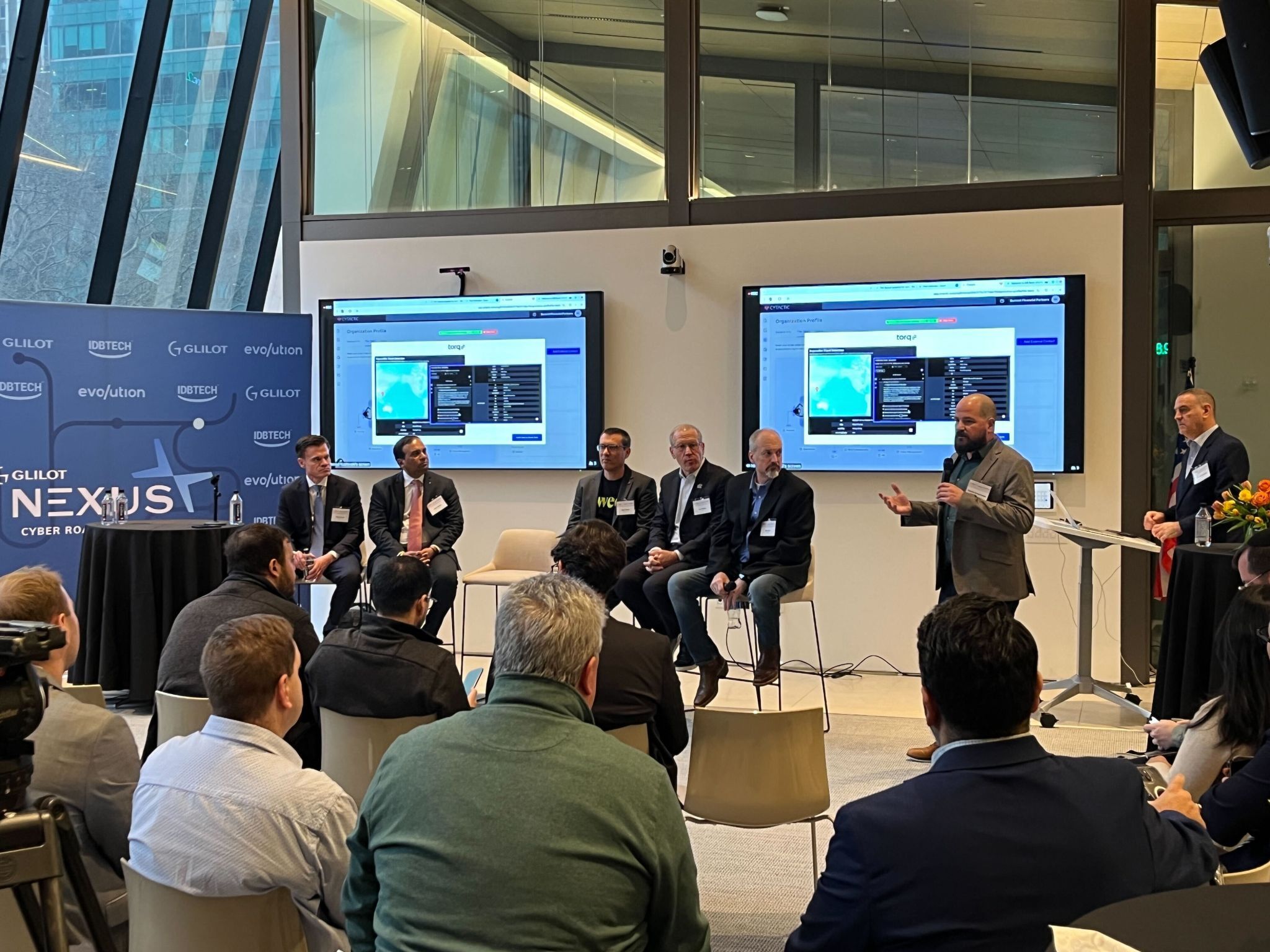
I recently took part in a cyber crisis simulation event which showcased Evolution Equity Partners’ portfolio companies and made Torq’s real-world value strikingly clear.

The simulation presented a realistic scenario: a data breach at a fictional wealth management firm, with the attack’s progression followed through detection, investigation, response, and resolution. Participating companies included Torq, Sweet Security, Oleria, Halcyon, and Cytactic

This cyber simulation reinforced the need for proactive security: automation, robust identity management, and agile cloud response. It also underscored the importance of having a crisis management system in place for simulating a live event — so when the inevitable happens, all teams, stakeholders, and external parties that need to be involved in resolving a major incident are included from the beginning.

A Cyber Crisis Simulation Unfolds

1. Detecting the Impossible Alert

The initial attack factor in the simulation was a compromised credential initially identified by an “impossible journey” detection in Torq’s AI-native Hyperautomation platform. Torq was able to identify this impossible travel through authentication logs that contained geographical source login information. 

The targeted financial services company had several layers in place to detect and respond to these types of attacks, so the incident was kicked off through the initial case management system in Torq. 

Through its AI-powered automated response capabilities, Torq’s platform triaged, enriched, and investigated the alert, ultimately determining that it required escalation.

Inside Torq’s platform, this event could then be tracked by the SOC throughout the incident lifecycle until being handed off to Legal, PR, and potentially cyber-insurance and external incident response partners. 

2. Confronting the Extortion

After the initial attack, it was determined that the user did in fact access sensitive information contained in an S3 bucket, which was detected by Sweet Security’s unified detection and response platform. 

Once the attacker procured the data, they sent an extortion threat letter to the company which included screenshots of contracts and other sensitive information. At this point, management had to:

  • Decide whether or not to disclose the breach
  • Determine whether or not the breach was “material”
  • Assess if they need to contact their customer base. 

From there, Oleria identity security platform discovered the attacker had gained access to an insecure SharePoint site, but only accessed a limited amount of sensitive data.It was determined that the SharePoint site needed to be secured and, due to the limited data exposure, a negotiation team was brought in. They then found that the attacker was attempting to move laterally through the company’s systems.

3. Stopping Ransomware Escalation

From there, the company deployed Halcyon’s ransomware defense solution to determine if ransomware was active. Halcyon successfully detected and blocked infections on the systems where it was installed, but the attacker was able to begin encryption on systems where it was not.

The company then engaged Halcyon’s Professional Services to attempt to decrypt what the attacker was encrypting without having to pay for the keys.he keys. 

Minimal Damage, Maximum Defense

In the end, the company was able to handle the incident without a breach disclosure and minimal impact to customer operations. This event could have been much worse if the services company did not have advanced detection and response capabilities already deployed within its security stack.

  • Torq streamlined detection and initial investigation through SOC automation and integration with the entire security stack
  • Sweet Security correlated alerts and prevented exfiltration attempts in the cloud.
  • Oleria uncovered user account activities and assessed breach scope.
  • Halcyon blocked ransomware escalation and secured endpoints.
  • Cytactic enhanced tracking and decisionmaking capabilities for incident response.

Learn how Torq and Sweet Security operationalize cloud security automation >

Building Cyber Resilience through Proactive Simulation

This “impossible journey” simulation demonstrated the critical importance of establishing effective cybersecurity strategies and deploying innovative security solutions.

Proactive cyber crisis simulations enable businesses to build resilience and minimize the impact of potential attacks by:

  • Identifying vulnerabilities.
  • Improving mean time to detect and respond
  • Testing incident response plans
  • Improving decision-making under pressure
  • Understanding the impact of cyberattacks
  • Facilitating learning and continuous improvement

Want to learn more about leveling up your SOC’s automation and autonomous response capabilities? Read the SOC Automation Pyramid of Pain.

SEE TORQ IN ACTION

Ready to automate everything?

“Torq takes the vision that’s in your head and actually puts it on paper and into practice.”

Corey Kaemming, Senior Director of InfoSec

“Torq HyperSOC offers unprecedented protection and drives extraordinary efficiency for RSM and our customers.”

Todd Willoughby, Director

Compuquip logo in white

“Torq saves hundreds of hours a month on analysis. Alert fatigue is a thing of the past.”

Phillip Tarrant, SOC Technical Manager

Fiverr logo in black

“The only limit Torq has is people’s imaginations.”

Gai Hanochi, VP Business Technologies

Carvana logo in black

“Torq Agentic AI now handles 100% of Carvana’s Tier-1 security alerts.”

Dina Mathers, CISO

Riskified logo in white

“Torq has transformed efficiency for all five of my security teams and enabled them to focus on much more high-value strategic work.”

Yossi Yeshua, CISO

Modern SOC Framework: How Scalable Security Ops Are Built for Today’s Threats

Contents

Get a Personalized Demo

See how Torq harnesses AI in your SOC to detect, prioritize, and respond to threats faster.

Request a Demo

As cloud complexity explodes and threats move at machine speed, the old security frameworks just don’t cut it — they’re too slow, rigid, and built for a different era. 

Today’s security operations demand more: faster action, smarter decisions, and systems that don’t crack under scale. This isn’t just about staying ahead of attackers; it’s about rebuilding the SOC from the ground up, with automation at its core and resilience in its DNA. This is the blueprint for next-gen security operations — and it’s built for today’s threats.

What is a Security Operations Center (SOC) Framework?

The Three Core Components of a SOC Framework

  1. People: Security analysts, engineers, and managers responsible for triage, investigation, and incident response
  2. Processes: Standard operating procedures for threat hunting, alert triage, escalation, and remediation
  3. Technology: Essential tools such as SIEMs, EDR, IDS/IPS, and automation platforms power threat detection and response

Examples of SOC Frameworks

NIST Cybersecurity Framework: Focuses on five core functions — Identify, Protect, Detect, Respond, Recover — to manage cyber risk

MITRE ATT&CK: A detailed matrix of adversary tactics and techniques used to anticipate and understand attacker behavior

Custom frameworks: Many organizations tailor frameworks to their environments, blending industry standards with internal requirements

Benefits of Implementing a SOC Framework

Implementing a structured SOC framework equips security teams with the tools and clarity needed to respond faster, smarter, and more consistently to threats.

  • Stronger threat detection: Structured approaches enable proactive identification of emerging threats
  • Streamlined incident response: Defined roles and workflows reduce response times and errors
  • Reduced risk exposure: Frameworks enforce best practices, minimizing security gaps
  • Greater operational efficiency: Standardized processes eliminate ambiguity and improve team performance

Key Considerations for SOC Framework Success

A SOC framework must be practical, adaptable, and deeply aligned with the organization’s operational reality to maximize impact.

  • Integration: Frameworks must align with the organization’s broader security ecosystem and tools
  • Automation: Automating routine tasks boosts SOC capacity and reduces analyst fatigue
  • Continuous improvement: Frameworks should evolve with the threat landscape, incorporating lessons learned and new technologies

Rebuilding the SOC for the Cloud-First Era

The pace of digital transformation has reshaped enterprise infrastructure. Agile development, DevOps, and continuous deployment enable engineering teams to move faster than ever, shipping features in real time, automating updates, and expanding cloud-native environments at scale. 

But this speed comes with complexity. Constantly evolving systems introduce new vulnerabilities, while fragmented environments spanning public cloud, on-premises infrastructure, SaaS platforms, APIs, and endpoints create blind spots that traditional security operations centers can’t handle.

Legacy SOC frameworks were built for static environments and perimeter-based defense. They were siloed, reactive, and heavily dependent on manual investigation. Threat detection often lagged behind attacker tactics, and incident response relied on slow, disjointed workflows. As a result, security became a bottleneck instead of a business enabler.

Modern security operations require a fundamentally different approach, one that’s cloud-first, automation-native, and intelligence-driven. A contemporary SOC framework must extend continuous visibility across hybrid cloud infrastructure, integrate seamlessly with CI/CD pipelines and SaaS ecosystems, and adapt to infrastructure changes and new threats in real time. Sophisticated threat actors now leverage automation and AI. To keep up, the SOC must do the same.

Modern SOCs are built for resilience and speed. They function as cross-functional, collaborative teams that leverage AI-powered analytics, automated decision-making, and integrated orchestration so that:

  • Alerts are triaged automatically
  • Threats are contextualized instantly
  • Responses are executed across the stack, from IAM and cloud to endpoint and network, without waiting for human input

The result is a security operations center that moves as fast as the business it protects. By evolving beyond the reactive, manually intensive models of the past, today’s security operations centers become strategic assets, delivering continuous monitoring, proactive threat hunting, and intelligent response at enterprise scale.

Torq’s Role in the Modern SOC: Real Automation for Real-World Demands

Modern SOC frameworks need more than strategy — they need execution. That’s where Torq comes in. Torq enables security teams to build and scale their SOC operations in alignment with today’s demands: speed, resilience, automation, and continuous improvement.

With Torq, security teams can operationalize SOC frameworks through:

Torq HyperSOC™ is a fully autonomous security operations platform built for the realities of today’s threat landscape. HyperSOC leverages Hyperautomation and agentic AI to dynamically triage alerts, investigate incidents, and trigger precise remediation, all without human intervention. It automates the key components of your SOC framework: from detection logic and enrichment to playbook execution and case management.

Applying MITRE ATT&CK to Strengthen Detection and Response

MITRE ATT&CK (Adversarial Tactics, Techniques, and Common Knowledge) is a globally recognized, open-source framework that catalogs real-world adversaries’ tactics, techniques, and procedures (TTPs) during cyberattacks. It serves as a behavioral threat model, helping SOC teams and threat intelligence analysts understand how attackers operate.

What it is: Rather than focusing solely on static indicators like IP addresses or file hashes, ATT&CK maps the full attack lifecycle, from initial access and privilege escalation to lateral movement, data exfiltration, and persistence. This enables security teams to build, test, and refine detection and response capabilities that align with how threats unfold in the real world.

How it’s used: Penetration testers and red teams use the framework to emulate adversary behavior and identify weaknesses in infrastructure. Blue teams use it to strengthen defenses by aligning detections and controls to known tactics and techniques, improving visibility, response speed, and resilience.

How it helps: MITRE ATT&CK provides a tactical blueprint of real-world adversary behaviors that SOC analysts can use to improve threat detection and incident response. By mapping alerts and incidents to specific ATT&CK techniques, analysts can identify coverage gaps, refine detection logic, and prioritize high-impact defenses. 

Integrating MITRE ATT&CK into SOC workflows enables more proactive threat hunting, more precise response playbooks, and continuous alignment with evolving attacker tactics, strengthening security posture across the entire detection and response lifecycle.

Using MITRE D3FEND to Close Gaps and Validate Controls

MITRE D3FEND is the defensive counterpart to ATT&CK. It maps known tactics to countermeasures, offering prescriptive guidance to reduce attack surfaces and harden systems.

D3FEND empowers SOC teams to implement evidence-based controls, prioritize mitigations, and validate that defenses align with the real tactics adversaries use in the wild.

How Modern SOCs Operationalize MITRE Frameworks

Mature SOCs embed the MITRE ATT&CK and D3FEND frameworks into the fabric of daily operations. These frameworks provide a shared language and strategic lens for identifying detection gaps, simulating adversary behavior, and continuously refining defenses. But their true power is unlocked when paired with Hyperautomation.

With Torq Hyperautomation, SOC teams can:

  • Instantly remediate detection gaps identified in ATT&CK
  • Automatically update alert logic and enrich incidents based on mapped techniques
  • Simulate adversary behavior and validate controls using repeatable, automated workflows

For example, if ATT&CK highlights a missing control for lateral movement, Torq can trigger a sequence to update endpoint detection rules, notify appropriate analysts, and enforce IAM policy adjustments — all automatically.

This transforms the SOC into a self-improving system. One where detection, validation, and response are continuously optimized against evolving threats, and frameworks like MITRE become engines for operational excellence rather than compliance checkboxes.

Beyond automation, leading teams apply ATT&CK and D3FEND for threat modeling and control validation. They simulate realistic attack chains to test how controls hold up under pressure and then harden them based on empirical evidence. Over time, this creates a feedback loop, where detection logic, mitigation tactics, and automated response are continually optimized against evolving threats.

Scaling Smarter: Best Practices for High-Performance SOCs

Modern security operations center frameworks demand more than manual playbooks and reactive processes; they require automation that empowers analysts, accelerates response, and strengthens visibility across every layer of the infrastructure.

With platforms like Torq, SOC analysts can:

  • Eliminate alert fatigue and manual triage: Repetitive tasks like threat intel enrichment, investigation, and prioritization overwhelm analysts and delay response. Torq automates these processes by pulling context from SIEM tools, enriching alerts in real time, and routing them based on dynamic risk scoring, accelerating triage, and reducing cognitive load.
  • Embed no-code response directly in ChatOps tools: Incident response should happen where collaboration happens. Torq enables teams to execute security workflows natively within Slack, Microsoft Teams, or any ChatOps environment, allowing analysts to act quickly without switching platforms.
  • Automate compliance-ready incident documentation: Every step of an incident — from detection through resolution — is automatically logged, timestamped, and auditable. This ensures accurate records for compliance requirements without introducing additional overhead.

But automation alone doesn’t make a SOC resilient. To truly scale operations and mature security programs, organizations must follow best practices for building and evolving their SOC frameworks:

  • Align with MITRE ATT&CK, NIST CSF, and CIS Controls: Grounding your SOC framework in well-established standards ensures consistency, auditability, and defensibility. Integrating these frameworks into day-to-day workflows enables adaptive threat detection and informed decision-making.
  • Define and track KPIs that matter: Establish performance metrics such as Mean Time to Detect (MTTD), Mean Time to Respond (MTTR), and automation coverage. These indicators provide visibility into operational gaps and inform continuous investment and improvement.
  • Scale securely through software, not just headcount: Adding more analysts isn’t always sustainable. Automating Tier-1 triage, orchestrating response workflows, and optimizing alert routing allow SOCs to grow coverage and responsiveness without increasing overhead.

Together, security automation and strategic framework alignment transform the SOC from a reactive, overwhelmed team into a proactive, resilient, and high-performing function that delivers real security outcomes at enterprise scale.

Build a SOC Framework That Adapts as Fast as Threats Do

A modern security operations center framework must do more than meet regulatory standards — it must evolve with your business, your threat landscape, and your technology stack. Frameworks like MITRE ATT&CK, NIST CSF, and CIS provide the strategic foundation. But without automation, those frameworks remain theoretical.

Torq transforms them into action. By automating triage, response, compliance documentation, and control validation, Torq empowers SOC teams to operationalize frameworks in real time, not just for audits, but for actual defense.

Whether you’re scaling globally, modernizing legacy systems, or building your first SOC from scratch, the future of security operations depends on speed, context, and automation. Don’t settle for reactive checklists. Build an autonomous SOC that’s intelligent, resilient, and engineered to thrive in today’s threat environment.

Want to see how AI-driven Hyperautomation can modernize your SOC? Get the manifesto.

SEE TORQ IN ACTION

Ready to automate everything?

“Torq takes the vision that’s in your head and actually puts it on paper and into practice.”

Corey Kaemming, Senior Director of InfoSec

“Torq HyperSOC offers unprecedented protection and drives extraordinary efficiency for RSM and our customers.”

Todd Willoughby, Director

Compuquip logo in white

“Torq saves hundreds of hours a month on analysis. Alert fatigue is a thing of the past.”

Phillip Tarrant, SOC Technical Manager

Fiverr logo in black

“The only limit Torq has is people’s imaginations.”

Gai Hanochi, VP Business Technologies

Carvana logo in black

“Torq Agentic AI now handles 100% of Carvana’s Tier-1 security alerts.”

Dina Mathers, CISO

Riskified logo in white

“Torq has transformed efficiency for all five of my security teams and enabled them to focus on much more high-value strategic work.”

Yossi Yeshua, CISO

Generative AI Cybersecurity: What It Is, What It Isn’t, and What Comes Next

Contents

Get a Personalized Demo

See how Torq harnesses AI in your SOC to detect, prioritize, and respond to threats faster.

Request a Demo

Generative AI (GenAI) uses large language models (LLMs) to generate new content, synthesize data, and make context-aware decisions. In a cybersecurity organization, this means GenAI can help triage alerts, enrich threats, write playbooks, and assist analysts in real time.

But here’s the problem: Most SOCs are only scratching the surface of how generative AI can be used in cybersecurity. They’re using GenAI to summarize logs or generate scripts, which still requires human oversight and remains reactive. Did you know you could take your AI so much further? 

How Can Generative AI Be Used in Cybersecurity? 

GenAI is built on deep learning, a subset of machine learning, using large neural networks known as transformers. These transformers are trained on billions of data points and optimized to understand and mimic language, behavior, and structure.

Many GenAI systems are modeled after GPT (Generative Pretrained Transformer), which has learned how to respond to prompts in human-like ways by identifying patterns across massive data sets. 

Here are some ways generative AI can be used in cybersecurity: 

  • Triage and enrichment: GenAI can automatically triage incoming alerts, enrich data from SIEM, EDR, and other sources, and generate clear, concise summaries. 
  • Threat detection: Trained on historical attack data and threat patterns, GenAI models can identify indicators of compromise (IOCs) and anticipate emerging tactics. 
  • Case documentation: Generative AI can produce case reports, threat timelines, and case summaries. These auto-generated insights reduce the need for manual documentation and simplify compliance reporting.
  • Threat hunting: Security analysts can use GenAI to query threat intelligence databases and data lakes using natural language prompts. This simplifies threat hunting workflows and empowers junior analysts to work at a higher level.
  • Workflow design: GenAI allows users to describe desired automations in natural language, which the system then converts into executable workflows. This eliminates the need for manual scripting and accelerates automation adoption across teams.

All of this helps analysts move faster — but it’s still reactive. It still requires humans in the loop. And it’s still just the beginning.

Challenges of Using Generative AI Alone

Without the right guardrails, GenAI in cybersecurity comes with serious risks:

  • Accuracy issues: GenAI can hallucinate. That means it can produce outputs that are confidently wrong. And in cybersecurity, that’s dangerous. An inaccurate summary of a threat, a misidentified IOC, or a fabricated correlation can derail an investigation, waste valuable analyst time, or worse, lead to improper remediation actions.
  • Data privacy: GenAI models are only as good as the data they’re trained on and how that data is handled. Feeding sensitive logs, incident data, or user information into GenAI without proper controls can lead to unintentional exposure of private data or regulatory violations. This is especially risky in regulated industries (finance, healthcare, etc.), where compliance failures come with heavy penalties.
  • Infrastructure overhead: Running LLMs requires serious computing, storage, and ongoing management. Even when using APIs from providers, the costs of integrating, fine-tuning, and securing the system can add up quickly. Without a well-architected platform, organizations often end up with fragile, expensive prototypes that don’t scale.
  • Threat actor access: You’re not the only one using GenAI. Threat actors are, too. From auto-generating phishing emails and malware variants to simulating voices or bypassing MFA with deepfakes, adversaries are industrializing their attacks with the same tools defenders are exploring.

This is why GenAI alone doesn’t cut it. It enhances the SOC — but it doesn’t free it. It still relies on humans to verify outputs, make decisions, and connect the dots. To truly transform security operations, you need more than content generation — you need contextual understanding, autonomous action, and real-time orchestration.

That’s why Torq goes beyond GenAI — combining it with agentic AI, Hyperautomation, and RAG-powered microagents to deliver a self-sustaining, intelligent SOC.

IDC: GenAI is Just the Beginning 

A recent IDC Spotlight Report reinforces what leading cybersecurity teams already suspect: Generative AI is only the beginning. The real transformation happens with agentic AI.

Although only 7% of organizations are using agentic AI today, 60% expect it to impact their SOC operations within the next 18 months significantly. The benefits are tangible: organizations embracing this shift are seeing a 50% reduction in mean time to detect (MTTD), automated response for 90% of alerts, and a 35% lower risk of major breaches.

Torq’s HyperSOC platform, powered by agentic microagents, delivers exactly the kind of automation and intelligence IDC highlights — and it’s already available today.

Torq’s Take: From Generative AI to Autonomous Cybersecurity

At Torq, generative AI in cybersecurity was just the beginning. We combine GenAI with agentic AI, Hyperautomation, and Retrieval-Augmented Generation (RAG) to create what no one else in the market has: a truly autonomous SOC.

Agentic AI: Thinks Like a Human Analyst

Agentic AI is the brain behind the operation. Torq’s multi-agent system, led by Socrates, understands context, makes decisions, and learns from experience. How? 

  • It uses semantic memory to understand relationships between threats, assets, and users.
  • It applies episodic memory to recall past incidents and resolutions.
  • It executes using procedural memory, adapting workflows in real-time based on its growing knowledge base.

Unlike GenAI, which waits for a prompt, agentic AI acts independently. It triages alerts, investigates root causes, and escalates only when necessary — moving SOCs from a human-in-the-loop to a human-on-the-loop approach. That means analysts step in only when they’re truly needed.

Hyperautomation: Machine-Speed Response Across Your Stack

Torq’s Hyperautomation engine seamlessly orchestrates your entire security ecosystem — across EDR, SIEM, IAM, email security, ticketing systems, cloud platforms, and beyond.

These AI-driven workflows:

  • Automatically isolate compromised endpoints
  • Revoke credentials and enforce MFA
  • Trigger alert suppressions and log escalations
  • Sync case updates across your tools of record

Hyperautomation connects all the dots — transforming detection into response with zero delay.

RAG-Enabled Microagents: Smarter Agents

Retrieval-augmented generation (RAG) enhances our specialized AI Agents with memory, precision, and real-time data access. Each microagent is trained on a specific domain, like investigation, remediation, or case management, and uses RAG to:

  • Pull in relevant threat intel, logs, and past incidents
  • Filter out noise and focus only on actionable data
  • Generate concise, accurate case summaries and recommendations

Think of them as subject matter experts inside your AI-powered SOC — each one armed with a knowledge base that updates every second. 

Defending Against GenAI Security Threats

Adversaries are using GenAI too — for phishing, deepfakes, malware variants, and more. That’s why Torq’s defense stack includes:

  • Behavioral detection: We spot the telltale signs of GenAI-generated attacks such as weird phrasing, impossible travel, or AI-crafted obfuscation. 
  • Automated response: The second a threat is flagged, Torq acts. Endpoints isolated. Credentials locked. Sessions terminated. Tickets opened. Teams alerted. No hesitation. 
  • Adaptive workflows: Attackers adapt. So do we… automatically. Torq’s workflows update themselves based on real-time threat intel, evolving tactics, and active defense insights. What was a one-off attack yesterday becomes a blocked pattern today.

Go Beyond GenAI Cybersecurity with Torq 

Generative AI in cybersecurity got us started — summarizing alerts, drafting playbooks, and answering questions. But Torq takes it further. 

With agentic AI, Torq’s platform went from suggestion to autonomous decision-making. With Hyperautomation, Torq executes those decisions instantly across your entire stack. And with RAG-enabled microagents, every move is precise, contextual, and based on real-time intelligence. 

That’s how you build a truly autonomous SOC.

Want to go beyond GenAI cybersecurity? Get the AI or Die Manifesto.

SEE TORQ IN ACTION

Ready to automate everything?

“Torq takes the vision that’s in your head and actually puts it on paper and into practice.”

Corey Kaemming, Senior Director of InfoSec

“Torq HyperSOC offers unprecedented protection and drives extraordinary efficiency for RSM and our customers.”

Todd Willoughby, Director

Compuquip logo in white

“Torq saves hundreds of hours a month on analysis. Alert fatigue is a thing of the past.”

Phillip Tarrant, SOC Technical Manager

Fiverr logo in black

“The only limit Torq has is people’s imaginations.”

Gai Hanochi, VP Business Technologies

Carvana logo in black

“Torq Agentic AI now handles 100% of Carvana’s Tier-1 security alerts.”

Dina Mathers, CISO

Riskified logo in white

“Torq has transformed efficiency for all five of my security teams and enabled them to focus on much more high-value strategic work.”

Yossi Yeshua, CISO

Unleash a Multi-SIEM Strategy with Hyperautomation

Contents

Get a Personalized Demo

See how Torq harnesses AI in your SOC to detect, prioritize, and respond to threats faster.

Request a Demo

Industry analysts are calling it: Consolidation or collapse. 2024 saw Cisco’s $28B acquisition of Splunk, followed by Palo Alto Networks acquiring IBM’s QRadar SaaS assets, and LogRhythm and Exabeam’s merger to create an AI SIEM powerhouse.

We’ve seen this time and time again. Legacy security tools get acquired by larger tech companies as more efficient technologies come about. We saw it with antivirus, SOAR, and now SIEM. But here’s the twist: SIEM isn’t going away. Not even close.

Legacy SIEMs are deeply entrenched, housing massive volumes of regulated security logs and powering critical compliance workflows. The shift isn’t about replacing SIEMs — it’s about evolving how security teams use them.

What is a SIEM?

A SIEM (Security Information and Event Management) is a cybersecurity solution that collects, analyzes, and correlates security data from across an organization’s IT environment to detect threats, monitor activity, and support incident response and compliance. A SIEM can:

  • Ingest logs from sources like firewalls, endpoints, and applications
  • Correlate data to spot suspicious activity
  • Generate alerts for potential threats
  • Provide dashboards to help analysts investigate

The SIEM Struggle is Real

In The Evolution of the Modern Security Data Platform by Francis Odom and Josh Trup, legacy SIEM costs are largely indexed to data volume — meaning the more you ingest, the more you pay. This outdated pricing model is one of the biggest blockers to scaling detection across modern environments. 

SIEMs were also built for an on-prem world, not the cloud-native environments we operate in today. As more and more technologies shift to the cloud and SaaS sprawl grows, the volume of logs, events, and alerts increases exponentially.

Top SIEM challenges include: 

  • Excessive operational cost tied to ingestion and retention
  • Alert fatigue and time-consuming manual triage due to excessive noise
  • Tool sprawl and integration complexity
  • Difficulty scaling across hybrid and multi-cloud environments
  • Log retrieval penalties that make data migration expensive

Yet, despite these issues, most teams are not abandoning their SIEMs. Why? Because the cost and compliance risk of a rip-and-replace approach are even higher. This is where the multi-SIEM strategy emerges.

The Rise of the Multi-SIEM SOCs

Rather than choosing one SIEM to rule them all, forward-thinking SOC teams are embracing a multi-SIEM or hybrid SIEM architecture. Sometimes, this shift is born out of necessity, such as after mergers and acquisitions, where multiple SIEMs are bundled with the deal. At other times, it’s driven by a decline in trust in legacy SIEM innovation following industry shakeups and buyouts.

Legacy SIEMs charge by the byte, and with data volumes exploding, the cost to ingest, store, and retrieve logs has become unsustainable. Instead of a risky rip-and-replace, teams strategically minimize what they send to legacy platforms and route the rest elsewhere. 

To solve this, a wave of cloud-native, next-gen SIEM alternatives and data platforms has emerged: ETL orchestrators, cloud security data lakes, and multi-data SIEMs. These tools cleanse, normalize, and route logs more intelligently. Some even decouple analytics from storage to power faster, cheaper real-time detection across hybrid environments. 

Even for organizations that keep regulated data on-premises, new logs are increasingly routed to more flexible, lower-cost systems. It’s a smart move — but only if you have a way to connect and orchestrate it all.

Hyperautomation Makes SIEMs Better

Hyperautomation is the key to unlocking the full potential of a modern SIEM strategy. Torq Hyperautomation™ is the AI-driven orchestration layer that sits above your entire SIEM ecosystem. Whether you use one SIEM or several, Torq can connect the dots across tools, teams, and workflows to transform disparate data into actionable intelligence and automated responses.

Once integrated, Torq can:

  • Run parallel workflows across multiple SIEMs
  • Automate triage, investigation, and response across platforms
  • Reduce alert fatigue without disrupting existing operations
  • Build and deploy SIEM automations with drag-and-drop or natural language
  • Use Torq HyperSOC™ to auto-generate and resolve 95% of Tier-1 cases with agentic AI

Check Point SIEM and Torq Hyperautomation Integration Story

Check Point’s security team was in alert overload — not due to a lack of tooling, but because their SIEM was generating more noise than their lean SOC could handle. With a 30–40% manpower gap, traditional triage and manual response weren’t sustainable. 

Unlike legacy SOAR tools, Torq didn’t require Check Point to overhaul its SIEM or change how data was collected. Instead, Torq integrated directly into its existing SIEM infrastructure, ingesting and analyzing alerts. Within days, Check Point had deployed more than two dozen automated playbooks that operate natively across its security stack.

With Torq’s intelligent orchestration layer acting on SIEM-generated alerts — from triggering MFA to locking suspicious accounts — Check Point transformed a high-volume, high-fatigue environment into a streamlined, autonomous SOC

“With Torq HyperSOC, we can react automatically to problems before they become security incidents.”

Jonathan Fischbein, CISO, Check Point

Read Check Point’s full SOC transformation story here >

The Future: Autonomous SOCs Powered by AI + SIEM

The SIEM space is evolving fast. But legacy contracts, compliance requirements, and data gravity aren’t going away tomorrow. The future isn’t about replacing your SIEM. It’s about operationalizing it with AI.

With Torq, you can:

  • Connect any SIEM (or all of them)
  • Orchestrate security automation across platforms
  • Transform log overload into real-time response
  • Move toward an autonomous SOC without sacrificing control

Want to learn more about adopting AI in the SOC? Get the AI or Die manifesto to learn how to think strategically about AI in SecOps — from data privacy to AI hallucinations.

SEE TORQ IN ACTION

Ready to automate everything?

“Torq takes the vision that’s in your head and actually puts it on paper and into practice.”

Corey Kaemming, Senior Director of InfoSec

“Torq HyperSOC offers unprecedented protection and drives extraordinary efficiency for RSM and our customers.”

Todd Willoughby, Director

Compuquip logo in white

“Torq saves hundreds of hours a month on analysis. Alert fatigue is a thing of the past.”

Phillip Tarrant, SOC Technical Manager

Fiverr logo in black

“The only limit Torq has is people’s imaginations.”

Gai Hanochi, VP Business Technologies

Carvana logo in black

“Torq Agentic AI now handles 100% of Carvana’s Tier-1 security alerts.”

Dina Mathers, CISO

Riskified logo in white

“Torq has transformed efficiency for all five of my security teams and enabled them to focus on much more high-value strategic work.”

Yossi Yeshua, CISO

Operationalize Data Security Automation with Cyera and Torq

Contents

Get a Personalized Demo

See how Torq harnesses AI in your SOC to detect, prioritize, and respond to threats faster.

Request a Demo

Data is the critical foundation for all organizations, powering innovation, decisions, and growth. It’s also the fastest-growing attack surface, with sensitive information scattered across clouds, on-premise servers, and SaaS platforms. 

Cyera, the leader in modern data security, provides rich visibility into sensitive data down to its DNA level, providing vital context, identifying data risks and vulnerabilities, and delivering SOC teams a clear map of their data attack surface.

Once data insights are uncovered, SOC teams must take swift and consistent action. Torq’s platform operationalizes Cyera’s data security intelligence, organizing remediation and policy enforcement with machine-speed efficiency. Together, Cyera and Torq enable SOCs to protect sensitive data and intellectual property quickly, precisely, and accurately.

Solving Data Security’s Greatest Challenges 

Today’s landscape has opened a paradox. Organizations rely on data for business to thrive, yet the more data is generated, the harder it is to secure. Sensitive information is being spread everywhere, stored in cloud buckets, shared across SaaS apps, and accessed by a growing number of users and systems. SOC teams are tasked with protecting this sprawling landscape, but the sheer volume of alerts and manual processes makes it nearly impossible to keep up.

Cyera cuts through this noise, giving teams a clear view of what sensitive data exists, where the data lives, who (or what) has access to it, and the risks the data faces. Cyera’s approach is rooted in clarity — mapping the attack surface and delivering insights needed to protect critical assets.

This is where Torq comes in. By integrating with Cyera, Torq automates the actions required to secure data, eliminating inefficiencies and enabling SOC teams to instantly respond to data risks.

Data Security Automation at Work

When Cyera identifies a risk, such as an exposed cloud storage bucket or an anomalous data transfer, Torq acts immediately to execute tailored workflows, automating everything from remediation to stakeholder notifications. Here’s how Cyera and Torq work together: 

Comprehensive Data Discovery: Cyera scans your environment to identify sensitive data, classify it, and assess its risk profile.

Real-Time Insights: When Cyera detects an anomaly or identifies a risk, it triggers an event and passes the data insights along to Torq

Automated Orchestration: Torq picks up the baton, automatically launching workflows tailored to the specific alert, whether that’s notifying the right stakeholders, enforcing security controls, or triggering remediation actions.

Continuous Improvement: Cyera and Torq enable SOC teams to refine processes iteratively, reducing noise and improving response efficiency over time.

For example:

  • Cyera flags a misconfigured cloud storage bucket as containing sensitive PII. Torq automatically executes a remediation workflow, closing the bucket’s exposure and notifying relevant teams.
  • Cyera identifies an anomalous data transfer from a high-risk location. Torq not only alerts analysts but also enriches the alert with context and executes automated containment actions.

Cyera and Torq: Better Together

What makes Cyera and Torq a revolutionary pair is the shared commitment to scalability, speed, and precision. Cyera’s intelligence provides a clear path forward, while Torq delivers the power to act quickly and precisely.

Everyone in cyber knows speed is no longer an option. Manual processes simply can’t keep pace with the breakneck pace of today’s security landscape. Torq and Cyera together turn hours of work into seconds, automating everything from alert triage to remediation. Cyera provides 95% precision classification, while data security automation workflows from Torq ensure every response is consistent, reliable, and error-free, even under the pressure of an escalating incident.

As your organization grows, so do your risks. Cyera and Torq scale effortlessly, adapting to evolving needs and protecting data across clouds, Saas platforms, and beyond.

Elevate Your SOC

The integration of Cyera and Torq sets the new standard for what SOC teams can achieve with data security automation. By combining Cyera’s data-first approach with Torq’s automation expertise, organizations gain the tools to move faster, act smarter, and confidently secure data. 

Request a demo today to see how Cyera and Torq can transform your SOC.

SEE TORQ IN ACTION

Ready to automate everything?

“Torq takes the vision that’s in your head and actually puts it on paper and into practice.”

Corey Kaemming, Senior Director of InfoSec

“Torq HyperSOC offers unprecedented protection and drives extraordinary efficiency for RSM and our customers.”

Todd Willoughby, Director

Compuquip logo in white

“Torq saves hundreds of hours a month on analysis. Alert fatigue is a thing of the past.”

Phillip Tarrant, SOC Technical Manager

Fiverr logo in black

“The only limit Torq has is people’s imaginations.”

Gai Hanochi, VP Business Technologies

Carvana logo in black

“Torq Agentic AI now handles 100% of Carvana’s Tier-1 security alerts.”

Dina Mathers, CISO

Riskified logo in white

“Torq has transformed efficiency for all five of my security teams and enabled them to focus on much more high-value strategic work.”

Yossi Yeshua, CISO