Wizdom 2025: The Future of Cloud Security

Contents

Get a Personalized Demo

See how Torq harnesses AI in your SOC to detect, prioritize, and respond to threats faster.

Request a Demo

Chris Coburn is the Senior Director of Technology Alliances at Torq

Chris Coburn is the Senior Director of Technology Alliances at Torq, where he leads strategic partnerships that fuel innovation and growth. With experience scaling alliance programs at cybersecurity leaders like Recorded Future, he brings an execution-first mindset to ecosystem development. He’s the architect of Torq’s AMP program, redefining how partners integrate, collaborate, and win together.

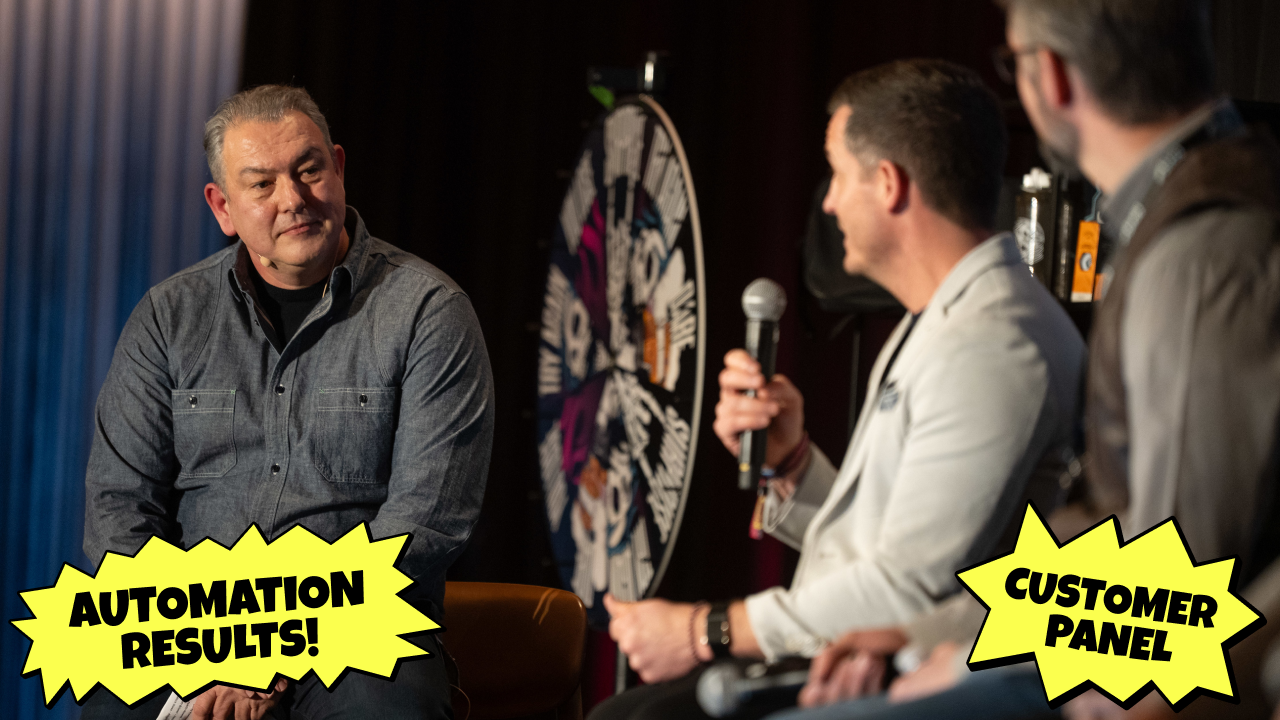
This November, New York City and London became the epicenter of modern cloud defense as Wiz hosted its first-ever user conference, Wizdom, bringing together global leaders, builders, and innovators who are redefining how organizations secure the cloud.

Across three days of keynotes, workshops, and hands-on sessions, Wizdom 2025 explored the next frontier of cloud protection — where AI, automation, and human creativity converge to deliver resilience at machine speed. As a featured partner, Torq joined Wiz to showcase how AI-driven Hyperautomation and real-time orchestration empower security teams to move as fast as the environments they defend.

Together, Wiz and Torq shared what’s next: a unified model for autonomous cloud operations, built on visibility, context, and speed.

Key Takeaways from Wizdom 2025

At Wizdom 2025, one message stood out: AI isn’t just another shift in technology; it’s a complete redefinition of how cybersecurity, innovation, and leadership will operate in the next decade. The conversations on stage reflected a new reality for defenders: one where AI accelerates both sides of the battle, innovation demands constant reinvention, and success depends on how fast teams can adapt.

  • AI transformation: AI is moving faster than any technological revolution before it. Speakers at Wizdom 2025 warned that it’s creating an asymmetric landscape, where attackers rapidly exploit generative models, automation, and data scale — while defenders must evolve their own systems just as quickly. The organizations that thrive will be those that integrate AI into every layer of security, serving as a foundation for informed decision-making and effective response.
  • Innovation: The next generation of successful founders and leaders will be defined by their willingness to disrupt their own playbooks. Speakers called out the need for decentralized innovation, encouraging teams to run fast-moving “skunkworks” projects that challenge assumptions and test what’s possible. Great founders, they said, are the ones who see what’s next before the market does — and aren’t afraid to break their own models to get there.
  • The future of technology: AI will evolve through phases: augmenting humans and ultimately enabling autonomous agent-to-agent collaboration. That future introduces a new challenge: trust. As AI systems increasingly act independently, companies will need to collaborate across industries to establish standards, ensure transparency, and implement shared safeguards.
  • Leadership: The best leaders won’t control every move — they’ll set vision and build infrastructure that allows teams to experiment, fail safely, and learn fast. Empowering entrepreneurial thinking at every level is no longer optional; it’s how organizations will stay relevant when change happens at machine speed.

A Proven Partnership: Wiz + Torq in Action

The Wiz and Torq partnership has become a benchmark for how security operations should function in the cloud era, seamlessly connecting visibility with action, and detection with remediation.

Since becoming an inaugural Wiz Integration (WIN) launch partner, Torq HyperSOC™ has served as the automation and orchestration engine behind Wiz’s unified cloud visibility platform. Together, Wiz and Torq help organizations detect, prioritize, and resolve cloud threats in minutes.

When Wiz finds a misconfiguration, leaked credential, or active threat, Torq HyperSOC™ takes over instantly. Alerts flow directly into AI-driven workflows, where Socrates, Torq’s AI SOC Analyst, correlates findings, enriches telemetry, and automates containment. The result: zero silos, zero lag, and complete visibility across every cloud environment.

From AWS and Azure to GCP and Kubernetes, this integration bridges cloud security and SecOps, giving teams a continuous, autonomous loop between Wiz Defend detections and Torq’s Hyperautomated response.

Over the last few years, the partnership has gone from just an integration to a real SOC impact. Today, customers running Wiz + Torq report measurable results:

  • 90% reduction in manual case handling
  • 3–5x increase in SOC throughput
  • 95%+ of Tier-1 and Tier-2 alerts remediated autonomously
  • 10x faster MTTR, with visibility into zero-day threats within 24 hours

As one of Torq’s featured AMP’d partners, Wiz joined the AMP’d Sessions video series to show how visibility and automation combine to deliver cloud security at machine speed. This partnership is a shared vision for the future of security operations: unified visibility from Wiz, autonomous response from Torq, and a cloud SOC that never sleeps.

“The beauty about this partnership is that Torq was always there, side by side, as one of our design partners as we have evolved.”

Oron Noah, VP of Product, Wiz

Get AMP’d: Wiz + Torq Demo

This AMP’d session shows exactly what happens when Wiz’s high-fidelity detections meet Torq’s autonomous response engine. AI Agents pick up the alert, triage it, enrich it, and contain the threat — all before a human even logs in.

Watch to learn how to:

  • Remediate cloud threats instantly
  • Strip out noise with intelligent triage
  • Grow your SOC’s impact with no-code automation

Watch Wiz’s Oron Noah and Torq’s Bob Boyle break down the workflow — then see how to bring it into your own SOC.

SEE TORQ IN ACTION

Ready to automate everything?

“Torq takes the vision that’s in your head and actually puts it on paper and into practice.”

Corey Kaemming, Senior Director of InfoSec

“Torq HyperSOC offers unprecedented protection and drives extraordinary efficiency for RSM and our customers.”

Todd Willoughby, Director

Compuquip logo in white

“Torq saves hundreds of hours a month on analysis. Alert fatigue is a thing of the past.”

Phillip Tarrant, SOC Technical Manager

Fiverr logo in black

“The only limit Torq has is people’s imaginations.”

Gai Hanochi, VP Business Technologies

Carvana logo in black

“Torq Agentic AI now handles 100% of Carvana’s Tier-1 security alerts.”

Dina Mathers, CISO

Riskified logo in white

“Torq has transformed efficiency for all five of my security teams and enabled them to focus on much more high-value strategic work.”

Yossi Yeshua, CISO

Torq Case Management: Built for Enterprise-Scale SOCs

Contents

Get a Personalized Demo

See how Torq harnesses AI in your SOC to detect, prioritize, and respond to threats faster.

Request a Demo

Most case management systems weren’t built for modern security operations. They were built for tickets. Legacy tools and add-on automations force analysts to swivel between dashboards, copy-paste IOCs, and manually escalate alerts that lack context. That model collapses fast in today’s SOC, where tens of thousands of alerts hit daily.

Torq built something different. Torq’s Enterprise Case Management is an AI-native system that unifies triage, investigation, enrichment, and response into a single, intelligent lifecycle. 

The Case Management Problem No One Talks About

Traditional case management platforms assume analysts will do the heavy lifting — gathering evidence, correlating alerts, updating tickets, and escalating manually. This is inconvenient at a small scale but unsustainable at an enterprise scale.

Large SOCs need a system that:

  • Keeps up with tens of thousands of alerts daily
  • Maintains accuracy and context across complex hybrid environments
  • Adapts dynamically as threats and priorities change

Torq HyperSOC™’s advanced case management is proven to do exactly that. 

How Torq Enterprise Case Management Works

Every case in Torq is a data object that represents the full lifecycle of an incident, from detection through remediation and closure. When an event is ingested — from a SIEM, XDR, or any of Torq’s 300+ integrations — the system determines if it is in fact an incident, and if so, automatically generates a case entity composed of five interlinked components:

  1. Metadata and taxonomy: Each case is assigned a structured schema (type, source, severity, MITRE ATT&CK mapping, SLA) derived from detection logic or workflow input. This ensures every case adheres to organizational taxonomies and compliance standards.
  2. Observables graph: Torq automatically parses and normalizes raw event data — IPs, hashes, usernames, domains, devices, and artifacts — into graph-linked observables. These relationships are stored natively, allowing queries like “show all cases with the same hash seen in the last 7 days” or “find devices accessed by this user post-compromise.”
  3. Dynamic enrichment pipeline: When a case is created, Torq launches parallel enrichment jobs using connected sources — EDR telemetry, threat intelligence feeds, IAM data, CMDBs, and more. Each enrichment step posts results directly into the case record, tagged and timestamped, creating a verifiable context chain.
  4. AI triage and prioritization: Socrates, Torq’s AI SOC Analyst, analyzes all observables and enrichment results to determine confidence, severity, and next steps. Using reinforcement learning from resolved cases, Socrates scores each case based on the likelihood of a true positive, business impact, and threat propagation risk. Low-confidence cases can be auto-closed or merged; high-confidence cases are escalated with full context attached.
  5. Execution: Torq connects directly to the organization’s security stack (EDR, IAM, firewall, CSPM, ITSM, and messaging). Analysts can trigger risk-gated actions directly from within the case without context switching or manual scripts. These actions are governed by deterministic rulesets (“approval gates”) and recorded immutably in the case timeline.

Example Case Lifecycle in Torq

Example Case Lifecycle in Torq

 A Hyperautomation workflow triggers Torq’s custom AI Agents to triage the event and enrich the data with third-party threat intelligence, blending deterministic event-driven workflows with agentic reasoning and execution.

Example Case Lifecycle in Torq

The Tier-1 Agent functions as a security analyst responsible for creating, formatting, and compiling a comprehensive security case — all while keeping the security team updated via Slack/Teams integrations.

Example Case Lifecycle in Torq

Torq HyperSOC uses agentic reasoning to prioritize the most critical cases and summarizes each case with relevant information.

Example Case Lifecycle in Torq

Based on the case classification, one-click quick action buttons are added that trigger Hyperautomation workflows for the most common containment and response actions. Higher-impact actions can optionally require human authorization, blending machine-speed response with human oversight.

In over 90% of cases, Socrates — the AI SOC Analyst — has the tools necessary to remediate the case autonomously, following the steps laid out in the appropriate remediation runbook. Every AI action is thoroughly documented, with immutable execution logs and transparent decision-making processes.

Example Case Lifecycle in Torq

Once the incident is contained and the risk is remediated, the case is closed, and an AI-generated resolution note is added. If necessary, the case will be assigned to a human analyst for any further action — such as following up with a user whose account was locked, or assigning additional security awareness training.

What Makes Torq Case Management Different

Architecture-Level Advantages

  • Event-driven: Built on an asynchronous, distributed event system that handles millions of concurrent actions with zero blocking.
  • Schema-agnostic: Accepts unstructured JSON payloads and normalizes them into a consistent internal data model for cross-tool correlation.
  • API-first design: Every case, enrichment, and action is addressable via REST and GraphQL APIs for seamless integration with custom tooling.
  • Immutable state engine: Every field modification is versioned; every state change is logged — ensuring compliance, auditability, and forensic traceability.
  • Elastic scalability: Dynamic worker scaling enables horizontal growth across clusters without downtime, supporting multi-region, multi-tenant SOCs.

AI + Deterministic Reliability

Torq blends agentic AI with deterministic control, ensuring automation remains explainable and compliant.

  • LLM-based reasoning for analysis and enrichment
  • Deterministic “approval gates” for containment or deletion actions
  • Immutable logs of every AI recommendation, human correction, and execution
  • Continuous learning from resolved cases to refine triage logic

This combination delivers both speed and trust, balancing AI autonomy with human oversight — a key reason enterprises choose Torq over less mature “workflow emulators.”

Hyperautomation

Torq unifies detection, enrichment, workflow, and audit into a single case lifecycle. Unlike platforms that bolt ticketing onto automations, Torq’s cases are the automation — dynamically updating with every new event, IOC, and workflow execution.

  • Auto-populates with threat, asset, and user context
  • Logs every enrichment, containment, and analyst action
  • Enables one-click actions (isolate, revoke, block) from within the case
  • Generates immutable audit trails and timeline visualizations

Real-Time Collaboration

Torq’s enterprise case management syncs context, chat, and action in one workspace — automatically updating as workflows execute.

  • Live “war rooms” that connect SOC, IT, and compliance teams
  • Real-time updates on findings, analyst notes, and playbook actions
  • Integrations with Slack, Teams, and ServiceNow for seamless handoffs
  • Cross-functional collaboration for HR, Help Desk, or BI teams — without requiring platform logins

Built for MSSPs and Global Enterprises

Torq’s multi-tenant case management enables managed security service providers and large organizations to scale horizontally, managing hundreds of customers or internal business units through a unified platform.

  • Templates and reusable workflows accelerate onboarding
  • Shared automations across tenants while keeping data fully isolated
  • Unified analyst queue that spans customers, with precise access controls
  • Faster SLAs, consistent reporting, and stronger margins for MSSPs

Case Management for the SOC of Tomorrow

Case management is no longer about tracking what happened but orchestrating what happens next. Torq HyperSOC™ transforms every case into a living, automated workflow that connects people, processes, and AI in real time.

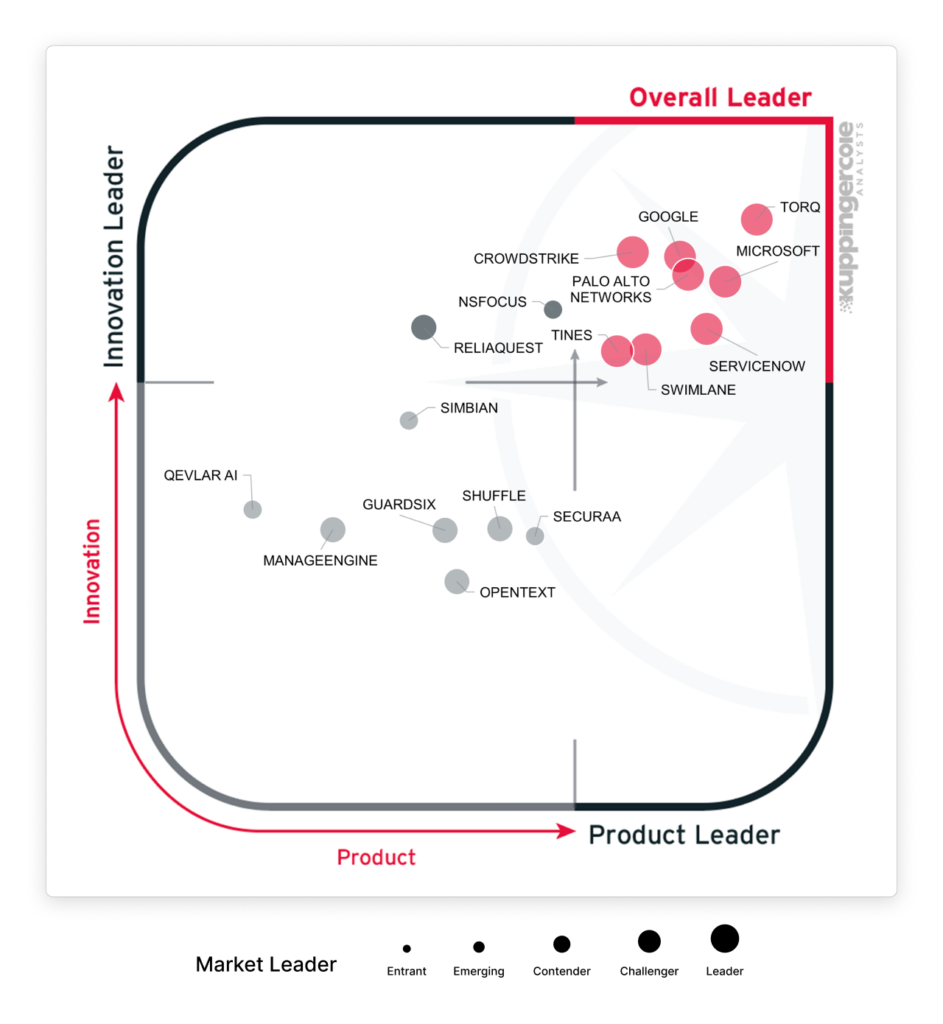
And industry validation backs it up: The 2025 GigaOm SecOps Automation Radar Report named Torq a Leader and Fast Mover for execution-based automation, giving Torq Enterprise Case Management a top score in this area.

SEE TORQ IN ACTION

Ready to automate everything?

“Torq takes the vision that’s in your head and actually puts it on paper and into practice.”

Corey Kaemming, Senior Director of InfoSec

“Torq HyperSOC offers unprecedented protection and drives extraordinary efficiency for RSM and our customers.”

Todd Willoughby, Director

Compuquip logo in white

“Torq saves hundreds of hours a month on analysis. Alert fatigue is a thing of the past.”

Phillip Tarrant, SOC Technical Manager

Fiverr logo in black

“The only limit Torq has is people’s imaginations.”

Gai Hanochi, VP Business Technologies

Carvana logo in black

“Torq Agentic AI now handles 100% of Carvana’s Tier-1 security alerts.”

Dina Mathers, CISO

Riskified logo in white

“Torq has transformed efficiency for all five of my security teams and enabled them to focus on much more high-value strategic work.”

Yossi Yeshua, CISO

Cyera + Torq: Automate Data Protection

Contents

Get a Personalized Demo

See how Torq harnesses AI in your SOC to detect, prioritize, and respond to threats faster.

Request a Demo

Torq AMP spotlights the partners redefining what’s possible in security operations. Each partner brings a unique strength that seamlessly extends Torq’s autonomous SOC platform. Together, these partnerships help SOC teams achieve speed, accuracy, and scale that were once out of reach. Explore the future of SOC in the AMP’d Sessions video series.

In today’s enterprise, data is both the most valuable asset and the greatest risk. Security operations are only as strong as their understanding of data — yet for most SOCs, data exposure remains a blind spot, sprawling across cloud, SaaS, and AI-driven environments faster than analysts can track.

Torq’s recent episode of the AMP’d Sessions spotlighted Cyera, the leader in data security and AI protection, to explore how its platform pairs with Torq HyperSOC™ to create an autonomous feedback loop between detection and response. This powerful partnership will also be on display at Cyera’s 2025 DataSecAI conference

Together, Torq and Cyera give SOC teams real-time visibility into data risk — and the power to remediate it instantly. Here’s how.

Inside the Torq + Cyera Integration

Every SOC stack looks different and that’s exactly why Torq HyperSOC™ was built to integrate with anything. From SIEM and EDR to DSPM, IAM, and XDR tools, Torq connects every signal, system, and workflow through a no-code, API-first architecture. That means every detection — no matter where it originates — can trigger an immediate, intelligent response.

 Torq + Cyera Integration
Torq HyperSOC™ automatically generates a case from a Cyera data exposure alert, enriching context and assigning ownership for immediate triage.

The integration between Torq and Cyera exemplifies that vision. Cyera delivers deep visibility into data exposure risks across cloud and SaaS environments. When Cyera detects a sensitive data incident — like an exposed file containing personal or financial information — it sends rich, contextual telemetry directly into Torq.

Torq then automatically:

  • Creates a case pre-populated with Cyera’s alert data, observables, and recommendations
  • Correlates the event across security systems to validate and enrich context
  • Orchestrates the next best action, from isolation to user verification, through agentic AI and security Hyperautomation

Cyera’s Data Detection Engine

Torq + Cyera Integration
Cyera detects and classifies sensitive data exposure in Microsoft 365, pinpointing affected files, identities, and risk level for the SOC.

Cyera gives security teams the superpower they’ve always needed: complete visibility into what data exists, where it lives, and how it’s exposed. Its Data Security Posture Management (DSPM) platform continuously scans every corner of an organization’s environment — from AWS buckets to OneDrive files — to identify sensitive data at risk.

Within minutes of deployment, Cyera classifies and contextualizes data across structured and unstructured sources. It goes far beyond standard identifiers like names or Social Security numbers — uncovering context-rich categories such as patient data, financial records, or proprietary business IP.

When exposure occurs, Cyera’s AI-driven analytics determine whether it’s accidental (like an overly permissive sharing link) or malicious. Each alert includes detailed metadata about the affected files, identities, and access patterns, giving the SOC immediate insight into what’s at stake. This level of visibility turns blind data into actionable intelligence. SOC analysts no longer have to guess which exposures matter — Cyera shows, explains, and prioritizes them.

With Cyera pinpointing every exposure across the data landscape, the next step is turning knowledge into action. That’s where Torq HyperSOC™ takes over — closing the loop between detection and response at machine speed.

How Torq Turns Data Detection Into Instant Action

Once Cyera flags a data exposure, Torq HyperSOC™ springs into action — automatically ingesting the alert, enriching it with context, and launching an autonomous response. The alert is passed to Socrates, Torq’s AI SOC Analyst, which correlates the finding across systems to understand its scope and impact and then autonomously initiates the right response.

In the AMP’d demo, Cyera detected a Microsoft 365 file publicly shared outside the organization containing patient insurance records and personal identifiers. Within seconds, the two platforms worked together to remediate the risk from start to finish.

 Torq + Cyera Integration
Within seconds, Torq executes the remediation runbook — restricting access, collecting audit evidence, notifying stakeholders, and closing the loop autonomously.

Here’s how it unfolded:

  1. Containment: Socrates immediately revoked public access to the OneDrive file, removing all anonymous sharing links.
  2. Evidence collection: Torq automatically pulled audit logs from Microsoft 365, confirming when permissions changed and whether the file had been accessed.
  3. User verification: Torq’s AI agent messaged the employee directly in Slack to confirm intent:
    1. “Hey, the sharing link for sensitive files from your OneDrive was set to Public Access, which violates policy. Did you mean to share this?” 
    2. “No, that was a mistake,” replied the user.
  4. Manager notification: Socrates notified the user’s manager and documented the entire exchange in the case record.
  5. Awareness and closure: The employee was automatically assigned a short data security awareness course. With no evidence of external access, the case was closed.

The entire process — from Cyera’s detection to Torq’s full remediation — took less than five minutes. Every action happens in real time, without waiting for a human to step in. SOC teams maintain oversight, but Torq handles the heavy lifting, creating a continuous feedback loop between Cyera’s detection and Torq’s autonomous response. 

“When Cyera flags a sensitive risk, Torq’s Hyperautomated workflows instantly take the next step — eliminating the gap between detection and response.”

Jeremy Goldsmith, Cyera

The Reflexive SOC: From Reactive to Autonomous

For years, SOCs were reactive, flooded with data but slow to respond. The partnership between Cyera and Torq creates a reflexive SOC — one that doesn’t just see risk, but acts on it instantly.

“When you combine Cyera’s data intelligence with Torq’s orchestration, you get a new level of granularity and precision in how data risks are detected and resolved.”

Ash Hunt, Cyera

Together, Cyera and Torq are transforming security operations into a closed, intelligent system where data protection becomes continuous, adaptive, and autonomous.

Better Together: Torq + Cyera

Every enterprise has unique SOC tools, data landscapes, and compliance demands. Torq and Cyera meet SOC teams where they are — integrating seamlessly via APIs to unify detection, investigation, and response across the entire data lifecycle.

For security teams, this partnership means:

  • Real-time data exposure detection and containment
  • End-to-end visibility and auditability across data flows
  • Autonomous workflows that eliminate manual triage
  • Faster MTTR and measurable customer value

Watch this workflow unfold in real time in Torq + Cyera’s AMP’d Session, where Britt, Bob, Ash, and Jeremy walk through how Torq HyperSOC™ autonomously remediates Cyera-detected data exposures.

Join Torq at DataSecAI 2025 to explore the future of autonomous data and AI security.

SEE TORQ IN ACTION

Ready to automate everything?

“Torq takes the vision that’s in your head and actually puts it on paper and into practice.”

Corey Kaemming, Senior Director of InfoSec

“Torq HyperSOC offers unprecedented protection and drives extraordinary efficiency for RSM and our customers.”

Todd Willoughby, Director

Compuquip logo in white

“Torq saves hundreds of hours a month on analysis. Alert fatigue is a thing of the past.”

Phillip Tarrant, SOC Technical Manager

Fiverr logo in black

“The only limit Torq has is people’s imaginations.”

Gai Hanochi, VP Business Technologies

Carvana logo in black

“Torq Agentic AI now handles 100% of Carvana’s Tier-1 security alerts.”

Dina Mathers, CISO

Riskified logo in white

“Torq has transformed efficiency for all five of my security teams and enabled them to focus on much more high-value strategic work.”

Yossi Yeshua, CISO

The Complete Guide to Security Automation Platforms

Contents

Get a Personalized Demo

See how Torq harnesses AI in your SOC to detect, prioritize, and respond to threats faster.

Request a Demo

Modern security operations feel a lot of pressure — not just from attackers, but from their own complexity. Alerts, tools, and manual processes pile up faster than teams can respond. 

The solution isn’t hiring more analysts or buying another dashboard. It’s adopting a modern security automation platform — a system designed to unify, automate, and scale security operations at machine speed. 

What Is a Security Automation Platform? 

Unlike traditional systems, which rely on manual intervention, a modern security automation platform seamlessly links SIEM, EDR, IAM, and cloud tools into unified, automated detection and response workflows.

Security automation tools perform tasks such as:

Automation isn’t just about speed. It’s about precision, consistency, and scale. Every SOC leader knows that one of the biggest risks is the the deluge of alerts. Without SOC automation, alert fatigue turns even the best analysts into human rate limiters.

This integration of automation, analytics, and orchestration transforms cybersecurity automation from a reactive process into a proactive strategy that reduces noise, improves efficiency, and strengthens resilience.

Why Legacy SOAR Falls Short

Legacy SOAR systems once promised security automation, but they can’t match the dynamic needs of modern security operations. They’re too slow to deploy, too limited to adapt, and too brittle to handle evolving threats.

A modern security automation platform replaces this rigidity with Hyperautomation — connecting every automation tool and workflow across IT, cloud, and SecOps. It enables real-time collaboration and eliminates silos, so detection and response happen in seconds, not hours.

Key differences between SOAR vs. no-code security automation tools include:

  • Dynamic orchestration instead of static playbooks
  • Cloud-native scalability to handle hybrid environments
  • AI-driven correlation for accurate threat detection
  • Automated vulnerability remediation and continuous optimization

For security leaders, the difference is transformational: a team that moves from reactive to proactively engineering security resilience.

Features and Capabilities of Security Automation Platforms

A high-performing security automation platform combines orchestration, integration, and intelligence. 

Workflow Automation and Orchestration

Workflow orchestration is where automation becomes operational reality. Torq’s security automation platform enables teams to:

  • Automate alert triage and enrichment using threat intelligence and asset data
  • Orchestrate automated endpoint isolation and account deactivation
  • Sync incidents with ITSM tools like ServiceNow and Jira for unified visibility
  • Enable continuous security monitoring across multi-cloud environments

Unlike legacy systems, Torq doesn’t just automate within the SOC. It extends automation across IT, compliance, and cloud environments, bringing every stakeholder into the same intelligent loop. This is where the real ROI lives: not just faster security, but smarter, organization-wide alignment.

Integrations and Tool Compatibility

A security automation platform is only as strong as its connective tissue. Torq natively integrates with hundreds of security and IT tools — from SIEMs like Splunk and Chronicle, to EDRs like CrowdStrike and SentinelOne, to cloud platforms like AWS and Azure.

More importantly, these integrations aren’t fragile connectors that break with every API update. They’re dynamic, adaptable to change, and enhanced by Torq’s agentic AI to suggest optimal automations based on real usage data.

Security Automation Use Cases

From automated security testing to vulnerability management, modern SOCs rely on automation in security for speed and scale. Common security automation use cases include:

  • Phishing triage and email containment
  • Cloud misconfiguration detection and auto-remediation
  • Privilege escalation alerts with endpoint isolation
  • Vulnerability scanning and automated patch management
  • Threat intelligence correlation for contextual enrichment

Each use case accelerates detection and remediation while maintaining a continuous feedback loop that strengthens your security posture.

Security Automation Platform Implementation and Best Practices

Deploying a security automation platform isn’t just a technical shift — it’s a cultural one. The goal isn’t to replace analysts but to amplify their impact. Here’s how leading enterprises get it right.

1. Prioritize automation in security use cases: Start with repeatable, high-frequency workflows. The most common use cases Torq customers deploy first include:

  • Phishing email triage
  • Privilege escalation alerts
  • Endpoint isolation
  • Threat intel enrichment
  • Cloud misconfiguration detection

By automating these first, SOCs can eliminate most manual workloads in the first quarter, freeing analysts for threat hunting and proactive defense.

2. Avoid common pitfalls: Automation fails when teams treat it as a “set and forget” tool. Security environments evolve daily — so should your workflows. Avoid these mistakes:

  • Over-automating without oversight
  • Ignoring workflow performance metrics
  • Relying on rigid playbooks instead of adaptive orchestration

3. Align automation with team structures: Automation should fit your SOC’s workflow, not vice versa. Torq makes this easy by allowing role-based access and collaborative design. Security engineers can manage integrations; analysts can design workflows; leadership can track KPIs. Everyone stays in sync.

4. Iterate constantly: Automation thrives on adaptation. Review and refine workflows regularly to stay ahead of emerging threats.

Continuous Monitoring and Measuring Effectiveness

A high-performing SOC measures success through continuous security monitoring and quantifiable KPIs. Here’s what to track:

  • Mean time to respond (MTTR): Reduction after automation deployment
  • Alert volume decrease: Fewer false positives = higher analyst focus
  • Analyst hours saved: Tangible ROI from reduced manual labor
  • Incident closure rate: Are more alerts resolved automatically?

Torq’s dashboards make these insights visible — in real time. Teams can measure performance across integrations, track improvements, and adapt workflows based on results. This feedback loop creates autonomous SOC maturity — where automation not only executes but helps teams learn and improve continuously.

The Future Belongs to Automated, Intelligent Security Operations

The security landscape isn’t slowing down — but your SOC doesn’t have to play catch-up. A modern security automation platform like Torq Hyperautomation™ transforms chaos into clarity. It breaks the cycle of manual toil, bridges security and IT, and empowers teams to operate at machine speed — without losing human judgment.

Start building your future-ready SOC today with Torq Hyperautomation™, the industry’s leading security automation platform. Get the Kill Your SOAR playbook.

FAQs

What security processes can be automated?

A modern security automation platform can streamline nearly every repetitive task in security operations. Commonly automated processes include incident triage, alert enrichment, phishing response, malware containment, and threat intelligence correlation.

Automation can also extend to vulnerability management, automated security testing, and continuous security monitoring, ensuring that misconfigurations, outdated endpoints, and emerging threats are identified and remediated in real time.

These use cases allow SOC teams to move from reactive to proactive cybersecurity automation, improving visibility, efficiency, and overall security posture.

What are the benefits of automating security?

The benefits of automation in security go far beyond faster response times. A well-implemented security automation platform helps teams:

  • Detect and respond to threats automatically, without waiting for manual input
  • Reduce analyst fatigue by eliminating repetitive triage and documentation tasks
  • Cut operational costs through automated workflows and continuous monitoring
  • Improve accuracy and consistency across security operations and incident management
  • Strengthen cybersecurity posture through real-time data correlation and enrichment
  • Free up experts to focus on strategic threat hunting, engineering, and risk reduction

Ultimately, automation transforms security from a reactive function into a scalable, intelligent system that continuously learns and improves.

Will cybersecurity be automated completely?

Full cybersecurity automation isn’t the goal — agentic AI and human expertise will coexist. While AI-powered automation tools can manage automated detection, correlation, and first-response actions, analysts will continue to drive complex investigations, policy decisions, and cross-team collaboration.

The future lies in cybersecurity automation that’s agentically assisted — where AI handles routine, data-intensive processes while humans focus on strategy, creativity, and contextual judgment. This balance delivers speed, precision, and trust without losing human oversight.

What are security automation tools?

Security automation tools are software platforms that integrate across your entire security tooling ecosystem — including SIEM, EDR, IAM, cloud, and ITSM systems — to perform tasks automatically. They execute automated security testing, correlation, containment, and remediation workflows without manual input.

By connecting disparate systems and automating detection and response actions, these tools help organizations maintain continuous security monitoring, reduce dwell time, and build a more resilient security posture.

What are SOAR tools, and how do they differ from Torq?

SOAR tools (Security Orchestration, Automation, and Response) were an early step toward security automation, helping SOC teams centralize alerts and standardize playbooks. However, legacy SOAR systems rely on rigid scripting and limited integrations.

Torq Hyperautomation™, by contrast, is a next-generation security automation platform that goes beyond SOAR. It delivers no-code and low-code workflows, AI-driven orchestration, and agentic adaptability, enabling analysts to automate complex workflows — from vulnerability management to threat intelligence — without engineering support.

The result is a dynamic, scalable cybersecurity automation framework that evolves as threats change.

How can I measure the ROI of a security automation platform?

Measuring the success of your security automation platform starts with tracking operational and business metrics tied to automation tools and efficiency gains.
Key KPIs include:

  • Mean Time to Respond (MTTR): Measure how automation reduces response times.
  • Alert volume reduction: Quantify how many false positives are filtered automatically.
  • Analyst hours saved: Calculate time reclaimed from automated workflows and continuous security monitoring.
  • Incident closure rate: Track how quickly and consistently threats are resolved.
  • Vulnerability remediation rate: Assess improvements in patch cycles and risk reduction.

Most organizations using modern cybersecurity automation platforms like Torq see measurable ROI within the first quarter and a lasting improvement in productivity, accuracy, and overall security posture.


SEE TORQ IN ACTION

Ready to automate everything?

“Torq takes the vision that’s in your head and actually puts it on paper and into practice.”

Corey Kaemming, Senior Director of InfoSec

“Torq HyperSOC offers unprecedented protection and drives extraordinary efficiency for RSM and our customers.”

Todd Willoughby, Director

Compuquip logo in white

“Torq saves hundreds of hours a month on analysis. Alert fatigue is a thing of the past.”

Phillip Tarrant, SOC Technical Manager

Fiverr logo in black

“The only limit Torq has is people’s imaginations.”

Gai Hanochi, VP Business Technologies

Carvana logo in black

“Torq Agentic AI now handles 100% of Carvana’s Tier-1 security alerts.”

Dina Mathers, CISO

Riskified logo in white

“Torq has transformed efficiency for all five of my security teams and enabled them to focus on much more high-value strategic work.”

Yossi Yeshua, CISO

Zscaler + Torq: Inside the Zero Trust SOC

Contents

Get a Personalized Demo

See how Torq harnesses AI in your SOC to detect, prioritize, and respond to threats faster.

Request a Demo

Torq AMP spotlights the partners redefining what’s possible in security operations. Each partner brings a unique strength that seamlessly extends Torq’s autonomous SOC platform. Together, these partnerships help SOC teams achieve speed, accuracy, and scale that were once out of reach. Explore the future of SOC in the AMP’d Sessions video series.

Today’s SOCs face never-ending alerts, hybrid environments, and fast-moving threats that exploit even momentary blind spots. Zscaler has long led the charge on Zero Trust, enforcing least privilege, secure access, and inspection across every user and workload. But even with strong prevention, threats inevitably slip through, hidden in user traffic, cloud workloads, or endpoint activity.

That’s where detection and response become critical — and where traditional SOC tools fall short. Manual triage, delayed investigation, and fragmented tooling leave SOCs reactive and overworked.

The solution is an autonomous, Zero Trust SOC — powered by real-time detection from Zscaler and automated, context-aware remediation from Torq HyperSOC™. Together, they create a closed feedback loop in which detection and response happen at machine speed without sacrificing human oversight or control.

“What excites me is the opportunity for security outcomes that one tool can’t do alone.”

 – Jeff Spencer, Senior Sales Engineer, Zscaler

Inside the Torq + Zscaler Integration

This integration brings together two pillars of modern security operations:

  • Zscaler’s Zero Trust Exchange provides continuous inspection, policy enforcement, and high-fidelity detections across every user, device, and application.
  • Torq HyperSOC™, which applies AI-driven automation, agentic AI, and case management to orchestrate instant, context-aware incident response.

Together, they form the foundation of a Zero Trust SOC — a system where every alert is verified, every workflow is automated, and every response is precise.

Step 1: Zscaler Deception: Proactive Zero Trust Detection

Zscaler’s Zero Trust Exchange is the industry standard for secure access — continuously verifying users, devices, and applications. With Zscaler Deception, that protection extends beyond prevention into active defense.

Zscaler deploys SaaS-based decoys across endpoints, networks, and applications, convincing high-value assets designed to lure attackers and expose lateral movement early in the kill chain. When a decoy is touched, accessed, or queried, Zscaler instantly flags it as a true positive event because legitimate users never interact with decoys.

These decoys reveal “patient zero” moments — detecting staged or dormant threats before execution — and provide defenders with the earliest possible warning to act.

Zscaler Deception reveals lateral movement through decoys — identifying real attacker behavior before impact.

Step 2: Torq HyperSOC: Autonomous Correlation and Response

Once Zscaler Deception raises an alert, Torq HyperSOC™ automatically springs into action. Torq’s AI SOC Analyst, Socrates, instantly correlates Zscaler telemetry with data from SIEM, EDR, IAM, and cloud systems to understand the full scope of the incident. From there, Socrates executes an agentic runbook — autonomously investigating, validating, and containing the threat.

The workflow looks like this:

  1. Case Creation: Torq auto-generates a case populated with all Zscaler observables, file hashes, and context.
  2. User Verification: Torq contacts the endpoint owner via Slack or Teams to confirm activity. If verified, a multi-factor authentication (MFA) check in Okta confirms legitimacy.
  3. AI Reasoning: If suspicious, Socrates escalates and begins machine-speed containment, isolating the device, blocking the user, and updating Zscaler policies.
  4. Remediation: Torq coordinates across EDR and IAM to revoke sessions, rotate credentials, and update blocklists.
  5. Documentation: The entire process — from detection to containment — is logged automatically and complete with AI-generated summaries for compliance and audit.

Together, Zscaler and Torq create a closed feedback loop between detection and response in which:

  • Zscaler traps attackers with decoys and identifies threats with surgical precision.
  • Torq responds instantly, isolating endpoints, blocking IPs, and disabling compromised accounts before attackers can pivot.

This integration extends Zscaler’s zero-trust principles into the SOC itself, ensuring continuous verification and the least privilege at access throughout the entire response lifecycle.

Zscaler and Torq
Torq HyperSOC™ transforms the Zscaler alert into an automated, AI-driven case — isolating the endpoint instantly.

The Zero Trust SOC Advantage

Zscaler + Torq deliver a SOC experience that’s both faster and smarter, with:

  • Near 100% detection fidelity from Zscaler Deception
  • Sub-minute containment triggered by Torq HyperSOC™
  • Full auditability with automatic case creation, evidence tracking, and AI summaries
  • Built-in human oversight, so analysts validate and learn from autonomous decisions

For SOCs, that means fewer false positives, faster containment, and measurable improvement. Zscaler and Torq close the loop between visibility and action, transforming zero-rust detection into instant containment.

Torq AMP Sessions Ad

Better Together: Torq + Zscaler

Every enterprise has a unique security stack: a mix of legacy systems, modern SaaS tools, and homegrown integrations. Zscaler and Torq meet customers where they are. The integration is API-first, customizable, and built to respect each organization’s ecosystem, delivering precise outcomes without forcing architectural changes.

The Zscaler + Torq partnership represents a new model for modern SOCs — one where AI agents and automation reinforce zero-rust principles across detection, investigation, and response.

See how Torq and Zscaler provide a foundation for the Zero Trust SOC. Watch AMP’d Sessions Episode 3 to see Torq + Zscaler in action.

SEE TORQ IN ACTION

Ready to automate everything?

“Torq takes the vision that’s in your head and actually puts it on paper and into practice.”

Corey Kaemming, Senior Director of InfoSec

“Torq HyperSOC offers unprecedented protection and drives extraordinary efficiency for RSM and our customers.”

Todd Willoughby, Director

Compuquip logo in white

“Torq saves hundreds of hours a month on analysis. Alert fatigue is a thing of the past.”

Phillip Tarrant, SOC Technical Manager

Fiverr logo in black

“The only limit Torq has is people’s imaginations.”

Gai Hanochi, VP Business Technologies

Carvana logo in black

“Torq Agentic AI now handles 100% of Carvana’s Tier-1 security alerts.”

Dina Mathers, CISO

Riskified logo in white

“Torq has transformed efficiency for all five of my security teams and enabled them to focus on much more high-value strategic work.”

Yossi Yeshua, CISO

The Shift in SOC Escalation: From Manual to AI-Powered 

Contents

Get a Personalized Demo

See how Torq harnesses AI in your SOC to detect, prioritize, and respond to threats faster.

Request a Demo

Torq Field CISO Patrick "PO" Orzechowski, SOC leader and expert

Patrick Orzechowski (also known as “PO”) is Torq’s former Field CISO, bringing his years of experience and expertise as a SOC leader to our customers. PO is a seasoned security veteran with a deep understanding of the modern security landscape. You can find him talking to SOC leaders and CISOs from major brands at cybersecurity events around the world.

Every SOC has an escalation process — but not every SOC has one that is truly effective.

Most still run on an outdated, human-only escalation matrix built for simpler times. A world where analysts could manually sift through a few hundred alerts a day and escalate what “felt” risky. 

Now, we’re dealing with tens of thousands of alerts daily, hybrid environments, and adversaries who use AI to move faster than humanly possible. The escalation matrix, once designed to bring order, now struggles under the weight of automation gaps, alert overload, and static processes.

With Torq HyperSOC™, threat escalation moves beyond manual handoffs and playbooks. Teams gain dynamic, automated escalation workflows that adapt in real time, reduce response times, and ensure the right people act the moment an incident occurs.

What Is an Escalation Matrix and Why It Matters

An escalation matrix is a structured framework that defines how incidents, alerts, or service disruptions are escalated to higher authority levels when they aren’t resolved within specific timeframes or exceed impact thresholds.

In traditional SOCs, escalation follows a severity-based model: Critical, High, Medium, Low, and Informational. But modern SOCs are replacing this with context-driven escalation, where business risk, asset criticality, and data sensitivity guide prioritization.

An automated threat escalation matrix enables:

  • Faster and more accurate incident routing
  • Clear accountability across escalation levels
  • Consistent communication and response times across teams outside the SOC
  • Reduced noise, false positives, and human fatigue

For security teams, the automated threat escalation matrix dynamically adjusts based on contextual signals — asset importance, user behavior, and ongoing attack patterns.

Manual SOC Threat Escalation: The Old Model

Here’s how escalation still looks in many SOCs:

  1. Tier-1 analysts triage thousands of alerts by hand.
  2. Anything that looks “real” gets escalated to Tier 2 for deeper analysis.
  3. Confirmed incidents go to Tier 3 or the incident response team.

Sounds structured, right? In reality, it’s chaos disguised as process. Alerts bounce from person to person, critical signals get buried under false positives, and by the time something reaches Tier 3, the attacker’s already moved on.

I’ve seen SOCs where 70% of an analyst’s day is spent reclassifying alerts that should’ve been auto-dismissed. It’s not an efficiency problem — it’s a design problem. A lot of vendors do not allow for fundamental reclassification of alert severities.

AI-Powered Threat Escalation for SOCs

Torq HyperSOC brings the Autonomous Threat Escalation Matrix to life — an AI-powered framework that redefines how alerts flow, how context is applied, and how response happens. Instead of human triage being the first filter, AI takes that role — automatically scoring, enriching, and routing alerts based on real business impact.

How it works:

  • AI filters out 99% of alert noise and enriches the remaining 1% with full context and risk scores.
  • Analysts only see cases — not alerts — prioritized by business impact.
  • Human analysts validate AI-generated insights and approve or refine the automated responses (e.g., isolate a host, revoke credentials).

A few examples:

  • A malware alert on a retired test server is logged and archived automatically.
  • A suspicious login to the CFO’s laptop from two countries apart is escalated immediately with risk context attached.
  • A confirmed beacon from a domain controller is triggered with AI for containment before humans even wake up.

How the Autonomous Threat Escalation Matrix Works

Think of the Autonomous Threat Escalation Matrix as an intelligent, risk-based hierarchy — not built on severity labels, but on context. Each alert is scored dynamically using signals like:

  • Asset criticality: Is this production or a test?
  • User behavior: Does this deviate from baseline patterns?
  • Threat intelligence: Is this IOC part of an active campaign?
  • Historical context: Has this alert been a false positive before?

The result is a living, automated escalation matrix that determines: what gets handled automatically, what needs a quick human validation, and what demands immediate escalation. 

The Autonomous Threat Escalation Matrix operates on a dynamic, context-driven hierarchy that replaces rigid severity scoring with real business risk. Instead of static labels like Critical or Low, each alert is automatically analyzed and scored based on asset importance, user behavior, threat intelligence, and historical reliability. Routine telemetry and low-impact alerts are logged and enriched for trend analysis without human intervention. 

Moderate-risk activity — such as suspicious logins or unusual SaaS behavior — triggers automated containment and creates a case for analyst validation. High- and critical-risk incidents, like privileged account compromise or ransomware in production, prompt immediate containment actions and human escalation to senior SOC leadership. This flexible design allows organizations to calibrate AI autonomy to their risk tolerance — fully automated, human-in-the-loop, or hybrid.

This model gives organizations flexibility — tune AI autonomy up or down depending on your risk appetite. Some CISOs want near-total automation; others prefer AI assistance with human checkpoints. Torq HyperSOC™ supports both.

From Framework to Action

In the old SOC model, escalation was linear — an alert passed from Tier 1 to Tier 2 to Tier 3, bleeding time and risking loss of context at every handoff. In the new world, escalation is dynamic — AI does 80% of the heavy lifting, humans focus on the 20% that actually matters. 

Here’s what that looks like in a phishing or malicious payload workflow: 

Scenario: A user reports a suspicious email with an attachment.

Automated Workflow:

  1. The email is flagged via user report or spam detection.
  2. A phishing classifier analyzes the message structure, links, and language patterns.
  3. Torq runs a user impact analysis, checking who received and clicked the email.
  4. If the message is determined risky, the system performs auto-quarantine across all affected mailboxes.
  5. If a VIP or finance team user is impacted, the case is escalated automatically to the incident response team for immediate validation.

Behind the scenes, AI agents handle the enrichment and scoring, while human analysts step in only when risk or ambiguity demands it.

The impact is tangible:

It’s not about replacing analysts. It’s about giving them time to think, hunt, and innovate — not just click “escalate.”

Why Risk Beats Severity Every Time

Severity-based models like CVSS are still essential, but they tell only part of the story. Two alerts might share a Critical score — yet a compromised test VM and a compromised production database have vastly different business impacts.

AI-powered escalation models fix that by injecting real-world context into every decision. They understand that Critical doesn’t always mean “important” — and that Medium sometimes means “urgent.”

That shift — from static severity to dynamic risk — is what separates modern SOCs from legacy ones. 

It’s time to rethink SOC triage. See how the Autonomous Threat Escalation Matrix works.

FAQs

How does a threat escalation matrix work?

A threat escalation matrix is a structured, hierarchical framework that defines how security threats progress through different response levels based on their severity, impact, and urgency. It outlines clear roles, responsibilities, communication channels, and response timelines to handle every threat with the right priority and accountability.

In practice, a Level 1 threat might be handled by a SOC analyst for initial triage and validation. If the incident shows indicators of compromise or potential data exposure, it escalates to Level 2, where specialized security engineers or threat hunters perform deeper analysis. Level 3 may involve executive or crisis-level coordination when the threat poses a critical risk to operations or compliance.

With Torq Hyperautomation™, organizations can automate their threat escalation matrix, linking detection, triage, and response workflows across platforms like SIEMs, PagerDuty, Slack, and Jira. This ensures that threat alerts escalate automatically, eliminating manual bottlenecks and guaranteeing that the right team addresses every security incident at the right time, with complete visibility and auditability.

What are the levels of escalation?

Torq’s threat escalation matrix includes four levels of escalation, each representing a different response tier. Level 1 handles initial detection and triage by analysts, Level 2 escalates to security engineers for deeper investigation, Level 3 involves management or cross-functional coordination, and Level 4 activates executive or crisis response. Automating these escalation levels through Torq ensures that incidents move seamlessly through the hierarchy with full traceability and faster resolution.

Why is an escalation matrix important in security operations?

An escalation matrix is critical in security operations because it prevents delays, confusion, and missed alerts during high-pressure incidents. It defines exactly who acts, when, and how communication flows during an active security threat or incident escalation. By automating the matrix through Torq’s Hyperautomation platform, SOC teams can enforce consistent, real-time escalation workflows that reduce mean time to respond (MTTR) and strengthen their overall security posture.

What is the difference between functional and hierarchical escalation?

In a threat escalation matrix, functional escalation occurs when a threat is passed to someone with the required technical expertise — for example, escalating a network anomaly to a forensics specialist. On the other hand, hierarchical escalation moves the incident up the management chain when additional authority or resources are required. Torq Hyperautomation™ supports both models by automatically routing incidents to specialists or leadership based on the escalation criteria defined in your workflow.

How can automation improve the threat escalation process?

Automation enhances the threat escalation by removing manual handoffs and ensuring rapid, reliable response coordination. Using Torq, organizations can automatically trigger escalations when predefined conditions are met, such as time thresholds, severity scores, or detection from integrated tools like PagerDuty or CrowdStrike. This ensures the threat escalation matrix remains consistent, measurable, and scalable — even in complex enterprise environments — while giving SOCs complete visibility into every step of the response chain.

SEE TORQ IN ACTION

Ready to automate everything?

“Torq takes the vision that’s in your head and actually puts it on paper and into practice.”

Corey Kaemming, Senior Director of InfoSec

“Torq HyperSOC offers unprecedented protection and drives extraordinary efficiency for RSM and our customers.”

Todd Willoughby, Director

Compuquip logo in white

“Torq saves hundreds of hours a month on analysis. Alert fatigue is a thing of the past.”

Phillip Tarrant, SOC Technical Manager

Fiverr logo in black

“The only limit Torq has is people’s imaginations.”

Gai Hanochi, VP Business Technologies

Carvana logo in black

“Torq Agentic AI now handles 100% of Carvana’s Tier-1 security alerts.”

Dina Mathers, CISO

Riskified logo in white

“Torq has transformed efficiency for all five of my security teams and enabled them to focus on much more high-value strategic work.”

Yossi Yeshua, CISO

Build Smarter Security Operations Workflows with AI-Driven Automation

Contents

Get a Personalized Demo

See how Torq harnesses AI in your SOC to detect, prioritize, and respond to threats faster.

Request a Demo

Every second counts in today’s cybersecurity landscape. Threats move fast, attack surfaces evolve daily, and manual processes aren’t cutting it. That’s why modern Security Operations Centers (SOCs) are rethinking how they operate — and turning to security operations workflows that automate the detection, triage, and response process from start to finish.

A security operations workflow is an essential part to an effective SOC. It defines how incidents are detected, analyzed, escalated, contained, and reported. Done right, these workflows cut response times, strengthen security posture, and reduce analyst fatigue. Done manually, they slow everything down.

With Hyperautomation and Torq’s AI-powered security workflow builder, teams are empowered to build intelligent, adaptive workflows that evolve as quickly as the threats they defend against.

The Importance of Hyperautomation in Security Operations

As threats become more complex — spanning endpoints, identities, and cloud workloads — automation must evolve, too. Hyperautomation takes security orchestration to the next level. It integrates AI reasoning, no-code automation, and agentic decision-making to help SOC teams move at machine speed. Instead of managing dozens of tools and playbooks, analysts can let automation handle repetitive triage and enrichment while they focus on investigation and strategy.

Modern SOCs are adopting Hyperautomation because:

Components of a Security Operations Workflow

Building an effective security workflow requires a balance of structure, flexibility, and intelligence. Here are the core components every team needs:

  1. Incident detection: Data from SIEM, EDR, CSPM, and other tools flows into the SOC. The goal is to identify genuine threats, not noise.
  2. Analysis and enrichment: AI and automation gather context — who’s affected, what systems are at risk, whether the IP or file hash is known to be malicious — to reduce false positives.
  3. Triage and escalation: Incidents are prioritized based on severity, impact, and business risk. Hyperautomation can even apply risk-based escalation rules automatically.
  4. Response and containment: Automated playbooks isolate hosts, block domains, or reset credentials in seconds — minimizing damage before humans intervene.
  5. Reporting and continuous improvement: Every workflow should automatically document actions, enabling metrics tracking, audit readiness, and ongoing optimization.

Evolving from Templates to AI-Powered Workflows

Historically, teams built automation from scratch or relied on static templates. Templates were a major improvement — they made it easier to deploy pre-built use cases like phishing response or endpoint isolation. But they were limited. Each template still required customization and maintenance.

Torq’s AI Workflow Builder is a true leap forward for security workflow builders. Using natural language, you simply describe what you want to automate, and the system creates a complete workflow in seconds.

Powered by 4,000+ actions and 300+ native integrations, Torq’s AI Workflow Builder understands your intent and connects your security stack instantly — from vulnerability management and SIEM to identity, ticketing, and chat platforms. It understands the context of your SOC, automatically aligning logic, tools, and policies.

That means your workflows operate within the greater context of your security operations platform — pulling in threat intelligence, correlating events, enriching alerts, and even routing cases to the right analyst or team.

And because Torq’s AI is agentic, it doesn’t just follow static instructions. It builds reasoning through workflows — suggesting optimizations, identifying missing steps, and aligning automations with your organization’s security posture. It learns how your team works, then helps them work smarter.

With Torq’s AI Workflow Builder, simply:

  • Describe it: Tell Torq what you need in plain English.
  • Get it: AI builds your workflow in seconds.
  • Refine it: Review, adjust, and run.

The result: 

  • Complex workflows that once took hours to design now take minutes.
  • Junior analysts can automate advanced use cases without coding.
  • Security teams can scale automation consistently across departments.

Best Practices for Designing Effective AI Security Operation Workflows in Torq

Here’s how to design AI security workflows in Torq that scale with your organization and strengthen your overall security posture.

1. Start with What You Want to Accomplish

In Torq, building starts with plain English, not code. Just describe your goal — for example: “When a phishing email is reported in Outlook, analyze it with VirusTotal, remove it from all inboxes, and notify the user in Slack.”

The AI Workflow Builder instantly generates a working automation that connects all relevant tools. You don’t have to map APIs, configure triggers, or guess which actions to use — Torq’s AI does that for you. Within seconds, you’re previewing a workflow that would’ve taken hours to build in a legacy SOAR platform.

2. Customize with Ease

Once Torq builds your workflow, it’s easy to tweak it. Every step is editable in an intuitive drag-and-drop canvas. Want to add another integration? Just type or search for it — Torq automatically configures it. Need to adjust conditions, risk levels, or timeouts? You can do it directly from the workflow builder without touching a line of code.

Because Torq integrates with 4,000+ out-of-the-box actions and 300+ tools, every new system you connect — from Wiz and Okta to CrowdStrike, Jira, and Slack — becomes part of a living automation ecosystem. You can reuse steps, clone workflows, and scale them globally with a few clicks.

3. Use AI to Design Smarter, Not Harder

Torq’s agentic AI  thinks through workflows with you. As you describe what you want, it:

  • Suggests missing logic or best-practice security steps
  • Auto-selects the right tools based on your integrations
  • Maps data across systems automatically (no more manual field matching)
  • Writes descriptions, case summaries, and contextual notifications for you

This means junior analysts can create advanced SOC workflows that follow expert logic — safely, consistently, and with built-in guardrails.

4. Keep Collaboration Seamless

Workflows in Torq are naturally collaborative. You can embed ChatOps steps directly into automations — sending alerts to the right Slack or Teams channels, tagging relevant users, or requiring quick approvals before executing sensitive actions.

These built-in collaboration loops ensure that even highly automated SOCs maintain human oversight for key decisions like access control, multi-factor authentication resets, or encryption changes.

5. Build Once, Reuse Everywhere

One of the biggest advantages of Torq is reusability. Every workflow can be turned into a reusable “building block” for other automations. For example, if you’ve already built a malicious IP detection flow, you can drop that same step into new phishing or cloud exposure workflows instantly.

Torq also supports environment-level organization — letting global teams (SOC, IT, or DevSecOps) share templates, enforce naming standards, and manage compliance documentation.

6. Measure, Iterate, and Scale

Torq’s built-in analytics and reporting make it easy to see what’s working — tracking metrics like MTTR, alert reduction, and automation success rate. You can clone successful workflows, experiment safely, and continuously improve without slowing down operations.

Hyperautomation isn’t just about speed; it’s about evolution. Torq’s AI learns from your actions and continuously helps refine workflows for efficiency and precision, improving your security posture over time.

AI Builder in Action: Instant IP Threat Detection

Let’s see it in action. Suppose your SOC wants to check whether an IP address is malicious using VirusTotal — and automatically create a case if flagged.

Just type this prompt into the AI Workflow Builder:

Check IP address 8.8.8.8 with VirusTotal. If it’s flagged as malicious more than three times:

  • Create a Torq case with High severity. 
  • Send a Slack alert to #alerts.
AI Builder in Action: Instant IP Threat Detection
Torq’s AI Workflow Builder turns a plain-English IP check request into a ready-to-run security workflow.

Seconds later, Torq’s AI Workflow Builder generates a fully functioning workflow ready for review. You can tweak anything — from setting custom thresholds to fine-tuning case details and personalizing Slack alerts. 

Build the SOC of Tomorrow with Torq’s AI Workflow Builder

The SOC of the future won’t be defined by how many alerts it handles — but by how intelligently it evolves. With AI-powered security operations workflows, teams can finally break free from manual triage, fragmented tools, and burnout.

Torq’s AI Workflow Builder transforms everyday response into continuous innovation — connecting people, processes, and platforms through Hyperautomation that learns and adapts at machine speed.

Start building the SOC of tomorrow — today. The Google Cloud + Torq playbook shows you how to spot SOC bottlenecks early, automate what drags you down, and rebuild for long-term resilience.

SEE TORQ IN ACTION

Ready to automate everything?

“Torq takes the vision that’s in your head and actually puts it on paper and into practice.”

Corey Kaemming, Senior Director of InfoSec

“Torq HyperSOC offers unprecedented protection and drives extraordinary efficiency for RSM and our customers.”

Todd Willoughby, Director

Compuquip logo in white

“Torq saves hundreds of hours a month on analysis. Alert fatigue is a thing of the past.”

Phillip Tarrant, SOC Technical Manager

Fiverr logo in black

“The only limit Torq has is people’s imaginations.”

Gai Hanochi, VP Business Technologies

Carvana logo in black

“Torq Agentic AI now handles 100% of Carvana’s Tier-1 security alerts.”

Dina Mathers, CISO

Riskified logo in white

“Torq has transformed efficiency for all five of my security teams and enabled them to focus on much more high-value strategic work.”

Yossi Yeshua, CISO

The 5 Nightmares Haunting SOCs — and How Torq HyperSOC™ Puts Them to Rest

Contents

Get a Personalized Demo

See how Torq harnesses AI in your SOC to detect, prioritize, and respond to threats faster.

Request a Demo

The real horror story is happening inside SOCs every single day. Analysts are buried alive under endless alerts. Silent screams when critical threats slip through. Empty chairs as burnout claims another teammate.

Here are the five nightmares every SOC analyst knows too well — and how Torq HyperSOC™ turns them from never-ending sequels into closed cases.

Nightmare 1: Buried Alive (Alert Fatigue & Data Dumping)

The Nightmare: A SOC analyst stares into the endless abyss of dashboards: 3,000+ alerts a day across 28+ tools. No matter how many they close, more keep spawning. There’s no time to separate real threats from the noise. 

That’s why 42% of SOCs admit they shove everything into a SIEM without a plan to analyze or retrieve it. It’s like digging your own grave in data, one ticket at a time.

The Wake-Up Call with Torq HyperSOC™: 

  • Torq automatically enriches raw alerts with context such as asset data, identity information, and threat intelligence, so analysts only see cases that matter.
  • AI-powered case-first automation prioritizes alerts based on severity, correlation, and potential business impact instead of overwhelming analysts with raw logs.
  • Known false positives are automatically identified and closed out, preventing analysts from wasting time on noise.

The Morning After: With Torq, analysts finally see daylight. Instead of being buried under thousands of raw alerts, they’re presented with clean, prioritized cases enriched with context and scored by severity. False positives are automatically suppressed, freeing analysts from chasing ghosts. 

Customers report 80%+ reductions in alerts, faster MTTD/MTTR, and reclaim thousands of hours annually that were once lost to manual triage. The SOC shifts from drowning in noise to focusing on the handful of alerts that truly matter.

Nightmare 2: The Silent Scream (Critical Alerts Ignored)

The Nightmare: The alert queue builds and builds.. Is this alert real? Or another false positive? Fatigue sets in. But that one missed alert might just be the one that can take the business down. 

62% of SOCs admit they’ve ignored alerts that later turned out to be critical.

The Wake-Up Call with Torq HyperSOC™: 

  • Autonomous triage ensures critical alerts automatically rise to the top of the queue, instead of being buried under low-priority noise.
  • Each case is enriched with supporting evidence — including correlated telemetry, threat intelligence, and asset data — so analysts don’t waste time searching for context.
  • Torq’s AI SOC Analyst, Socrates, generates clear, narrative-driven case summaries that help analysts quickly validate which alerts are genuine threats.

The Morning After: Torq ensures no alert slips through the cracks. Every critical alert is enriched with telemetry, threat intel, and AI-generated summaries before reaching an analyst’s desk. SOC teams cut MTTR by 75%+, giving them the time and confidence to respond before attackers can entrench themselves. 

Instead of second-guessing whether an alert is real, analysts wake up to cases that come with everything they need to take action quickly — no more missed warnings turning into full-blown incidents.

Nightmare 3: Code Red (Reactive Firefighting)

The Nightmare: 85% of SOCs are stuck reacting to endpoint alerts, always one step behind attackers who move laterally in under a minute. By the time the fire alarms go off, the whole house is already burning.

The Wake-Up Call with Torq HyperSOC™: 

  • Agentic AI orchestrates automated containment actions across the SOC stack in seconds, from isolating compromised endpoints to disabling risky accounts.
  • Torq connects EDR, IAM, SIEM, cloud, and ITSM systems in unified workflows, ensuring coordinated responses rather than siloed firefighting.
  • Every containment and remediation action is automatically logged, providing a complete, auditable timeline of decisions and outcomes.

The Morning After: SOC teams stop reacting to the fire after it spreads and start containing it at the first spark. Torq customers now respond to incidents 10× faster than industry averages, often containing intrusions in seconds.

Endpoint isolation, account disablement, and malicious process termination happen automatically, documented in real time. Instead of endless firefighting, the SOC shifts to proactive prevention — with confidence that lateral movement is being shut down before adversaries can gain ground.

Nightmare 4: The Empty Chair (Burnout & Turnover)

The Nightmare: The fluorescent glow of the SOC hides the empty chairs. Another analyst gone. Another shift to cover. 62% of SOC professionals say their organizations aren’t doing enough to keep top talent. With an average tenure of only 3–5 years, the SOC becomes a revolving door.

The Wake-Up Call with Torq HyperSOC™: 

  • Torq automates over 90% of Tier-1 tasks, including triage, enrichment, evidence collection, and initial containment, eliminating the repetitive work that drives burnout.
  • Socrates, Torq’s AI SOC Analyst, is an always-on teammate who handles investigations and remediation at scale so humans don’t have to.
  • Analysts are freed up to focus on engaging work like proactive threat hunting, strategy, and advanced incident response, restoring meaning to their roles.

The Morning After: The revolving door of SOC turnover slows. By automating more than 90% of Tier-1 tasks, Torq frees analysts from the endless grind of low-value work. SOCs running on Torq handle 4× more alerts with the same headcount, while giving their teams time to focus on threat hunting, strategy, and professional growth. 

Analysts are no longer chained to ticket queues — they’re energized by higher-value work that keeps them engaged, reduces burnout, and extends tenure. 

Nightmare 5: The Monster You Can’t Kill (Legacy SOAR)

The Nightmare: Legacy SOAR was supposed to help. Instead, it became another monster. Playbooks that don’t work. Endless scripting. Broken integrations. Whenever you think it’s dead, it rises again — blocking progress and draining resources.

The Wake-Up Call with Torq HyperSOC™: 

  • Torq replaces playbooks with a modern, event-driven, multi-agent architecture that adapts to real-world complexity.
  • Teams can build workflows using no-code, low-code, or pro-code — removing the dependency on Python developers to maintain basic automations.
  • Torq comes with 300+ pre-built integrations, making it easy to connect existing security tools without months of custom development.

The Morning After: Organizations that migrate off legacy SOAR discover freedom. Instead of spending months scripting, patching, and babysitting fragile automations, Torq customers go live with critical workflows in under 30 days. 

Operational overhead drops by 50%, and the SOC gains resilience. With a flexible, event-driven architecture and 300+ integrations, the endless cycle of broken workflows and failed promises ends. The monster is finally defeated — replaced by a platform built to evolve with your team, not against it.

Wake Up From the Nightmare

The nightmares SOCs face aren’t just scary stories — they’re daily realities for teams buried in alerts, burning out talent, and battling attackers who move at machine speed. 

Torq HyperSOC™ puts an end to the nightmare. Combining agentic AI, Hyperautomation, and case-first architecture transforms SOCs from reactive firefighting units into resilient, autonomous operations. SOCs can now respond faster, deal with fewer false positives, have happier analysts, and finally get ahead of adversaries.
Sleep peacefully. We’ll leave the Torq on.

SEE TORQ IN ACTION

Ready to automate everything?

“Torq takes the vision that’s in your head and actually puts it on paper and into practice.”

Corey Kaemming, Senior Director of InfoSec

“Torq HyperSOC offers unprecedented protection and drives extraordinary efficiency for RSM and our customers.”

Todd Willoughby, Director

Compuquip logo in white

“Torq saves hundreds of hours a month on analysis. Alert fatigue is a thing of the past.”

Phillip Tarrant, SOC Technical Manager

Fiverr logo in black

“The only limit Torq has is people’s imaginations.”

Gai Hanochi, VP Business Technologies

Carvana logo in black

“Torq Agentic AI now handles 100% of Carvana’s Tier-1 security alerts.”

Dina Mathers, CISO

Riskified logo in white

“Torq has transformed efficiency for all five of my security teams and enabled them to focus on much more high-value strategic work.”

Yossi Yeshua, CISO

Wiz + Torq: Smarter, Faster + Autonomous Cloud Security

Contents

Get a Personalized Demo

See how Torq harnesses AI in your SOC to detect, prioritize, and respond to threats faster.

Request a Demo

Torq AMP spotlights the partners redefining what’s possible in security operations. Each partner brings a unique strength that seamlessly extends Torq’s autonomous SOC platform. Together, these partnerships help SOC teams achieve speed, accuracy, and scale that were once out of reach. Explore the future of SOC in the AMP’d Sessions video series.

Cloud has changed everything: how we build, how we deploy, and how attackers strike. Environments are dynamic, identities multiply, and workloads spin up and down by the second. And yet, most SOCs are still running with playbooks designed for static, on-premises networks.

Wiz provides the unified, contextual cloud security platform; Torq turns those high-fidelity detections into action. Together, the Wiz and Torq integration delivers autonomous cloud security that triages, investigates, and remediates threats at machine speed — so that teams can finally keep up.

“Cloud changed everything. Organizations today are required to innovate fast and to deliver product as fast as they can into production.”

Oron Noah, VP of Product, Wiz

Silos, Alert Overload, and Fragmentation

Rapid innovation and expanding attack surface: Cloud-native architectures evolve constantly. That agility is great for business, but it creates an ever-shifting attack surface. Attackers don’t care about org charts or silos; they’ll exploit the weakest misconfiguration, leaked secret, or exposed workload they can find.

Fragmented tooling: DevSecOps teams use code scanners, cloud security uses posture tools, and SecOps uses runtime detectors. Each tool generates its own alerts in its own language. This brings slow, error-prone handoffs and endless “context switching” for analysts.

Alert fatigue: Analysts spend more time triaging and correlating low-value alerts than actually defending. Critical issues get buried, remediation stalls, and the SOC becomes reactive rather than proactive.

Wiz’s model breaks the silos with one platform across Wiz Cloud, Wiz Code, and Wiz Defend — what Wiz calls democratized cloud security. Torq extends that context into Hyperautomated response across teams and tools.

AMP Sessions video series

Inside the Torq + Wiz Integration

1. Detection and Handoff

  • Wiz Cloud + Wiz Defend continuously monitor for misconfigurations, vulnerabilities, and active threats.
  • When Wiz identifies an issue — enriched with context, IOCs, and attack path metadata — it generates a high-fidelity alert.
  • That alert is sent directly into Torq HyperSOC as the trigger for automated action.
When Wiz detects a cloud misconfiguration or active threat, it sends a context-rich, high-fidelity alert — complete with IOCs and attack path data, directly into Torq HyperSOC™.

2. AI-Powered Triage and Enrichment

  • Torq’s Hyper Agents immediately triage the alert.
  • They calculate business risk and exploitability, check for known attack techniques, and correlate data across SIEM, EDR, IAM, and cloud logs.
  • A case is created automatically, with an AI-generated summary and recommended actions.
Torq’s Hyper Agents instantly triage the alert — assessing business risk, correlating signals across your stack, and auto-creating a case with AI-generated context and next steps.

3. Workflow Orchestration Across Teams

  • Torq kicks off a Hyperautomated workflow that aligns all stakeholders.
  • A Slack channel is spun up instantly to notify DevSecOps, Cloud, and SecOps.
  • Jira tickets are pre-populated with all context from Wiz.
  • Parallel playbooks run across tools — updating SIEM rules, tagging EDR alerts, and preparing remediation steps.
Torq launches a Hyperautomated workflow that unites teams — spinning up Slack channels and running coordinated response playbooks.

4. Autonomous Remediation and Validation

  • DevOps and Cloud teams patch the vulnerable container, rotate exposed secrets, or adjust IAM policies.
  • Torq HyperSOC monitors progress, validates that the fix was successful, and continues hunting for related environmental threats.
  • Once the issue is fully remediated, Torq updates Jira, closes the case, and documents every action taken.
As teams remediate the issue, Torq HyperSOC tracks progress, verifies the fix, and automatically closes the case.

5. Audit Trail and Reporting

  • Every decision, escalation, and action is logged automatically.
  • SOC leaders gain compliance-ready reports, replayable case histories, and metrics for MTTR, accuracy, and workload reduction.
Torq automatically records every decision, escalation, and action.

“Security runs autonomously while collaborating with Dev, Cloud, and IT operations — everyone gets what they need in real time.”

– Bob Boyle, Product Marketing Manager, Torq

How Wiz + Torq Close the Loop in Minutes

Imagine this scenario:

Exposure: A Kubernetes container is accidentally exposed to the public internet. Wiz flags it as a critical issue tied to a vulnerable image and leaked IAM keys.

Threat identified: Moments later, Wiz Defend detects unusual activity — a reverse shell attempt — and maps the attack path directly to sensitive S3 data.

Alert handoff to Torq: The enriched Wiz alert is passed to Torq, where Hyper Agents triage the case, confirm severity, and trigger automation.

Coordinated response across teams: Slack and Jira light up, instantly connecting DevSecOps, Cloud, and SecOps. Remediation tasks are aligned and executed in parallel.

Autonomous remediation: The DevOps team patches the container. Torq validates the fix, updates Jira, closes the case, and produces a full audit trail.

Closed loop in minutes: What once took days of manual back-and-forth now resolves in minutes — fully autonomous, fully documented, and without silos.

“With Wiz’s real-time visibility and Torq’s machine speed response, Torq is turning Wiz’s detection engine into a full-stack tournament’s defense system.”

– Bob Boyle, Product Marketing Manager, Torq

Impact You Can Measure

Customers running Wiz + Torq see:

  • 90% reduction in manual case handling
  • 3–5× increase in SOC throughput
  • 95%+ of Tier-1 and Tier-2 alerts remediated autonomously
  • 5x improved visibility and coverage of cloud workloads 
  • 10x faster time to detect and respond to threats, with many customers reporting MTTRs under an hour 
  • <24hr immediate visibility to 0-day threats 
  • 10x lower effort to investigate and remediate issues

“The beauty about this partnership is that Torq was always there side by side as one of our design partners as we have evolved.”

Oron Noah, VP of Product, Wiz

Better Together: Torq and Wiz

The Torq + Wiz partnership isn’t just another integration; it’s a model for how SOCs will thrive in the cloud era. By unifying visibility and context from Wiz with Torq’s Hyperautomation and AI-driven response, organizations finally get an operating model that matches the speed and scale of the cloud.

Together, Torq and Wiz deliver what security leaders have been waiting for: autonomous cloud security that’s proactive, collaborative, and built for the cloud-first world.

Watch AMP Sessions Episode 2 to see Torq + Wiz in action.

SEE TORQ IN ACTION

Ready to automate everything?

“Torq takes the vision that’s in your head and actually puts it on paper and into practice.”

Corey Kaemming, Senior Director of InfoSec

“Torq HyperSOC offers unprecedented protection and drives extraordinary efficiency for RSM and our customers.”

Todd Willoughby, Director

Compuquip logo in white

“Torq saves hundreds of hours a month on analysis. Alert fatigue is a thing of the past.”

Phillip Tarrant, SOC Technical Manager

Fiverr logo in black

“The only limit Torq has is people’s imaginations.”

Gai Hanochi, VP Business Technologies

Carvana logo in black

“Torq Agentic AI now handles 100% of Carvana’s Tier-1 security alerts.”

Dina Mathers, CISO

Riskified logo in white

“Torq has transformed efficiency for all five of my security teams and enabled them to focus on much more high-value strategic work.”

Yossi Yeshua, CISO

Intezer + Torq: Agent to Agent Communciation

Contents

Get a Personalized Demo

See how Torq harnesses AI in your SOC to detect, prioritize, and respond to threats faster.

Request a Demo

Torq AMP spotlights the partners redefining what’s possible in security operations. Each partner brings a unique strength that seamlessly extends Torq’s autonomous SOC platform. Together, these partnerships help SOC teams achieve speed, accuracy, and scale that were once out of reach. Explore the future of SOC in the AMP’d Sessions video series.

Security operations centers (SOCs) have long been stuck in a reactive, overwhelmed state. Analysts are swamped with alerts. Triage is repetitive. Even the biggest teams can’t keep up.

Torq and Intezer are rewriting the SOC playbook with agent-to-agent AI collaboration. Together, we’re showing how two AI-driven platforms can work seamlessly to handle the entire alert lifecycle — from detection to triage to remediation — completely autonomously, at machine speed.

Why SOCs Need Agent-to-Agent AI

Every SOC leader knows the math doesn’t add up. Cloud adoption, SaaS sprawl, and AI-powered adversaries have all converged to push SOCs beyond their limits. Alert volumes climb year after year, yet most teams can only investigate a fraction of them. Burnout is rampant, with analysts stuck in repetitive triage instead of higher-value work. 

Traditional SOAR tools tried to automate some of the load, but rigid playbooks and partial integrations left the real problem — scale — unsolved. The result is a SOC that remains reactive, noisy, and perpetually behind.

Intezer and Torq are solving that together:

  • Intezer AI agents emulate elite analysts, performing deep, forensic-grade investigations at speed.
  • Torq’s agentic AI SOC Analyst, Socrates, takes the lead, orchestrating remediation across the entire stack with Hyperautomation.

The result: The entire alert lifecycle is handled without human bottlenecks, with analysts only stepping in when their judgment is truly needed.

“This really starts to cut down everything that has made the SOC a sore place for decades.”

Mitchem Boles, Field CISO, Intezer

Inside the Torq + Intezer Integration

Step 1: Intezer’s AI Agents Triage Alerts

Intezer is known for forensic-grade analysis — and they’ve built AI agents to scale that expertise. Their agents investigate alerts like a senior analyst would by:

  • Asking the right triage questions
  • Checking tools and data sources in the right order
  • Validating threats even if a mitigation attempt has already occurred

By automating these investigation steps, Intezer filters out noise and escalates only the threats that truly matter. Customers see 4% of alerts escalated in as little as two minutes with 97.6% accuracy.

Intezer alert flows into Torq
Intezer confirms a high-severity PowerShell exploit with malicious URLs and anomalies, escalating to Torq for automated response.

Step 2: Triage and Remediation with Torq AI Agents

Once Intezer triages the initial event, Torq Socrates, the AI SOC Analyst, and its AI agents, designed to act like a Tier-1 and Tier-2 team, take over. Here’s what happens next:

  • Case creation: Torq automatically builds a case enriched with all IOCs, observables, and investigation notes from Intezer.
  • Context enrichment: Socrates correlates data across SIEM, EDR, IAM, cloud, and more, ensuring the case has full context.
  • Runbook planning: Socrates generates a remediation plan, which includes isolating hosts, locking accounts, resetting credentials, or running endpoint scans.
  • Autonomous execution: Socrates triggers Hyperautomation workflows that execute those actions across the connected stack, step by step, until the threat is contained and remediated.
  • Resolution: The case is closed with full audit-ready documentation.

The handoff is seamless. Intezer ensures the right alerts are surfaced, and Torq ensures they’re fully resolved.

Intezer alert flows in to Torq
Intezer alert fully resolved in Torq — with automated isolation, account disablement, and endpoint scanning — and a Socrates-generated summary documenting every autonomous action taken.

Speed, Accuracy, and Scale

The numbers tell the story:

  • 97.6% accuracy in Intezer’s AI-driven triage
  • 90% reduction in manual investigation effort for Torq customers
  • 3–5× increase in alert handling capacity without adding headcount
  • 95%+ of Tier-1 and Tier-2 cases remediated autonomously

For analysts, this means less alert fatigue and burnout and more time for threat hunting, detection engineering, and strategic projects. For SOC leaders, it means world-class outcomes without ballooning costs.

“Everyone is looking for speed, but we’re also removing burnout — freeing analysts to focus on the most important cases.”

Mitchem Boles, Field CISO, Intezer

Better Together: Torq and Intezer

This is the future of the SOC: AI agents collaborating seamlessly to handle the noise and remediate threats at scale. Most importantly, it gives analysts back the time and focus they need to do the kind of cybersecurity work that truly matters.

Watch AMP Sessions Episode 1 to see Torq + Intezer in action.

SEE TORQ IN ACTION

Ready to automate everything?

“Torq takes the vision that’s in your head and actually puts it on paper and into practice.”

Corey Kaemming, Senior Director of InfoSec

“Torq HyperSOC offers unprecedented protection and drives extraordinary efficiency for RSM and our customers.”

Todd Willoughby, Director

Compuquip logo in white

“Torq saves hundreds of hours a month on analysis. Alert fatigue is a thing of the past.”

Phillip Tarrant, SOC Technical Manager

Fiverr logo in black

“The only limit Torq has is people’s imaginations.”

Gai Hanochi, VP Business Technologies

Carvana logo in black

“Torq Agentic AI now handles 100% of Carvana’s Tier-1 security alerts.”

Dina Mathers, CISO

Riskified logo in white

“Torq has transformed efficiency for all five of my security teams and enabled them to focus on much more high-value strategic work.”

Yossi Yeshua, CISO