Exploring the Future of SOC Automation with Francis Odum

Contents

Get a Personalized Demo

See how Torq harnesses AI in your SOC to detect, prioritize, and respond to threats faster.

Request a Demo

The future of SOC automation is dynamic and rapidly evolving, promising to revolutionize how security operations centers (SOCs) tackle their most pressing challenges. As cybersecurity threats grow in volume and sophistication, SOC teams are increasingly overwhelmed by alert fatigue, false positives, and a critical shortage of skilled professionals.

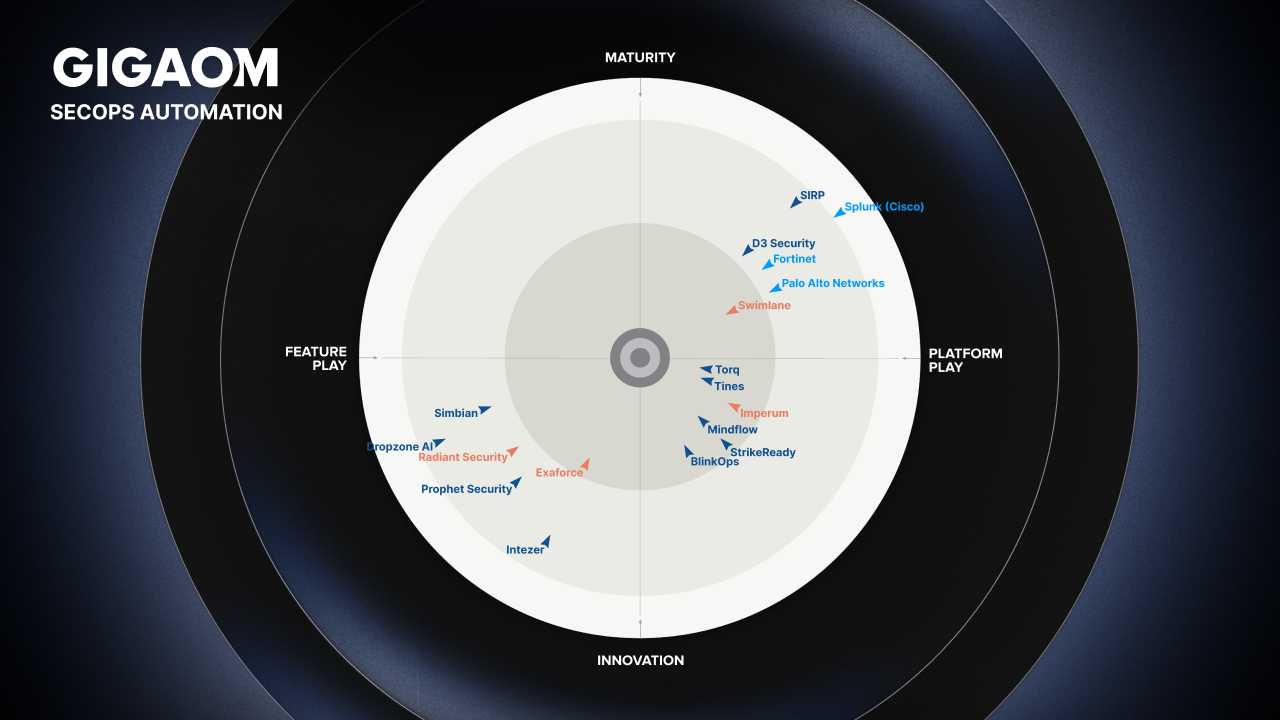
We recently sat down with Cybersecurity Researcher and Analyst Francis Odum to discuss his report exploring trends in SOC automation and how Torq HyperSOC™  solves the challenges legacy solutions failed to deliver on. 

The Evolution of SOC Automation

Early Days: Bespoke Scripts

In the early days of SOC automation, bespoke scripts were the primary tools used to streamline security operations. These scripts were often handcrafted by experienced analysts to automate repetitive tasks such as log parsing, alert triaging, and basic threat detection.

While these custom scripts provided some level of efficiency, they had significant limitations. They were often brittle, difficult to maintain, and heavily reliant on the expertise of individual analysts who created them. This made scaling automation across the SOC challenging. Moreover, the scripts lacked the intelligence and adaptability to handle the growing complexity and volume of cyber threats.

Despite these drawbacks, bespoke scripts laid the groundwork for future advancements in SOC automation, highlighting the potential for automation to alleviate some of the workload from human analysts.

The Rise and Fall of SOAR Platforms

As the limitations of bespoke scripts became apparent, we saw the emergence of Security Orchestration, Automation, and Response (SOAR) platforms. Legacy SOAR platforms were designed to bring a more structured and scalable approach to SOC automation. They integrated various security tools and data sources, enabling automated workflows that could handle complex threat scenarios more effectively.

SOAR platforms made hefty promises of increased efficiency and scalability in the SOC. Unfortunately, SOAR’s monolithic, rigid architecture led to a lack of integrations, limited flexibility, and major complexity issues. Today, SOAR solutions are being phased out by SOC teams looking for a more modern, scalable approach to security automation.

Torq HyperSOC™: The First Purpose-Built Hyperautomated SOC Solution

Hyperautomation represents the next frontier in SOC automation, pushing the boundaries of what is possible. Unlike earlier approaches, hyperautomation aims to automate virtually every aspect of SOC operations, from threat detection and response to compliance and reporting. By leveraging AI and machine learning, hyperautomation can continuously learn and adapt to new threats, making SOCs more resilient and proactive.

Additionally, hyperautomation platforms can orchestrate complex workflows that involve multiple tools and systems, providing a unified approach to cybersecurity management. As organizations face increasingly sophisticated cyber threats, Torq HyperSOC™ offers a scalable and robust solution, enabling SOCs to operate at peak efficiency while freeing human analysts to focus on more strategic tasks.

How Hyperautomation Solves SOC Challenges

Eliminating Alert Fatigue

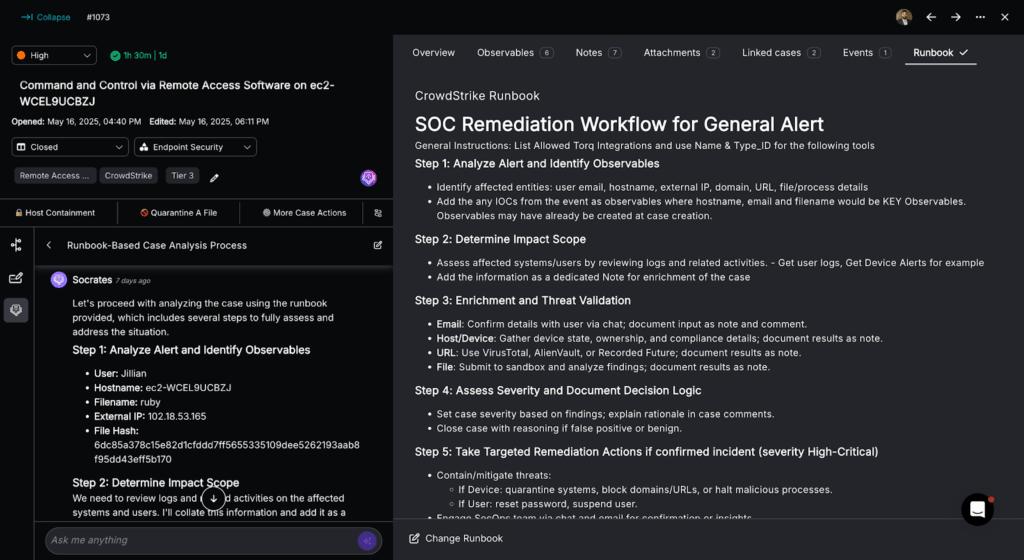
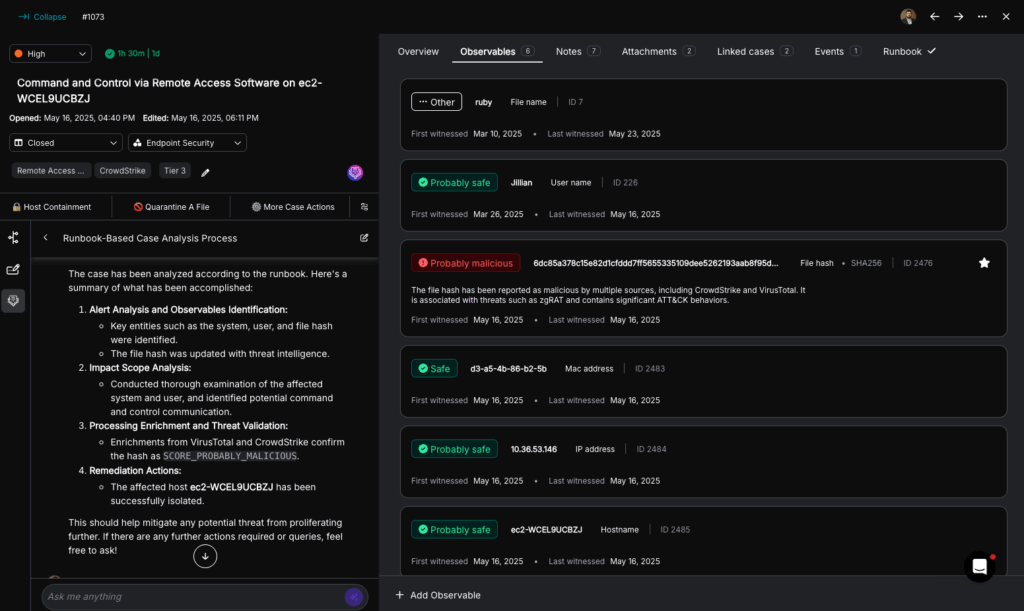
SOC teams drown in thousands of daily alerts, with analysts unable to distinguish critical threats from noise. Torq’s AI-driven Hyperautomation filters, enriches, and prioritizes alerts automatically, surfacing only what matters and auto-remediating the rest. Compuquip now saves hundreds of hours per month in analysis, with alert fatigue eliminated entirely.

Doing More with Less

The cybersecurity talent shortage means SOC teams can’t hire their way out of the problem. Torq automates repetitive Tier-1 tasks (triage, enrichment, containment) so existing analysts can handle higher alert volumes without burnout. BigID reports that work requiring 10 security engineers now takes just one or two with Torq.

Accelerating Phishing Response

Manual phishing triage — extracting IOCs, checking threat intel, removing malicious emails — takes 15+ minutes per incident and doesn’t scale. Torq automates the entire workflow in seconds, from detection to remediation across all affected inboxes. Lennar reduced phishing response from hours to minutes, freeing analysts for threats that require human judgment.

Achieving Consistent, Scalable Response

Manual incident response varies by analyst, shift, and workload, leading to missed steps and inconsistent outcomes. Torq workflows execute identically every time, whether handling 10 alerts or 10,000, with full audit trails for compliance. Carvana automated 41 different runbooks within one month, with agentic AI now handling 100% of Tier-1 alerts.

What’s Next in SOC Automation

Automating Tier-One Analyst Tasks

Tier-one tasks, such as initial alert triage, data enrichment, and basic investigation, are often repetitive and time-consuming. Analysts can focus on more complex and critical issues by automating these processes. Automation not only speeds up response times but also reduces the chance of human error.

Furthermore, it helps maintain high productivity even during high alert volumes, preventing burnout among analysts. Torq HyperSOC™ offers automation capabilities that ensure tier-one tasks are completed swiftly, allowing SOC teams to allocate their resources more strategically. This leads to a more effective security operation, where skilled professionals can focus on tasks that truly require their expertise.

AI Integration: LLMs and Beyond

AI integration has become a cornerstone of modern SOC automation, with large language models (LLMs) leading the way. These advanced AI models can process and analyze vast amounts of textual data, providing deeper insights into threat intelligence and incident reports. LLMs can assist in generating detailed incident summaries, recommending remediation steps, and even automating threat-hunting activities.

Other applications of LLMs include unlocking the ability to create new integrations or build out automations using natural language, removing the barrier of entry for analysts who don’t have the necessary coding skills demanded by SOAR connectors and integration builders. Beyond LLMs, AI integration encompasses various machine learning algorithms designed to detect anomalies, predict potential threats, and optimize response strategies.

The ability of AI to learn from historical data and adapt to new threat landscapes makes it an invaluable asset for SOCs. Furthermore, AI-driven analytics can correlate data from disparate sources, offering a more comprehensive view of the security environment. As AI technology continues to evolve, its integration into SOC operations will undoubtedly enhance the efficiency and effectiveness of cybersecurity measures. 

The Vision of a Fully Hyperautomated SOC

A fully Hyperautomated SOC has already become a reality as we look at the modern security landscape. The modern SOC relies heavily on Hyperautomation to amplify the capabilities of human analysts, not replace them.

Envision a system where sophisticated AI algorithms are continuously informed by vast troves of historical and real-time data, with humans providing the strategic oversight necessary to navigate the evolving threat landscape. This is precisely what Hyperautomation is already delivering and where SOAR solutions failed to rise to the challenge.

In this modern Hyperautomated SOC, technology not only detects and counteracts threats faster but also forecasts and preemptively strengthens defenses against potential vulnerabilities. This level of human-guided automation promises to improve the speed of incident detection and mitigation, delivering expedited yet carefully vetted responses to emerging threats.

A human-centric, hyperautomated SOC would ensure seamless compatibility with broader enterprise systems, promoting an integrated security orientation that comprehensively covers an organization. 

Get a Demo

If you’re ready to experience the future of SOC automation, contact us to get a demo today.

SEE TORQ IN ACTION

Ready to automate everything?

“Torq takes the vision that’s in your head and actually puts it on paper and into practice.”

Corey Kaemming, Senior Director of InfoSec

“Torq HyperSOC offers unprecedented protection and drives extraordinary efficiency for RSM and our customers.”

Todd Willoughby, Director

Compuquip logo in white

“Torq saves hundreds of hours a month on analysis. Alert fatigue is a thing of the past.”

Phillip Tarrant, SOC Technical Manager

Fiverr logo in black

“The only limit Torq has is people’s imaginations.”

Gai Hanochi, VP Business Technologies

Carvana logo in black

“Torq Agentic AI now handles 100% of Carvana’s Tier-1 security alerts.”

Dina Mathers, CISO

Riskified logo in white

“Torq has transformed efficiency for all five of my security teams and enabled them to focus on much more high-value strategic work.”

Yossi Yeshua, CISO

Gartner Says “SOAR Is Obsolete” in ITSM Hype Cycle

Gartner just hammered another nail into the coffin of SOAR. The just-released “Gartner IT Service Management software (ITSM) Hype Cycle” report confirms SecOps professionals are profoundly unhappy with antiquated, legacy SOAR products and vendors. In fact, it places SOAR at the very bottom of its “Trough of Disillusionment” column, meaning “the innovation does not live up to its overinflated expectations.”

According to Gartner, “SOAR requires both development and ongoing operational cycles to maintain, similar to other coding development practices” and that justifying the expense of a SOAR purchase “remains an obstacle for clients.”

In contrast, the report points to modern generative AI-based security automation as a path forward for modern enterprises. It refers to Automated Incident Response solutions, such as the Torq Hyperautomation Platform, as being on the “Slope of Enlightenment,” due to its advanced threat identification, management, and remediation capabilities, and vastly higher ongoing ROI. 

“Workflow automation tools can automate workflows that are part of processes like converting actionable alerts into incidents, opening a communications channel in instant messengers for collaboration, updating the status on a web portal in real time and one-click remediation for existing runbooks,” states the report.

It goes on to applaud modern post-SOAR automation for its unique ability to “remediate and extend incident response capabilities that can integrate with DevOps toolchains.”

Gartner further highlights other critical limitations of SOAR in the report, including:

  • High initial set up and implementation costs
  • High ongoing maintenance and support costs
  • The requirement for specialized personnel and analysts with extensive coding skills
  • Integration and interoperability issues with third-party tools and custom connectors
  • The unrealistic and inaccurate expectation that SOAR can solve all security issues as a standalone solution

In closing, Gartner recommends organizations be extremely critical about their security platform purchase decisions, advising them to “select an appropriate product based on buyer understanding and its applicable use cases, such as SOC optimization, threat monitoring and response, threat investigation and hunting, and TI management.”

Torq professionals are ready to help emancipate organizations from the limitations of SOAR and answer any questions they may have stemming from this report.

If you’re in a trough of disillusionment and ready to ditch Legacy SOAR, contact us to get a demo of Torq Hyperautomation.

SEE TORQ IN ACTION

Ready to automate everything?

“Torq takes the vision that’s in your head and actually puts it on paper and into practice.”

Corey Kaemming, Senior Director of InfoSec

“Torq HyperSOC offers unprecedented protection and drives extraordinary efficiency for RSM and our customers.”

Todd Willoughby, Director

Compuquip logo in white

“Torq saves hundreds of hours a month on analysis. Alert fatigue is a thing of the past.”

Phillip Tarrant, SOC Technical Manager

Fiverr logo in black

“The only limit Torq has is people’s imaginations.”

Gai Hanochi, VP Business Technologies

Carvana logo in black

“Torq Agentic AI now handles 100% of Carvana’s Tier-1 security alerts.”

Dina Mathers, CISO

Riskified logo in white

“Torq has transformed efficiency for all five of my security teams and enabled them to focus on much more high-value strategic work.”

Yossi Yeshua, CISO

Security Automation vs. Security Orchestration: What’s the Difference?

Contents

Get a Personalized Demo

See how Torq harnesses AI in your SOC to detect, prioritize, and respond to threats faster.

Request a Demo

It’s 2024, and we’ve got to stop using “automation” and “orchestration” synonymously.

Security automation eliminates manual effort by automatically executing tasks at machine speed. Security orchestration streamlines processes by connecting disparate tools and coordinating multiple automated workflows. 

But not all automation is created equal. Traditional security automation has limitations. Enter AI-driven Hyperautomation, which takes security operations beyond scripted workflows into a truly autonomous, self-sustaining security model.

Here’s why that matters and why legacy SOAR’s approach to security orchestration is no longer effective. 

What is Security Automation?

Security automation leverages AI and automated workflows to efficiently handle cybersecurity tasks at machine speed, eliminating the need for human intervention and reducing time-consuming manual processes. This enables faster threat detection, analysis, and response. Instead of waiting on your already bogged-down analysts to triage and investigate alerts, automation executes predefined actions instantly, ensuring faster, more accurate responses.

What was once a luxury for Fortune 500s is now non-negotiable for any security team facing overwhelming alert volumes, talent shortages, and non-stop cyberattacks.

In a modern SOC, automation can handle most of Tier-1 work and repetitive, time-consuming tasks for security teams. The use cases are endless, ranging from threat detection and response to GRC workflows like compliance and patch deployment, to blocking domains and encrypting data. 

The benefits speak for themselves. Cybersecurity automation accelerates response times, filters out false positives, and provides the context analysts need to take decisive action. It doesn’t take breaks, it doesn’t get overwhelmed, and it operates at machine speed 24/7 to stop threats before damage is done.

What is Security Hyperautomation?

At Torq, we call this AI-driven Hyperautomation. Torq Hyperautomation™ is security automation that goes beyond simple playbooks and rigid rule sets. 

Unlike traditional security automation, which focuses on predefined rule-based responses, Torq Hyperautomation dynamically connects disparate tools, enriches alerts with real-time intelligence, and autonomously executes remediation — all without manual intervention. It integrates AI and large language models (LLMs) to correlate signals across multiple sources, filter false positives, and instantly prioritize real threats.

So, what makes Torq Hyperautomation different? 

  • Intelligent case automation and prioritization: Comprehensive case management that reduces the analyst’s workflow through automation and enhanced response times.
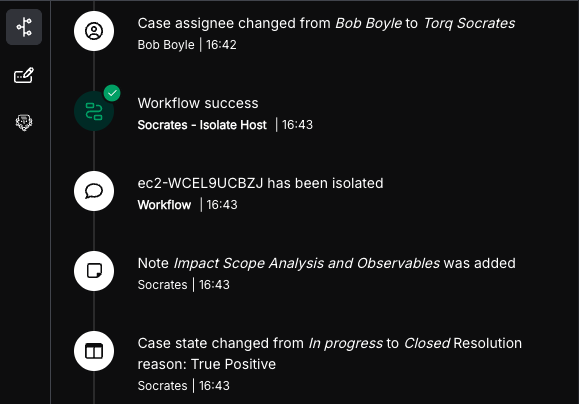
  • Autonomous remediation: No waiting for analysts to act. Hyperautomation automatically isolates compromised endpoints, blocks malicious domains, and disables compromised accounts in seconds. 
  • Full-stack integration: Legacy SOAR is notorious for missing critical integrations, causing silos. Torq Hyperautomation connects to every tool in your stack.
  • No-code automation: No engineers, no problem. Hyperautomation lets SOC teams automate complex processes using natural language, making security automation accessible to everyone, not just developers.

Where security automation removes friction, Hyperautomation eliminates inefficiencies entirely — allowing organizations to move from reactive to proactive, self-sustaining security operations. With agentic AI-powered automation, security teams can investigate, escalate, and remediate threats autonomously, closing security gaps faster than ever. AI-powered Hyperautomation doesn’t just improve security workflows but redefines modern SOCs’ operations.

“Employing AI to augment human security analysts acts as a force multiplier that helps security teams be more productive. This approach not only improves response times, but also ensures that human ingenuity is applied where it is most needed, effectively expanding the capabilities of existing security teams.” – Forbes

Security Automation in Action: Real-World Use Cases

Understanding security automation and orchestration concepts is one thing — seeing them deliver measurable results is another. Here’s how organizations are using Torq Hyperautomation™ to solve their most pressing security challenges.

Eliminating Alert Fatigue and Accelerating Threat Response

The problem: Security teams are drowning in alerts. The average SOC receives thousands of notifications daily, and analysts simply can’t keep pace. The result? Slow response times, missed threats, and burnout. When every alert requires manual triage, investigation, and action, critical threats can sit unaddressed for hours — giving attackers the time they need to move laterally and escalate damage.

The solution: Torq automates alert triage using AI-driven workflows that analyze, enrich, and prioritize incoming threats at machine speed. Instead of analysts manually reviewing every notification, Torq’s Hyperautomation platform automatically correlates signals across multiple security tools, filters out false positives, and escalates only verified threats that require human attention. For confirmed incidents, Torq can autonomously execute containment actions — isolating endpoints, blocking malicious IPs, and disabling compromised accounts — without waiting for manual intervention.

The result: Organizations implementing Torq’s automated alert triage have achieved a 40% reduction in response time, dramatically enhancing threat mitigation efficiency. Analysts are freed from repetitive triage work to focus on strategic threat hunting, while threats are contained in seconds rather than hours.

Streamlining Patch Management Across the Enterprise

The problem: Patch management is a critical but often neglected security function. When vulnerabilities are disclosed, organizations face a race against time to deploy patches before attackers can exploit them. But manual patch deployment is slow, error-prone, and resource-intensive — especially across complex environments with thousands of endpoints, multiple operating systems, and distributed infrastructure. Delays in patching leave systems exposed and create windows of opportunity for attackers.

The solution: Torq’s security orchestration automates the entire patch management lifecycle. When new vulnerabilities are identified, Torq workflows automatically assess which systems are affected, prioritize patches by risk severity, coordinate deployment schedules across teams, and execute patch installations across systems — all without manual coordination. Integration with vulnerability scanners, ITSM platforms, and endpoint management tools ensures that patches are deployed consistently and verified as successful.

The result: Teams using Torq for automated patch management have compressed remediation timelines from weeks to hours, minimizing the window of vulnerability exposure and improving overall system integrity. Automated verification ensures patches are applied correctly, reducing the risk of misconfigurations and compliance gaps.

What is Security Orchestration? 

Security orchestration is the automated management and coordination of multiple security workflows, often spanning multiple tools within an organization’s security infrastructure.

Orchestration ensures that interdependent automated tasks within the security ecosystem proceed smoothly, with data shared effectively and subsequent actions triggered correctly across different tools. Orchestration is crucial for managing complex security operations where automated processes rely on each other for completion and data exchange.

Why is SOAR Dead?

Security Orchestration and Response (SOAR) platforms were supposed to be the missing link between security tools to streamline workflows and reduce manual efforts. Instead, they became bottlenecks and money pits.

SOAR platforms promised to unify security operations. They failed. Why?

  • Playbooks required constant maintenance
  • They were slow, rigid, and lacked adaptability
  • They demanded skilled engineers to build and manage workflows
  • They relied on manual tuning

Security teams don’t need another tool that creates more work — they need one that eliminates it. That’s why Security Hyperautomation is the next evolution. AI-driven, no-code, and fully autonomous. 

Ready to pull the plug on your SOAR? We can help >

Why Hyperautomation Replaces SOAR-Based Security Orchestration

Security orchestration as a concept isn’t dead — it’s evolving. Torq still orchestrates workflows, but not the way legacy SOAR did. Here are the main differences:

  • Legacy SOAR playbooks require maintenance. Hyperautomation learns and adapts in real time.
  • Legacy SOAR is static. Hyperautomation makes security processes dynamic, enabling them to optimize and adapt to new attack patterns.
  • Legacy SOAR requires engineers. Hyperautomation is no-code and accessible to any SOC analyst.
  • Legacy SOAR operates in silos. Hyperautomation connects seamlessly across your entire environment.

The clunky, expensive orchestration of the SOAR era is over. But intelligent, adaptive orchestration powered by agentic AI is alive and thriving in the world’s most advanced SOCs.

Hyperautomation in Action: Real-World Results

Accelerating threat response: Manual investigation and containment takes 30+ minutes per alert — time attackers use to move laterally. Torq Hyperautomation executes detection, enrichment, and containment in seconds, automatically isolating endpoints and disabling compromised accounts the moment indicators are confirmed. Valvoline cut analyst workload by 7 hours per day after implementing Torq.

Eliminating integration bottlenecks: Legacy SOAR platforms are notorious for missing critical integrations — creating silos and forcing manual workarounds. Torq connects seamlessly across your entire stack with 300+ pre-built integrations and AI-powered custom integration generation.

No-Code Automation for Every Analyst: Traditional automation required skilled engineers to build and maintain playbooks — a bottleneck most SOCs can’t afford. Torq’s no-code interface lets any analyst create complex workflows using natural language, removing the barrier between security expertise and automation capability. Fiverr’s VP of Business Technologies says: “The only limit Torq has is people’s imaginations.”

Autonomous Tier-1 Operations: Alert fatigue drowns SOC teams; analysts can’t keep pace with thousands of daily notifications. Torq’s agentic AI handles Tier-1 triage autonomously, filtering false positives, enriching real threats, and executing containment without human intervention. Carvana automated 100% of Tier-1 alerts within one month, with 41 runbooks deployed and running at machine speed.

The Bottom Line

Security automation and security orchestration aren’t interchangeable — but in 2024, the distinction matters less than the outcome. Legacy SOAR tried to orchestrate rigid playbooks across siloed tools and failed. Modern Hyperautomation delivers what SOAR promised: unified, intelligent, autonomous security operations that actually work.

The question isn’t whether to automate; it’s whether your automation can keep pace with attackers operating at machine speed. Static playbooks can’t. AI-driven Hyperautomation can.

Torq combines the speed of automation with the coordination of orchestration, powered by agentic AI that reasons, adapts, and executes without waiting for human intervention. It’s why the world’s most advanced SOCs have moved entirely away from legacy SOAR.

Get the GigaOm SOAR Radar Report to learn why Torq has outranked legacy SOAR for two years running.

FAQs

What is the difference between security automation and orchestration?

Security automation executes individual tasks at machine speed without human intervention — like blocking a malicious IP or isolating an endpoint. Security orchestration coordinates multiple automated workflows across different tools, ensuring data flows correctly and actions trigger in sequence. Automation handles the “doing,” orchestration handles the “connecting.” Modern Hyperautomation combines both into a unified, AI-driven approach. Learn more about Hyperautomation →

How does security Hyperautomation improve traditional methods?

Traditional automation relies on static, rule-based playbooks that break when conditions change. Hyperautomation uses AI and LLMs to dynamically adapt — correlating signals across tools, filtering false positives, prioritizing real threats, and executing remediation autonomously. It’s the difference between following a script and actually reasoning through a problem. Torq customers like Carvana now automate 100% of Tier-1 alerts with agentic AI.

Why is legacy SOAR considered outdated?

Legacy SOAR platforms promised unified security operations but delivered complexity instead. Playbooks required constant maintenance, integrations were limited, and skilled engineers were needed to build and manage workflows. They created more work, not less. Hyperautomation eliminates these pain points with no-code building, 300+ pre-built integrations, and AI that adapts in real time. See why SOAR is dead →

What benefits does AI-driven security automation provide?

AI-driven automation accelerates response times from hours to seconds, filters out false positives before they reach analysts, and provides contextual enrichment for faster decision-making. It operates 24/7 without fatigue, handles unlimited alert volumes, and frees analysts to focus on strategic threat hunting instead of repetitive triage.

How can organizations transition from manual to automated security processes?

Start by identifying high-volume, repeatable workflows — phishing triage, suspicious login investigation, and endpoint isolation are common starting points. Choose a platform with pre-built templates and no-code customization so your team can deploy quickly without engineering dependencies. Measure results (MTTR, automation rate, analyst hours saved), then progressively expand. Torq customers typically see production value within 30 days. Get a demo →

SEE TORQ IN ACTION

Ready to automate everything?

“Torq takes the vision that’s in your head and actually puts it on paper and into practice.”

Corey Kaemming, Senior Director of InfoSec

“Torq HyperSOC offers unprecedented protection and drives extraordinary efficiency for RSM and our customers.”

Todd Willoughby, Director

Compuquip logo in white

“Torq saves hundreds of hours a month on analysis. Alert fatigue is a thing of the past.”

Phillip Tarrant, SOC Technical Manager

Fiverr logo in black

“The only limit Torq has is people’s imaginations.”

Gai Hanochi, VP Business Technologies

Carvana logo in black

“Torq Agentic AI now handles 100% of Carvana’s Tier-1 security alerts.”

Dina Mathers, CISO

Riskified logo in white

“Torq has transformed efficiency for all five of my security teams and enabled them to focus on much more high-value strategic work.”

Yossi Yeshua, CISO

IDC Validates Torq HyperSOC™: A Game-Changer for SOC Analysts

IDC declares Torq HyperSOC™ the first solution to effectively mitigate SOC alert fatigue, false positives, staff burnout, and attrition.

In a groundbreaking report, IDC emphatically recognizes the potential of Torq’s latest innovation, Torq HyperSOC™, hailing it as a pivotal addition to the SOC analyst toolkit.

A Giant Leap Forward for SOC Analysts

IDC’s validation of Torq HyperSOC™ marks a significant milestone for SOC analysts. This endorsement is more than just a stamp of approval; it’s a signal that the industry is taking a giant leap forward. Torq HyperSOC™ was built with the unique needs of SOC teams in mind, offering features that embed automation across the entire case management lifecycle by combining AI-driven insights and Hyperautomation. Analysts can expect a reduction in false positives, faster identification of real threats, and a more intuitive interface that allows for quick adaptation. With the backing of a reputable organization like IDC, Torq HyperSOC™ is poised to set a new standard for SecOps, providing analysts with a powerful ally in the fight against cyber threats.

“Torq HyperSOC™ helps ensure Check Point internal security analysts’ time is used in the most productive and effective manner possible. We are impressed with how Torq HyperSOC™ harnesses AI to alleviate those burdens by automating investigation and remediation.”

Jonathan Fischbein, Global CISO, Check Point

The Game-Changing Impact on SecOps

The arrival of Torq HyperSOC™ signals a transformative era for SecOps. By integrating innovative automation and orchestration capabilities, SOC teams can now address alerts with unprecedented speed and accuracy. The impact is twofold: first, it dramatically reduces the time spent on menial tasks, freeing analysts to focus on strategic work; second, it enhances the organization’s overall security posture by enabling quicker response to threats. This is a game-changer in an environment where every second counts. The agility afforded by Torq HyperSOC™ allows for a more proactive and less reactive approach to security, shifting from a traditional, often cumbersome, process to a dynamic and streamlined operation. IDC’s recognition underscores the potential of Torq HyperSOC™ to redefine how we think about and execute security operations in the digital age.

How Torq HyperSOC™ Empowers CISOs and CIOs

CISOs and CIOs are under constant pressure to ensure their organization’s cybersecurity infrastructure is robust and efficient. Torq HyperSOC™ comes as a powerful asset for these leaders, providing them with a previously unattainable level of oversight and control. With its cutting-edge features, Torq HyperSOC™ equips CISOs and CIOs to enforce security policies more effectively, automate compliance procedures, and gain valuable insights into their security landscape. This solution translates into better decision-making based on real-time data, enabling a swift pivot as the threat environment evolves. Moreover, the efficiency gains from automating routine tasks can lead to significant cost savings, optimizing resource allocation and potentially lowering the risk of burnout among security teams. In essence, Torq HyperSOC™ is not just a tool for the present; it’s an investment in the future resilience of the enterprise.

Want to learn more about Torq HyperSOC™? Get a demo.

SEE TORQ IN ACTION

Ready to automate everything?

“Torq takes the vision that’s in your head and actually puts it on paper and into practice.”

Corey Kaemming, Senior Director of InfoSec

“Torq HyperSOC offers unprecedented protection and drives extraordinary efficiency for RSM and our customers.”

Todd Willoughby, Director

Compuquip logo in white

“Torq saves hundreds of hours a month on analysis. Alert fatigue is a thing of the past.”

Phillip Tarrant, SOC Technical Manager

Fiverr logo in black

“The only limit Torq has is people’s imaginations.”

Gai Hanochi, VP Business Technologies

Carvana logo in black

“Torq Agentic AI now handles 100% of Carvana’s Tier-1 security alerts.”

Dina Mathers, CISO

Riskified logo in white

“Torq has transformed efficiency for all five of my security teams and enabled them to focus on much more high-value strategic work.”

Yossi Yeshua, CISO

How Next DLP Automates Data Breach Investigations with Torq Hyperautomation

The following is adapted from a conversation between Torq and Robbie Jakob-Whitworth, Cybersecurity Solutions Architect at Next DLP. Next DLP is a leading provider of insider risk and data protection solutions. Read on to learn how Robbie has used Torq Hyperautomation to automate alerts and reduce alert fatigue within his organization.  

Introduction to Robbie and Next DLP

I’m Robbie Jakob-Whitworth, Solutions Architect with Next DLP. Next DLP is focused on reinventing data protection, DLP, and insider risk. So, I spend a lot of time working with customers and enterprises focusing on how we can protect the data in their organization, how we can prevent a data leak or data breach, and also how we can manage the insider risk. 

So a key thing that I work on with a lot of customers is alerts, detections and incidents from a data protection perspective as well as an insider risk perspective. And alert fatigue is something that is a very real problem for security analysts. They spend a lot of time looking through alerts. 

Next DLP provides a fantastic platform to get an overview and take control of risky behavior taken by users. For example, the sharing of sensitive data, or accessing data that is controlled by regulation or compliance. But going through all of these alerts and all of these incidents can be quite a time thing sometimes for an analyst. So in that theme of alert fatigue, I was able to use Torq to build a workflow to notify me separately via Slack about the most serious data breaches.

Combatting Alert Fatigue with Hyperautomation

So in the example that I’m going to show you here, we can actually reduce alert fatigue by using Torq to just alert us about the most high severity alerts. So using Next DLP, I built out a web hook integration directly into Torq and streamed detection information for Torq where the data is Personal Identifiable Information (PII).

I’m only going to focus on the most high risk users, and I only want events that are a score of at least 80. So, particularly high severity alerts. Now, when a policy violation or incident occurs that meets these thresholds, a workflow in Torq is triggered and I get notified in real time through Slack or on my phone.

Then, I can launch an investigation in real time. So I can go and spend my time on other things that are more important to me than looking through logs. I’m saving a lot of time by getting these alerts through Torq.

A Real-World Example

Consider this – from a data protection perspective, I might have data in my organization, maybe personal information, social security numbers, or customer information that needs to be protected. And in this case, if I’m a user and I’m sharing this data through a site like WeTransfer, either maliciously or accidentally, Next DLP can provide real-time data protection by enforcing IT and corporate policy, preventing the taking of sensitive data. 

So in this case, we caught the fact that this file contains this sensitive information – email addresses and social security numbers – and that it was leaked out through WeTransfer. Next DLP protected and blocked that activity.

Now as a SOC or security analyst, I don’t need to sit in the Next DLP platform and look through every single alert. With this automation, Torq notifies me with all of the information around the incident: which user violated the policy, what the policy was, that it contains social security numbers, how the data was being exfiltrated, in this case to WeTransfer. I get a link to view the file and the forensic evidence, along with a screenshot of the user’s desktop at that moment in time. So I’m able to launch an investigation to dive down deeper into the context of this user’s activity. 

The Power of Torq Hyperautomation

Traditionally, for an analyst or in a SOC, you spend all your time kind of combing through logs and alerts. You have a lot of false positives to deal with. And all the information is presented to you within a powerful UI of most products. But, you have to spend a lot of time going through each alert.

It was super simple to build this automation because I’m combining the powerful open API provided by Next DLP with the really helpful no code workflow UI provided by Torq. Plugging those two together is the best of both worlds. It’s really a fantastic way to orchestrate and connect different systems together and to save me time by automating those manual tasks.

Want to learn more about Torq Hyperautomation? Get a demo.

SEE TORQ IN ACTION

Ready to automate everything?

“Torq takes the vision that’s in your head and actually puts it on paper and into practice.”

Corey Kaemming, Senior Director of InfoSec

“Torq HyperSOC offers unprecedented protection and drives extraordinary efficiency for RSM and our customers.”

Todd Willoughby, Director

Compuquip logo in white

“Torq saves hundreds of hours a month on analysis. Alert fatigue is a thing of the past.”

Phillip Tarrant, SOC Technical Manager

Fiverr logo in black

“The only limit Torq has is people’s imaginations.”

Gai Hanochi, VP Business Technologies

Carvana logo in black

“Torq Agentic AI now handles 100% of Carvana’s Tier-1 security alerts.”

Dina Mathers, CISO

Riskified logo in white

“Torq has transformed efficiency for all five of my security teams and enabled them to focus on much more high-value strategic work.”

Yossi Yeshua, CISO

Stop SOAR From Killing Your SOC Budget With Hyperautomation

Cyberthreats are escalating and SOC budgets are tightening. It’s a recipe for disaster, that is, unless you take advantage of new technologies that keep both in check. The fact is, businesses are now spending nearly a third of their cybersecurity budget towards running an in-house SOC, averaging out to $2.86 million per year, according to Ponemon. 

Historically, security teams anchored their SOCs with SOAR. In the distant, fading past, this was intended to improve efficiency and drive standardization across incident response activities. SOARs promised to enable organizations to integrate security solutions within the SOC technology stack, filter and prioritize incident data, and automate processes to improve remediation speed. However, reality quickly set in, and SOC teams experienced disconnected and reactive defenses, narrow visibility and event processing capabilities, and limited inflexible integrations that were putting the organization in danger.

Beyond the technical limitations, organizations found that the myriad of hidden costs associated with running SOAR negatively impacted the investment already made in three key areas of the SOC: People, Time, and Technology.

People

When the SOC receives an alert, three levels of analysts typically work together to cover the entire threat lifecycle. Entry level analysts handle the initial triaging and filtering of alerts, escalating legitimate threats to Tier-2/3 analysts for more advanced investigations, and eventual remediation. However, the need for continuous monitoring, troubleshooting, and maintenance of SOAR solutions creates a bottleneck, slowing down the incident response process at every level. According to ESG, 92% of security professionals agree that leveraging a SOAR effectively demands intensive programming/scripting skills, meaning organizations often find themselves allocating one, if not more, FTEs strictly to SOAR management. 

Depending on the size and maturity of the organization, staffing an efficient 24/7 SOC may require between 5-10 analysts, with the average entry-level analyst salary hovering around $90,000 annually. The challenge is, the cyber security space is already dealing with a 4 million global shortage of security staff, and Tier-1 analyst roles are so tedious and demanding that employees don’t stay in these positions long due to high stress, and eventual burnout.  This shortage has made finding highly skilled and experienced analysts much more difficult, increasing the competitive salaries organizations must offer throughout the recruitment process. 

Time

Whether it’s cost associated with increasing staff or labor hours due to overwhelming amounts of disconnected SOAR alerts, the impact of organization downtime when a legitimate threat is missed, or even regulatory compliance fines and reputational damages that are incurred in post-breach recovery. According to IBM’s Cost of a Data Breach Report (2023), the global average cost of a data breach has risen by 15% over the past 3 years, reaching an astronomical $4.45 million dollars

Improving SOC speed to combat the potential impact of downtime is a key investment area for most organizations, and an area in which SOAR has drastically failed. SOAR’s poorly-scalable architecture and integration rigidity makes the initial implementation and configuration slow, tedious and time-consuming. Once implemented, CISOs and Directors of Cybersecurity commonly report on the mean time to respond (MTTR) to an incident when measuring the efficiency of the SOC. Ironically, the amount of time spent manually triaging, correlating and escalating massive amounts of alerts within a SOAR is often the major contributing factor leading to analyst burnout, and almost 40% of cybersecurity professionals say that their average MTTR is still “months or even years”

Technology 

To help reduce MTTR, especially in this intensely-competitive era of hiring experienced SOC analysts, organizations invest more heavily in technology to arm their security operations center. In 2024, approximately 70% of IT leaders expect to increase their cybersecurity budget, with almost half of that budget being allocated towards the cloud security and incident response solutions that are pertinent to day-to-day SOC responsibilities. Despite significant investments in cybersecurity tooling to increase SOC productivity, many organizations experience the opposite effect. 

Security teams are overloaded, trying to protect legacy systems, hybrid infrastructures, and emerging technologies with siloed security solutions that do not have pre-built SOAR integrations allowing them to work in harmony with each other, or third-party threat intelligence feeds. The overabundance of security tools meant to safeguard an organization, ends up contributing to operational deficiency known as stack sprawl, where a lack of integration, limited connectivity, and an overwhelming amount of disconnected event data actually decreases SOC productivity. Even building basic SOC automation playbooks and setting up integrations with existing security solutions can often require custom development or lengthy professional services offered by the SOAR vendor, delaying productivity and decreasing ROI.

Maximize ROI with SOC Hyperautomation

Before signing on the dotted line, organizations need to be aware of the budget-busters of SOAR and other legacy SOC solutions that erode their value, lengthen their ROI, and make them downright expensive. Today, building an efficient SOC and maximizing not only the investment made in SOC solutions, but also the resource investment in people and time, requires Hyperautomation

SOC teams leveraging Torq Hyperautomation easily integrate any security solution, and build effective automations using AI-prompts or no-code, low-code, and full-code support. Purpose-built AI capabilities that leverage LLMs to understand natural language uplevel Tier-1 analysts to perform Tier-3 tasks at machine speed, without the typical learning curve or need for professional services. By applying automation not only to security solutions, but to repetitive investigation, organization, and escalation tasks as well, Hyperautomation not only reduces the workload of SOC analysts, but enables them to act faster on critical incidents with intelligent, dynamic prioritization. Finally, a secure and extensible, cloud-native, zero-trust architecture eliminates scaling or performance ceilings, while maintaining compliance regardless of which best-of-breed solutions or enterprise architecture the organization is working with.

When building out a SOC, the best way to maximize an organization’s ROI is to protect the three key areas of investment; People, Time, and Technology. Torq Hyperautomation not only protects that investment, but enhances the SOC by automating processes at scale, with ease and efficiency – effectively solving the challenges outlined above, and removing the hidden costs associated with SOAR solutions. 

Learn more about how Torq Hyperautomation protects your SOC investment, and download our spotlight report “SOAR is Dead: A Manifesto”. And to see Torq in action, schedule a demo.

SEE TORQ IN ACTION

Ready to automate everything?

“Torq takes the vision that’s in your head and actually puts it on paper and into practice.”

Corey Kaemming, Senior Director of InfoSec

“Torq HyperSOC offers unprecedented protection and drives extraordinary efficiency for RSM and our customers.”

Todd Willoughby, Director

Compuquip logo in white

“Torq saves hundreds of hours a month on analysis. Alert fatigue is a thing of the past.”

Phillip Tarrant, SOC Technical Manager

Fiverr logo in black

“The only limit Torq has is people’s imaginations.”

Gai Hanochi, VP Business Technologies

Carvana logo in black

“Torq Agentic AI now handles 100% of Carvana’s Tier-1 security alerts.”

Dina Mathers, CISO

Riskified logo in white

“Torq has transformed efficiency for all five of my security teams and enabled them to focus on much more high-value strategic work.”

Yossi Yeshua, CISO

No More SuckOps: How Hyperautomation is Transforming SOC Analysts’ Lives Forever

Today’s SOC analysts are drowning in myriad notifications. They’re trying to parse what’s real, what matters, and what’s a genuine threat to the organization. This exhausting daily routine is significantly contributing to job dissatisfaction and the high turnover rate in SecOps teams. But there’s a major new innovation that solves it: AI-driven hyperautomation. This modern SecOps approach is enabling a key shift away from code reliance and it’s transforming analysts’ roles forever.

SecOps Is No Longer Just For Code Warriors

During the legacy SOAR era, SecOps was largely exclusively the realm of expert coders. Analysts needed months of complex training and the ability to dig deep into myriad programming languages in order to assess and address threats. 

Together, hyperautomation and generative AI liberate analysts from these requirements. The combination delivers auto-calibrated workflows in real time that can predictively mitigate threats before they happen–and even more importantly–handle them as they occur in real time. No code needed. The hyperautomation platform does all the work. And if something exceeds a critical impact threshold, hyperautomation’s human-in-the-loop crosschecks ensure the analyst is informed before a remediation approach is executed.

Out-of-the-Box Automations Don’t Cut It Anymore

Given the fact we’re living in the most complex security threat landscape in history, legacy SOAR’s out-of-the-box automations are simply no longer effective. They’ve historically been valuable prior to the explosion of novel cyberthreats, but with attackers hitting enterprises with more and more unanticipated tactics and strategies, the automation response must keep pace. Generative AI delivers a machine speed defense unlike anything we’ve previously seen in cybersecurity.

AI-driven hyperautomation is transforming and democratizing the role of SecOps analysts, so they can do more, with less training. This is lowering the bar to entry in the field, while further empowering their capabilities. By embracing AI-driven hyperautomation, we’re not just optimizing processes; we’re reinvigorating our teams, allowing them to shift from constant firefighting to proactive threat hunting and analysis. 
Ready to empower your SOC analysts? Learn more at: https://torq.io/product/

SEE TORQ IN ACTION

Ready to automate everything?

“Torq takes the vision that’s in your head and actually puts it on paper and into practice.”

Corey Kaemming, Senior Director of InfoSec

“Torq HyperSOC offers unprecedented protection and drives extraordinary efficiency for RSM and our customers.”

Todd Willoughby, Director

Compuquip logo in white

“Torq saves hundreds of hours a month on analysis. Alert fatigue is a thing of the past.”

Phillip Tarrant, SOC Technical Manager

Fiverr logo in black

“The only limit Torq has is people’s imaginations.”

Gai Hanochi, VP Business Technologies

Carvana logo in black

“Torq Agentic AI now handles 100% of Carvana’s Tier-1 security alerts.”

Dina Mathers, CISO

Riskified logo in white

“Torq has transformed efficiency for all five of my security teams and enabled them to focus on much more high-value strategic work.”

Yossi Yeshua, CISO

Enhancing Cyber Defenses: The Benefits of Hyperautomation in Cybersecurity

Cyber threats are constantly evolving and becoming increasingly sophisticated, and organizations are continuously searching for ways to fortify their cybersecurity defenses. One approach that has gained significant traction is hyperautomation

Hyperautomation, which automates once-manual security workflows and processes, enhances cybersecurity posture, streamlines security operations, and effectively mitigates risks.

So, what are the benefits of hyperautomation in cybersecurity, and how does it improve security operations while reducing cyber risks?

The Benefits of Hyperautomation in Cybersecurity

Increased Efficiency

Hyperautomation increases efficiency in cybersecurity. It enables organizations to automate repetitive tasks, such as threat detection, incident response, and vulnerability management by automating these processes. This allows cybersecurity teams to focus their time and efforts on more strategic initiatives.

Faster Response

Hyperautomation empowers SecOps teams to respond to threats in real-time. AI-powered hyperautomation that uses large language models can analyze vast amounts of data at incredible speeds, allowing for faster identification and remediation of security incidents before they have a chance to escalate into larger breaches.

Proactive Threat Detection

Hyperautomation uses AI in security to detect and analyze patterns indicative of potential cyber threats. By continuously monitoring network traffic, user behavior, and system logs, organizations can proactively identify and stop attacks before they have the chance to cause significant damage.

Seamless Integration

Hyperautomation integrates seamlessly with the vast majority of existing cybersecurity tools and technologies, which enhances their capabilities and provides a more unified approach to security management. This extensibility and interoperability ensures organizations can leverage their existing investments while maximizing the effectiveness of their cybersecurity defenses.

Scalability

As organizations grow and evolve, so do their cybersecurity needs. Hyperautomation delivers scalability by adapting to changing requirements and increasing workloads. Whether it’s securing new endpoints, expanding into cloud and hybrid environments, or integrating with emerging technologies, hyperautomation offers the flexibility to scale security operations accordingly.

How Does Hyperautomation Improve Security Operations?

AI-driven hyperautomation greatly improves security operations by streamlining workflows, accelerating response times, and enhancing decision-making processes. With hyperautomation you can achieve a 10X or more operational and productivity boost within weeks of deployment. Autonomously detecting, triaging, investigating, and remediating security threats introduces new efficiencies in cybersecurity without the need for human intervention. This dramatically filters out the noise of thousands of daily security alerts and only presents the most critical as needing attention, which greatly accelerates the mean-time-to-resolve genuine security. By leveraging AI and automation, organizations can:

  • Automate routine tasks: Hyperautomation automates repetitive tasks, such as log analysis, malware detection, and patch management, freeing up security teams to focus on more complex and strategic initiatives.
  • Enhance threat intelligence: AI algorithms analyze vast amounts of data to identify patterns and anomalies that indicate  a potential cyber threat. This enables organizations to stay ahead of emerging threats and proactively defend against potential attacks.
  • Improve incident response: Hyperautomation enables faster incident detection, analysis, and remediation. By automating incident response workflows, organizations minimize threat exposure and can more quickly mitigate the impact of security incidents.
  • Optimize resource allocation: AI-driven insights provide security teams with actionable intelligence, enabling them to prioritize tasks based on risk severity and potential impact. This eliminates the need to respond to low-priority alerts and tasks, and ensures resources are allocated efficiently to address the most critical security issues.

Can Hyperautomation Reduce Cybersecurity Risks?

Because hyperautomation gives security teams the ability to automate threat detection and response, reducing cyber risks is one of the main reasons organizations deploy it. Add to the mix AI cybersecurity advantages of being able to analyze massive amounts of data in real-time to identify indicators of potential security threats and security risk is further reduced. 

Ultimately, hyperautomation allows security teams to detect security threats faster and respond more quickly and more effectively, minimizing their impact and reducing cyber risks by.

  • Minimizing human error: By automating routine tasks and standardizing security processes, hyperautomation reduces the likelihood of human error, which is a common cause of security breaches.
  • Enabling proactive threat hunting: AI-powered analytics enable organizations to proactively hunt for threats across their infrastructure, identifying and neutralizing potential risks before they can be exploited.
  • Improving compliance posture: Hyperautomation ensures consistent enforcement of security policies and regulatory requirements, reducing the risk of non-compliance and potential penalties.

Hyperautomation offers myriad benefits, including increased efficiency in cybersecurity, faster response, proactive threat detection, seamless integration, and scalability. By leveraging AI and automation, organizations can enhance their security operations, reduce cyber risks, and strengthen their defenses against today’s evolving security threats.

To see the benefits of hyperautomation in action, schedule a Torq demo

SEE TORQ IN ACTION

Ready to automate everything?

“Torq takes the vision that’s in your head and actually puts it on paper and into practice.”

Corey Kaemming, Senior Director of InfoSec

“Torq HyperSOC offers unprecedented protection and drives extraordinary efficiency for RSM and our customers.”

Todd Willoughby, Director

Compuquip logo in white

“Torq saves hundreds of hours a month on analysis. Alert fatigue is a thing of the past.”

Phillip Tarrant, SOC Technical Manager

Fiverr logo in black

“The only limit Torq has is people’s imaginations.”

Gai Hanochi, VP Business Technologies

Carvana logo in black

“Torq Agentic AI now handles 100% of Carvana’s Tier-1 security alerts.”

Dina Mathers, CISO

Riskified logo in white

“Torq has transformed efficiency for all five of my security teams and enabled them to focus on much more high-value strategic work.”

Yossi Yeshua, CISO

Torq Talks to Tyler Young, CISO at BigID

The following is adapted from a conversation between Torq and Tyler Young, CISO at BigID. BigID produces software for data security, compliance, privacy, and governance. Read on to learn about how Torq Hyperautomation has helped BigID unlock new levels of efficiency and productivity by relieving their team of rudimentary tasks.

Introduction to Tyler and BigID

I’m Tyler Young, Chief Information Security Officer at BigID. I’ve been at BigID for two years, and I was brought in to take the company’s product security program to the next level. Prior to BigID, I was at Relativity for almost four and a half years where I was responsible for building out and scaling the security program. Prior to Relativity, I was at Zurich Insurance. Before that, I worked with some consulting firms and the US Government. I’ve had experience with multiple sectors am now focused in hypergrowth tech.

BigID’s Automation Journey

BigID’s automation journey consists of two different parts. First, we needed to bring in the right technologies that fed the right telemetry to our security engineering teams. Second, we wanted to save time by not building out an elaborate SOC. We talk all the time as an industry about burnout and talent shortage. Security teams want to build, they want to solve critical problems, they don’t want to be looking at alerts all day or wasting time on repetitive tasks that can be automated. That’s why we invested in Torq. We leverage Torq for the phishing aspects of what BigID is doing, as well as our level one and level two tasks. We built our automation strategy from scratch leveraging Torq.

Security teams want to build, they want to solve critical problems, they don’t want to be looking at alerts all day or wasting time on repetitive tasks that can be automated. That’s why we invested in Torq.

Tyler Young, CISO at BigID

Life Before Torq Hyperautomation

We had Torq Hyperautomation within my first five months of being at BigID, but in my last role, we used a SOAR platform. It took an entire team to operate and to manage it. I’m talking like six or seven people writing automation framework playbooks and writing threat detections in the platform. Instead of spending over a million dollars on the program, we could have been using those resources to build homegrown security solutions or leveraging open source that we could then offset some other security costs. I think a lot of places are leveraging these really robust SOAR capabilities, but they require a significant head count, a lot of funding and top-notch talent to write code, almost at the same level as some developers are writing.

Comparing Torq Hyperautomation to Traditional SOAR Offerings

Torq Hyperautomation’s click and drag capability and ability to integrate with companies like SentinelOne or Crowdstrike, combined with not having to write API connections and build connectors for all these different aspects make the program different from Legacy SOAR. Being able to just click and drag makes our job so much easier. I can do the same thing with one or two security engineers that we could do with ten when they’re having to write these things manually.

Benefits BigID Has Experienced with Torq Hyperautomation

Maybe this is the unconventional aspect of this, but I think the biggest benefit we’ve seen is our security engineers don’t have to focus on remedial workflows that they can build themselves in a playbook, which allows them to focus on more meaningful work. I’m a big believer in building security solutions, and leverage things off the shelf when possible. Torq allows our team to take the rudimentary tasks and automate them so that they can spend more of their time building. 

Advice to CISO’s Considering Torq Hyperautomation

I think it’s important to do a cost benefit analysis of how much time and money you spend today on your current SOAR offering. It’s also important to gauge your employees’ happiness and satisfaction with their responsibilities. There’s already a talent shortage. Ask yourself, is my team bought into what they’re doing? If not, leverage something like Torq Hyperautomation to automate those repetitive tasks so your team is focusing on more meaningful work. 

On the Future of AI and Security 

I think there’s a place and time where all the alerts, all the telemetry is going to some type of autonomous agent that’s leveraging AI in some capacity. In the future we’ll be able to understand the attacks that are happening in real time, something that’s lacking today with AI. If you have threat detections that are happening and updating in real time, then you have the ability to block and respond to those in real time. In a perfect world, I see AI enabling security teams to be focused on building solutions that are more custom tailored to your needs. 

Want to learn more about Torq Hyperautomation? Get a demo.

SEE TORQ IN ACTION

Ready to automate everything?

“Torq takes the vision that’s in your head and actually puts it on paper and into practice.”

Corey Kaemming, Senior Director of InfoSec

“Torq HyperSOC offers unprecedented protection and drives extraordinary efficiency for RSM and our customers.”

Todd Willoughby, Director

Compuquip logo in white

“Torq saves hundreds of hours a month on analysis. Alert fatigue is a thing of the past.”

Phillip Tarrant, SOC Technical Manager

Fiverr logo in black

“The only limit Torq has is people’s imaginations.”

Gai Hanochi, VP Business Technologies

Carvana logo in black

“Torq Agentic AI now handles 100% of Carvana’s Tier-1 security alerts.”

Dina Mathers, CISO

Riskified logo in white

“Torq has transformed efficiency for all five of my security teams and enabled them to focus on much more high-value strategic work.”

Yossi Yeshua, CISO

Detect and Respond to Threats Faster with Torq and Anvilogic

Is SIEM lock-in preventing the transformational impact of Torq Hyperautomation? Due to cost and scale challenges, endpoint activity, cloud telemetry, and network flows are often missing from detection and security automation. For security teams that keep these and other large datasets outside their SIEM, Anvilogic has teamed up with Torq to take SOC automation to the next level.

Integrating Torq and Anvilogic gives security operations teams a new way to detect threats across data platforms like Splunk, Snowflake, and Azure Sentinel- and then quickly handle those detections with interactive remediation workflows. Sound complicated? Let’s walk through an example of how Torq and Anvilogic make it easy.

Detection Scenarios Across Your SIEM and Data Lake

Traditionally, critical data sets such as Active Directory and endpoint activity logs are a SIEM blind spot. Anvilogic’s support for cost-effective data lake alternatives means these high-volume security feeds can be used for detection rules and correlated scenarios. 

For example, the FIN6 cybercrime group targets the retail and hospitality sectors to steal payment card data using Active Directory (AD) attack techniques. While these may often seem benign, one of Anvilogic’s thousands of curated detection scenarios correlates FIN6-associated AD activity and what the threat group later does on victim endpoint hosts. The combination of these data points, which are often not available in a traditional SIEM, serves as a high-confidence indication that an attack is in progress.

Slashing the Mean Time to Respond

With the new integration between Anvilogic and Torq, the alert for possible FIN6 activity can quickly turn into mitigation, reducing the risk of payment card data theft. The Torq Hyperautomation platform receives a detailed alert from Anvilogic, with information about the users involved and potential indicators of compromise (IOCs). In parallel, the affected user receives a Slack message to determine if they’re aware of the suspicious activity, while the IOCs are extracted for investigation. All of this happens without analyst involvement.

If the user is not aware of the activity, their response, as well as the extracted IOCs, are funneled into the case management system, where the SOC can see why Anvilogic triggered the alert together with the context that’s been automatically gathered. The team can then isolate the system and take any additional steps needed to eliminate the threat from the environment. 

Fewer Silos, Better Fidelity: Keys to Effective Automation

We’ve shown how a security operations team can keep an initial network compromise from becoming a full-blown breach. To do this, the team needed to correlate high-volume datasets often unavailable to detection engineers. Anvilogic breaks SIEM lock-in so the SOC can put these large-scale security sources to work. In addition to supporting multiple data platforms, Anvilogic provides thousands of multi-stage detection scenarios off the shelf. This cuts the alert noise that can keep security teams from adopting hyperautomation across more of their processes. 

For Torq customers, fewer data silos and better alert fidelity translate to more value from their existing investments. Doing more with less is a common demand in the current climate. We’ve only shown one example of the many opportunities to tackle threats like ransomware, cryptomining, and data theft across clouds, networks, and endpoints. Reach out to learn more about the exciting combination of multi-data platform SIEM and hyperautomation.

SEE TORQ IN ACTION

Ready to automate everything?

“Torq takes the vision that’s in your head and actually puts it on paper and into practice.”

Corey Kaemming, Senior Director of InfoSec

“Torq HyperSOC offers unprecedented protection and drives extraordinary efficiency for RSM and our customers.”

Todd Willoughby, Director

Compuquip logo in white

“Torq saves hundreds of hours a month on analysis. Alert fatigue is a thing of the past.”

Phillip Tarrant, SOC Technical Manager

Fiverr logo in black

“The only limit Torq has is people’s imaginations.”

Gai Hanochi, VP Business Technologies

Carvana logo in black

“Torq Agentic AI now handles 100% of Carvana’s Tier-1 security alerts.”

Dina Mathers, CISO

Riskified logo in white

“Torq has transformed efficiency for all five of my security teams and enabled them to focus on much more high-value strategic work.”

Yossi Yeshua, CISO